High security · Brampton
High Security Locks in Brampton
You run a home office with client files and equipment, and your insurer has asked what kind of lock is on the door.
In plain words
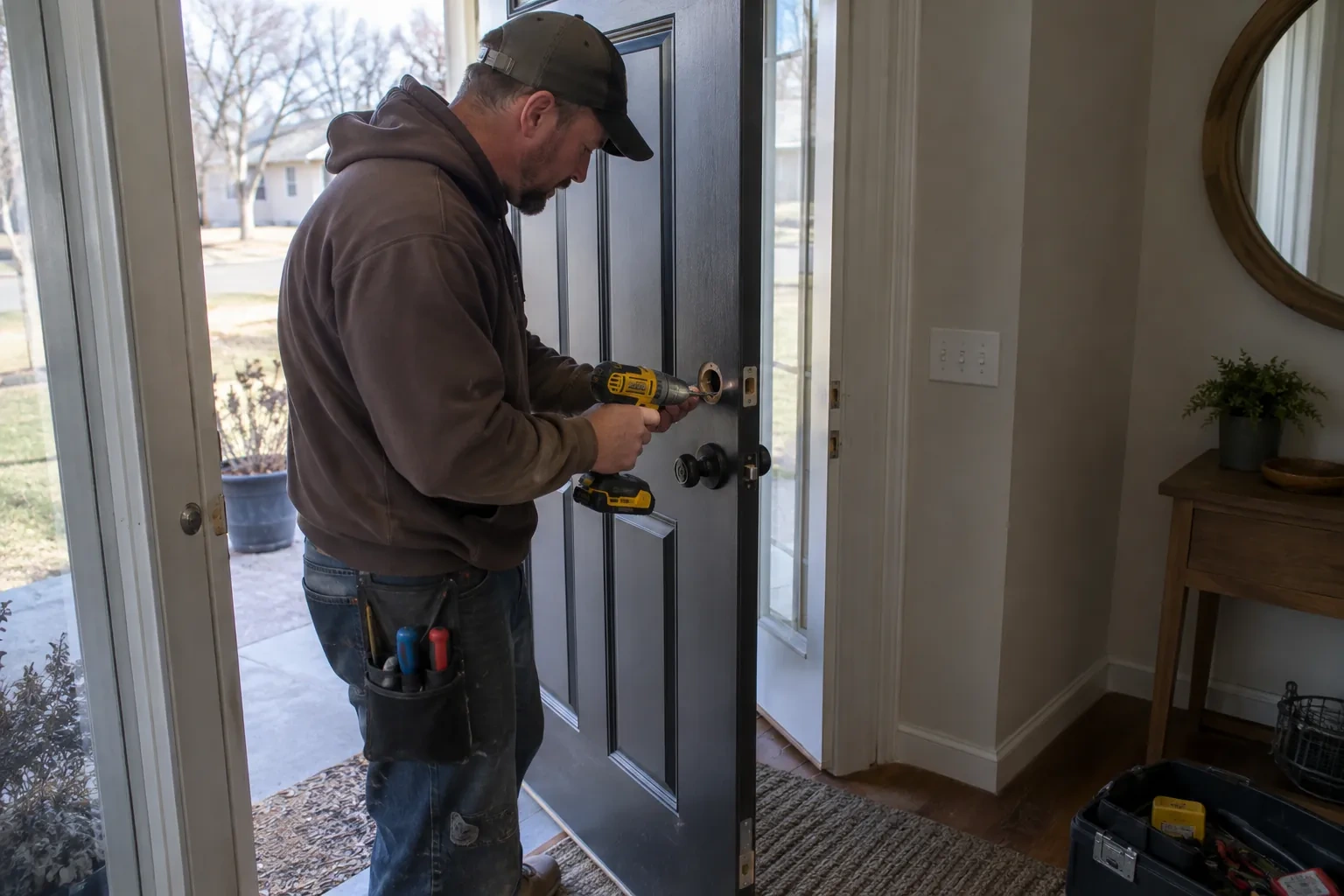
For a business, high security locks are as much about paperwork as metal. A restricted or patented key system registers the premises with the locksmith, names who may order keys, and numbers every key cut. That is what turns a lost staff key from a mystery into a line in a log. The hardware backs it up: cylinders with sidebars and hardened inserts, heavy-duty deadbolts or mortise locks, and strikes set into the structure. Where several doors are involved the keys can be arranged so a manager carries one key and staff carry keys that open only their own areas.
How the visit goesThe restricted keys you bought years ago are no longer restricted; the locksmith mentioned the patent has run out and blanks are sold openly. Your key control quietly stopped being control.
High Security Locks
How the visit goes

Who holds keys and who should
For a business or a rental, the locksmith asks to see the key list, or helps you start one. Which keys exist, who carries them, which doors they open, and what happens when someone leaves. This is where the case for a patented or restricted key system becomes clear, because the system replaces guesswork with a register: every key numbered, every order authorised by a named person, and no blanks available outside the locksmith who manages it. The locksmith also asks how many people need to reach each area so the keying plan reflects the way the building actually runs.
Keying several doors sensibly
When more than one door is upgraded, the locksmith plans the keying before pinning anything. A home usually wants every exterior door on one key. A business often wants staff keys that open the front and their own area, and one manager key that opens everything, arranged as a small master system on the same patented keyway. Cylinders are pinned on the bench, labelled and fitted door by door, and each key is checked against the doors it should open and, just as carefully, the doors it should not. The written key schedule is part of the handover.
A key plan that survives staff changes
For a business, the handover includes a key schedule showing every cylinder, every key number and who holds it. When someone leaves, their key comes back and is struck off; if it does not come back, you know exactly which doors it opened and can decide whether one cylinder or several should be repinned. Because the keyway is restricted, a departed employee cannot quietly keep a copy. New hires are issued a numbered key against a signature. The plan lives in a folder or spreadsheet, and the locksmith keeps a matching record so the two can be reconciled whenever you like.
High Security Locks
In the van
Graded deadbolt with hardened bolt
Patented key blanks
Hardened cylinder guard ring
Pinning kit and plug follower
Commercial mortise lock body
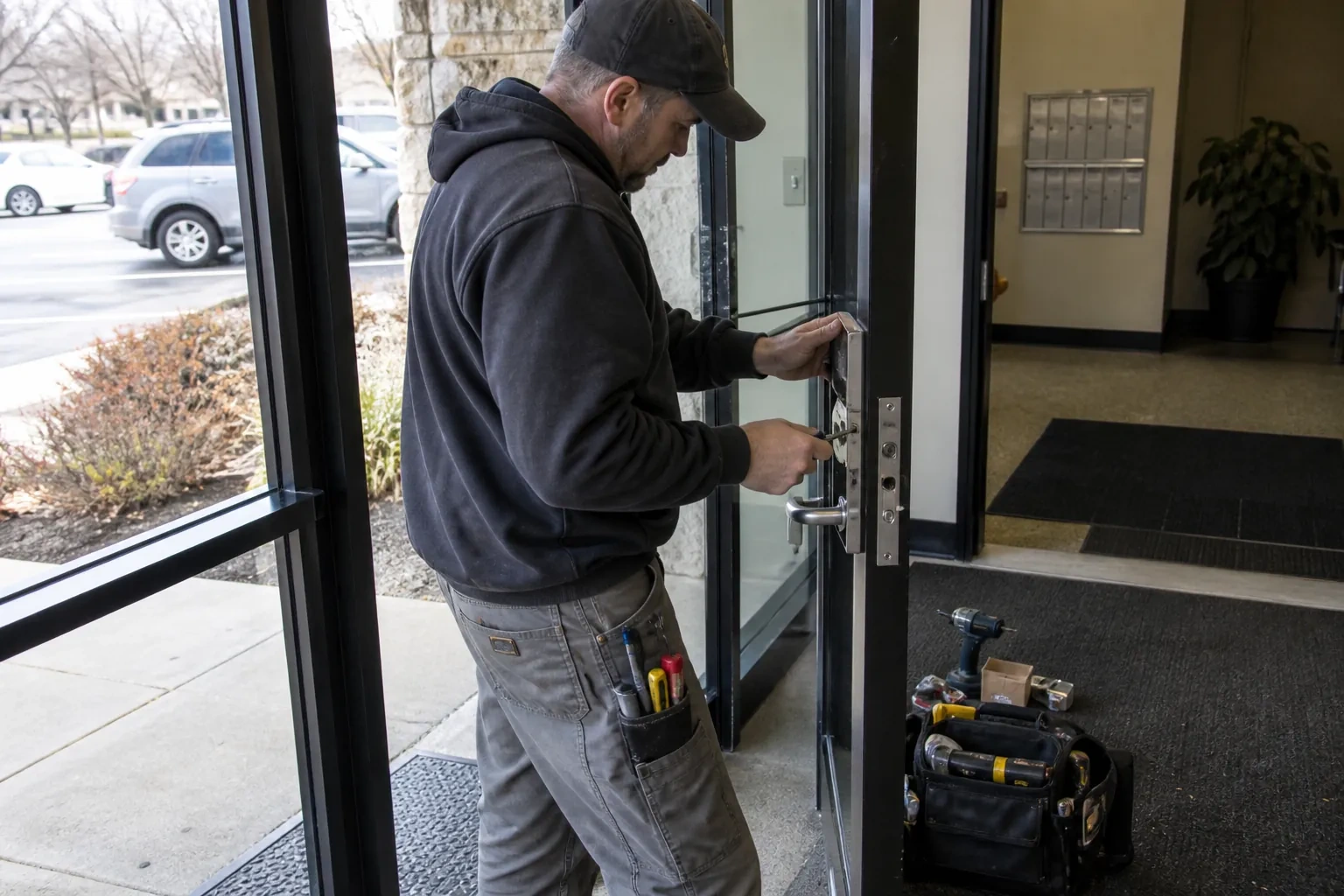
High Security Locks
What affects the quote
Hinge and door edge work
Long hinge screws, a hinge-side security stud or repair to a chewed door edge are small items that add up on a door that has been forced before.
Retiring the old keyway
If other doors stay on the old key for now, they may need rekeying so an unknown copy has nowhere to go; that is additional cylinder work alongside the upgrade.
Number of doors
Each door gets its own cylinder or lock, strike work and testing. Several doors on one keyway share the setup cost of the key system but add hardware and time per opening.
What to have ready
- Which locks are on the door now: knob only, knob and deadbolt, a mortise lock or a lever?
- Is there a window or sidelight within reach of the lock?
- How many exterior doors do you want included?
High Security Locks: questions
QuestionsCan a hardware store or kiosk copy my new key?
No. The blank for a patented keyway is distributed only through the manufacturer's network to locksmiths who hold the system, and the side milling or angled cuts need a machine set up for that line. A kiosk would have neither the blank nor the cut. Extra keys come through your locksmith, cut from code, once an authorised person has approved the order. That routine is a small inconvenience compared with never knowing who has a copy.
What is the difference between restricted and patented keys?
A restricted keyway is one the manufacturer supplies to a limited set of dealers, so blanks are harder to obtain but not legally protected. A patented key design is protected by a patent for a fixed term, and making or selling the blank without permission is unlawful during that time. Patented systems give the firmer control; restricted ones give a useful step up. The locksmith explains which your chosen line uses and when any patent expires.
Can a high security cylinder be rekeyed later?
Yes. Like any pin tumbler it can be repinned to a new combination by a locksmith who holds the system, so a departed employee's key can be retired without replacing hardware. Some lines use interchangeable cores that swap in moments with a control key, which suits businesses with frequent turnover. Rekeying stays within your registered keyway, so the key control you paid for continues after the change.