Lockouts · Brampton
Home Lockout Service
After a week of humid weather the back door has swollen in its frame.
In plain words
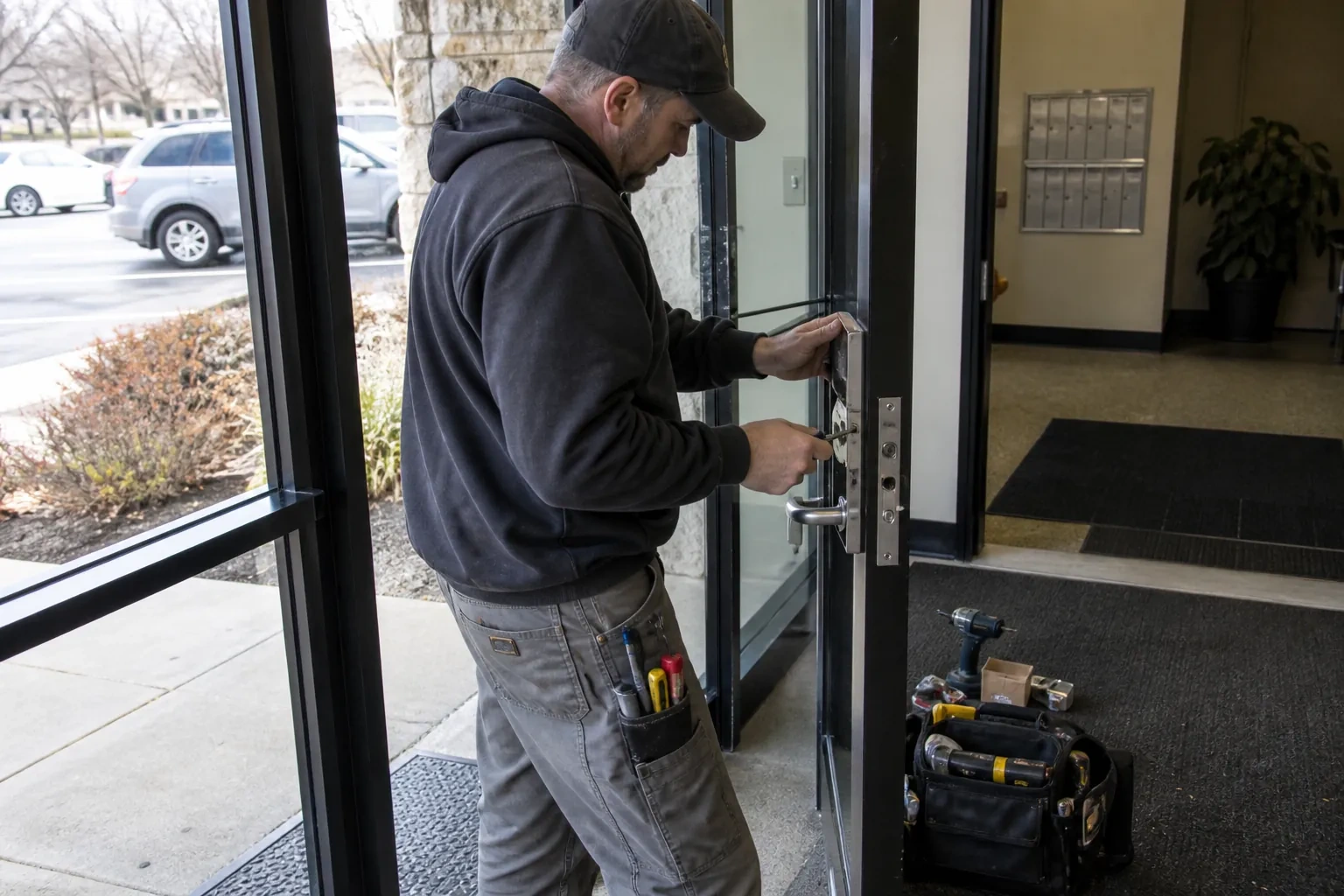
Different locks call for different openings, and a lockout visit starts by reading the hardware on your door. A spring latch in a knob or lever behaves differently from a deadbolt, a mortise lock in an older home has its own internals, and a high-security cylinder resists shortcuts that work on builder-grade hardware. A smart lock adds batteries and, on many models, a hidden keyed override, though some key-free designs rely instead on their own backup power, codes or app access. Knowing which is in front of them lets the locksmith pick, decode or bypass the mechanism, keeping the lock intact rather than reaching for a drill.
How the visit goesAfter a week of humid weather the back door has swollen in its frame. The key turns, you can feel the bolt trying to move, but it is jammed hard against the strike plate and the door refuses to open.
Home Lockout Service
How the visit goes
Is it the lock or the door?
A surprising number of lockouts are really door problems. The locksmith checks how the door sits in its frame: whether it has dropped on tired hinges, swollen with summer humidity, or shrunk in dry winter air so that the bolt no longer lines up with its pocket in the strike plate. A hand on the door while the key is turned often reveals the bolt binding against the strike rather than a failed cylinder. Sorting this out first matters because a door that is pinched in its frame needs pressure relieved, not a lock picked, and the fix afterwards is a strike adjustment or a hinge screw rather than new hardware.
Getting past a dead smart lock
A keypad lock that has lost power is usually opened by giving it power back. Many models expose two small terminals under the keypad that accept a fresh nine-volt battery held against them, which wakes the lock long enough to enter a code. If that route is unavailable, the locksmith removes the cover over the mechanical override and picks or decodes that small cylinder like a conventional lock. Where the lock has no keyway at all, that model's own recovery method is used instead. Afterwards, batteries are replaced, the door is confirmed to relock automatically if it should, and any forgotten code is reset from the inside.
Ready for the next cold snap
After a winter lockout you leave with a cylinder that has been dried and dressed with a moisture-shedding lubricant, and usually a small tube of lock de-icer for the glove box or coat pocket. Keeping the storm door closed shields the main lock from freezing rain, and a simple keyhole cover on an exposed side door stops meltwater getting in during a thaw. If the door itself was frozen to its seal, the weatherstripping has been cleared and a light silicone wipe on it stops it bonding to the door again. These small habits carry most households through a whole season of freeze and thaw without another stuck morning.
Home Lockout Service
In the van
Pick and tension tools
Strike plate and long hinge screws
Broken key extractors
Cylinder decoder
Dry graphite or PTFE lubricant
Home Lockout Service
What affects the quote
Any upgrade you choose while the locksmith is there
Some people use the visit to move to a heavier deadbolt, a reinforced strike, a keypad or a lockbox. None of it is required to get you inside; each option is priced as a separate line.
Drilling and a replacement cylinder
If the cylinder has to be drilled, the quote gains the new cylinder or complete deadbolt and the labour to fit it. You are told this before the drill comes out, never after.
Distance to your door
Travel is part of every call-out. A house across town and a rural property at the end of a long road involve different driving time, and the quote reflects the trip as well as the work.
What to have ready
- Is the door swollen, sagging or hard to close even when it is unlocked?
- Is there a second door, a garage entry or a spare key nearby you could use?
- Has anyone already tried to open the door with a card or tool?
Home Lockout Service: questions
QuestionsCan a frozen lock be opened, and how do I stop it freezing again?
Frozen cylinders open well with patience: lock de-icer or gentle warming melts the ice so the plug turns, and the cylinder is then dried and treated with a dry lubricant that sheds moisture. Hot water is avoided because it refreezes and can crack cold metal. To prevent a repeat, keep a storm door closed over the main lock, fit a keyhole cover on exposed side doors, and carry a small de-icer in your coat or car through the freeze-thaw months.
Should I rekey my locks after being locked out?
It depends entirely on where the key is. If it was inside the house the whole time, your locks are exactly as secure as they were yesterday and nothing needs changing. If the key was lost or stolen, rekeying is the sensible follow-up, because it retires that key for good while keeping your existing hardware. Lock manufacturers give a lost or stolen key as one of the main reasons to rekey, and doing it during the same visit saves a second call.
What if my wallet and every document are locked inside?
That is the most common version of a lockout, and there is a routine for it. Tell the locksmith on the phone so the plan is agreed before arrival. Often a neighbour can confirm you live there, a digital copy of a lease or bill is on your phone, or a property manager can vouch for you. Where none of that is available, the locksmith opens the door and completes the identification check with the documents inside before leaving.
Related services
- Broken Key ExtractionThat key had been bending a little for years, and you kept straightening it.
- Break-In Damage Lock RepairThere is a hole where the cylinder used to be.
- Seized & Jammed Lock OpeningThe old mortise lock on the front door of the house turns the key halfway and stops with a dull clunk.