Change or rekey · Brampton
Lock Rekeying
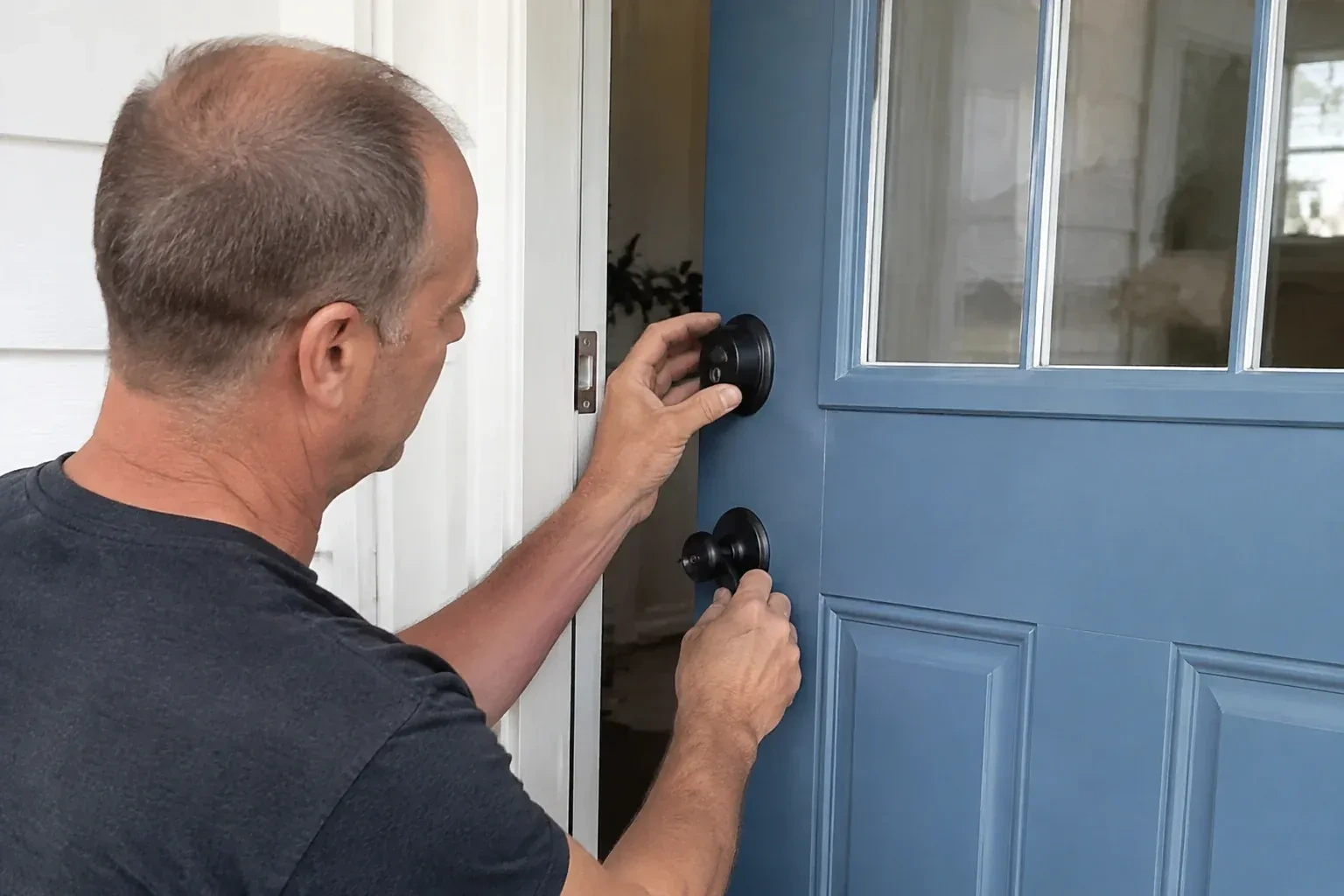
The builder handed over your new home with a stack of identical keys, and you know the framing crew, the painters and the flooring installers all used a construction key during the build.
In plain words
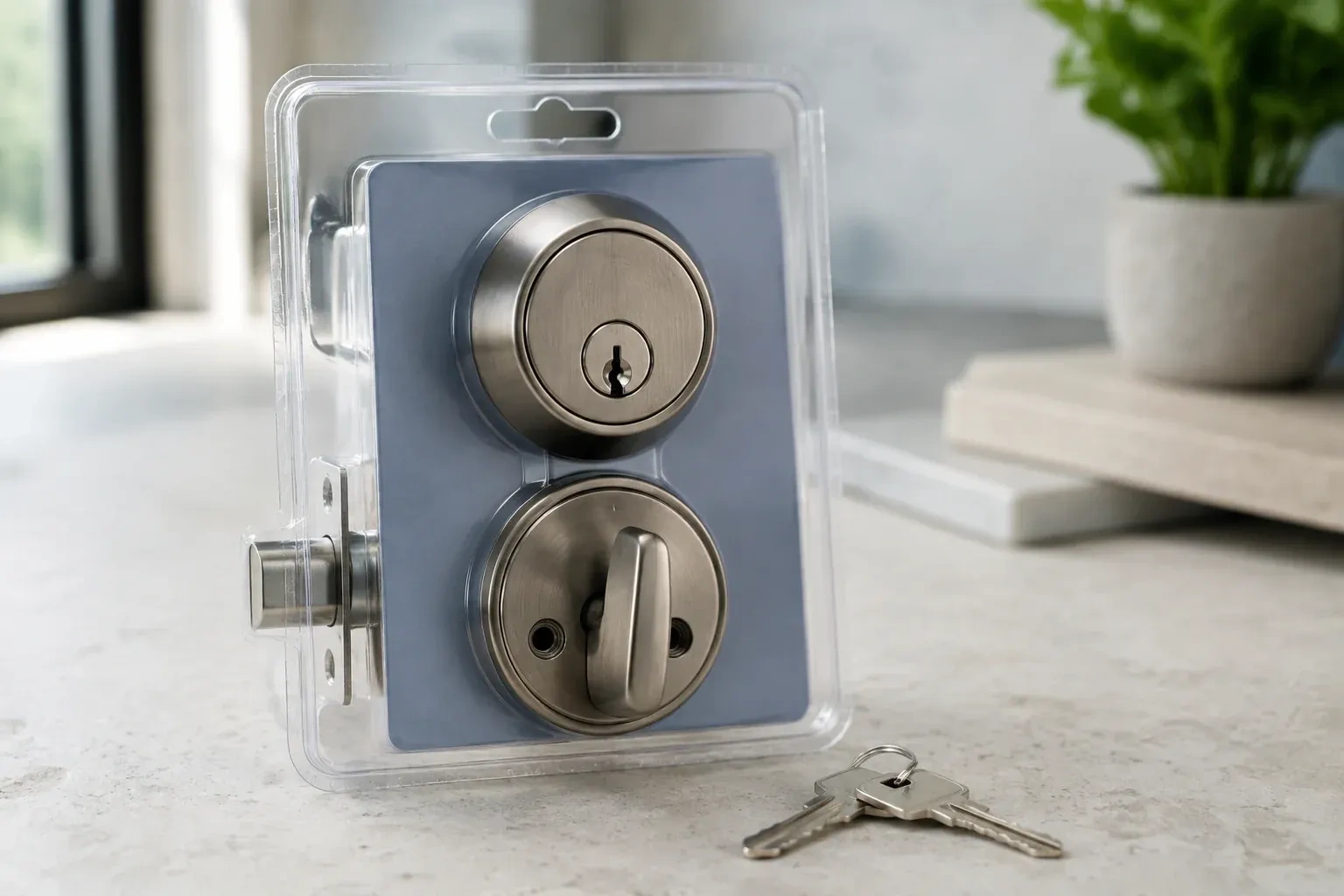
The choice between rekeying and replacing comes down to the condition of the lock and what you want from it. A cylinder that turns smoothly, sits firmly in a solid deadbolt and matches the look of the door is worth keeping, and rekeying gives it a new key for a fraction of the effort of replacement. Replacement earns its place when the hardware is worn, low grade, damaged, a mismatched keyway that cannot join the house key, or when you want a keypad or a heavier deadbolt anyway. A locksmith looks at each door and tells you which one applies.
How the visit goesEvery copy of your house key seems to work a little differently. One needs a jiggle, another sticks halfway, and the original wore down years ago. The lock itself is fine; the keys have drifted so far from each other that none fits cleanly.
Inside the lock
What a rekey changes
01
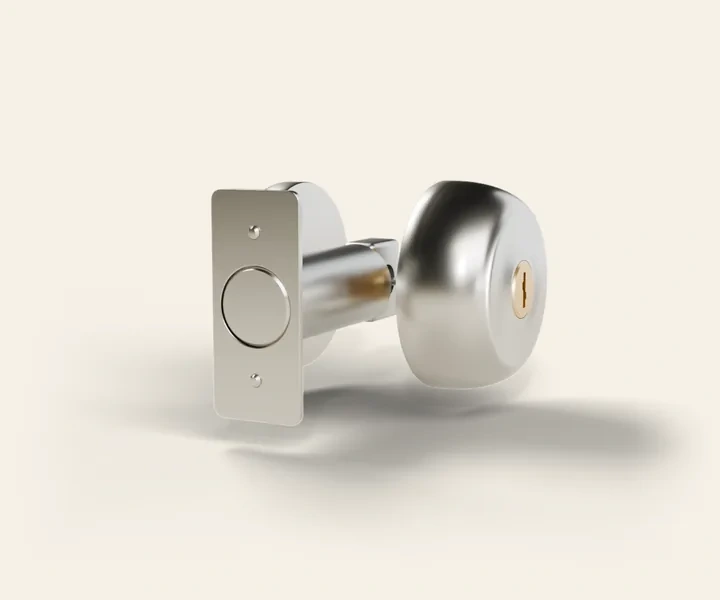
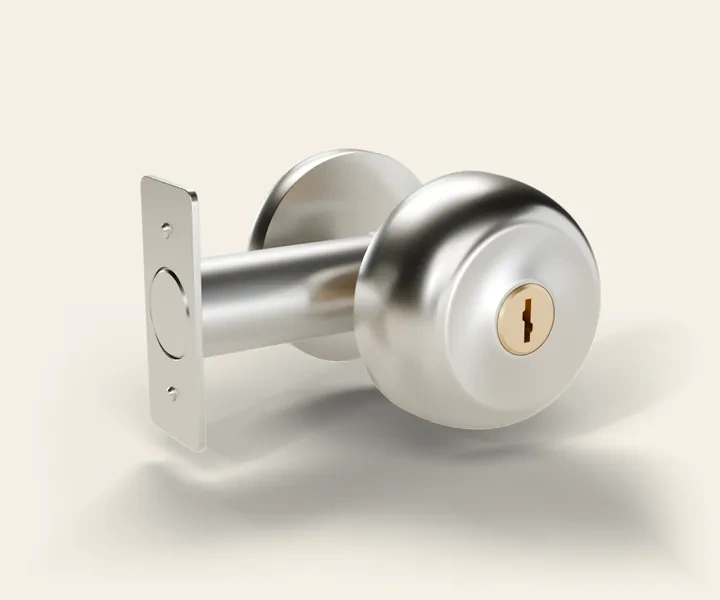
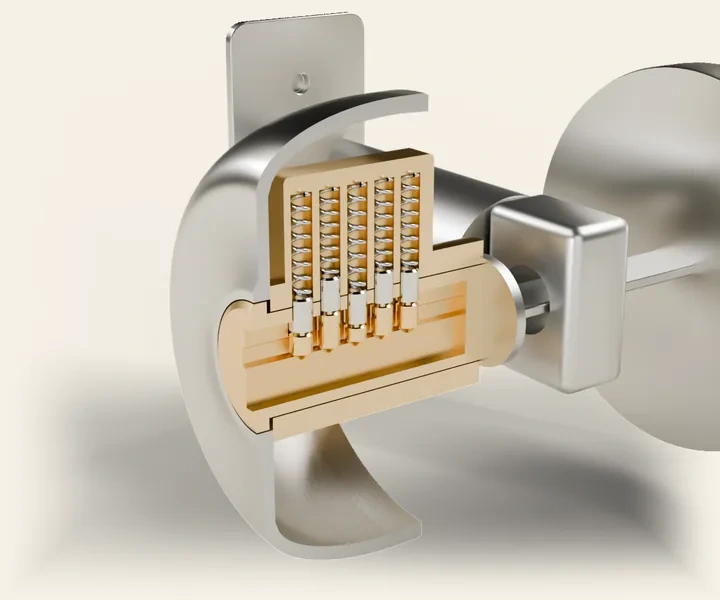
The lock you already have
02
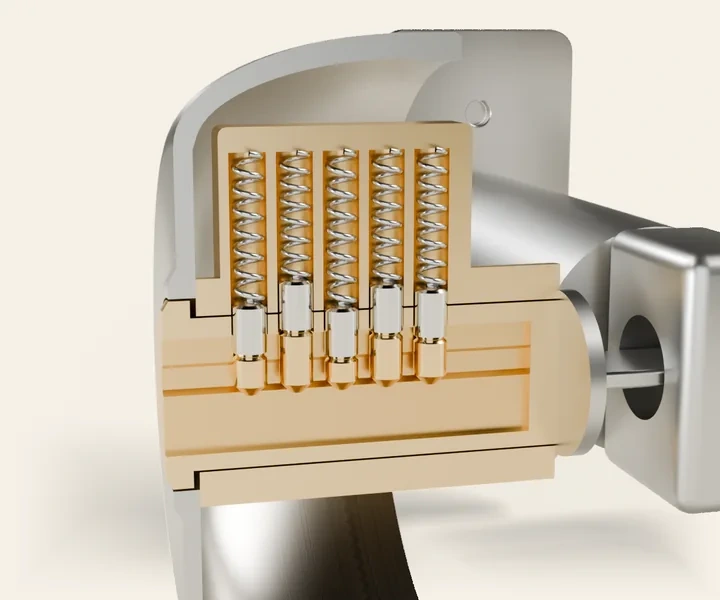
Inside the cylinder
03
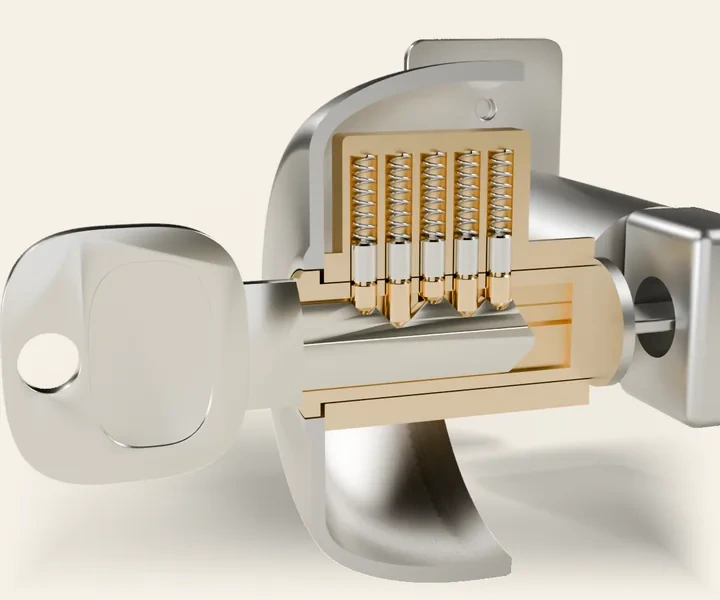
Pins, springs and the shear line
04
A new key, new pins
Lock Rekeying
How the visit goes
Walking every door that should be included
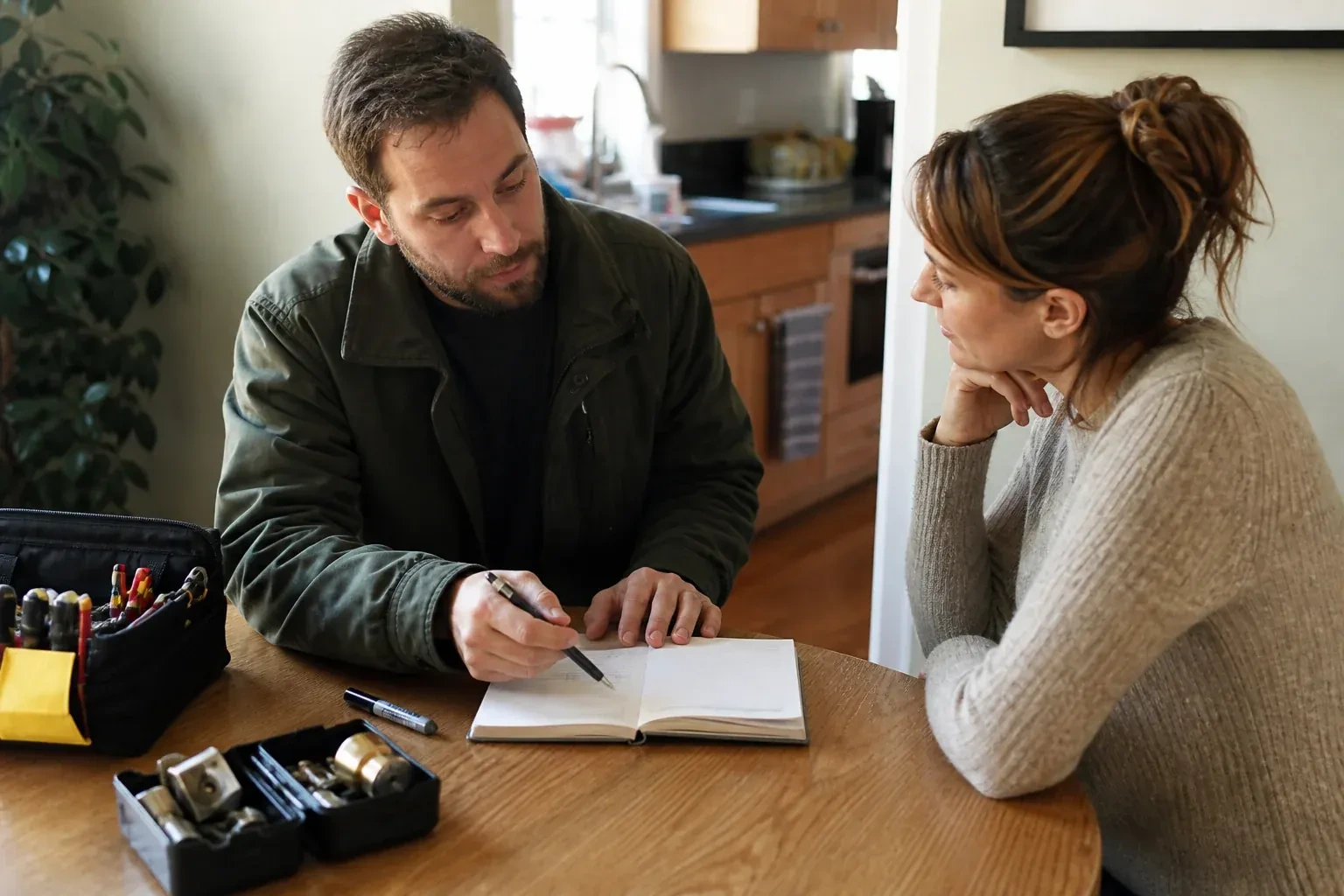
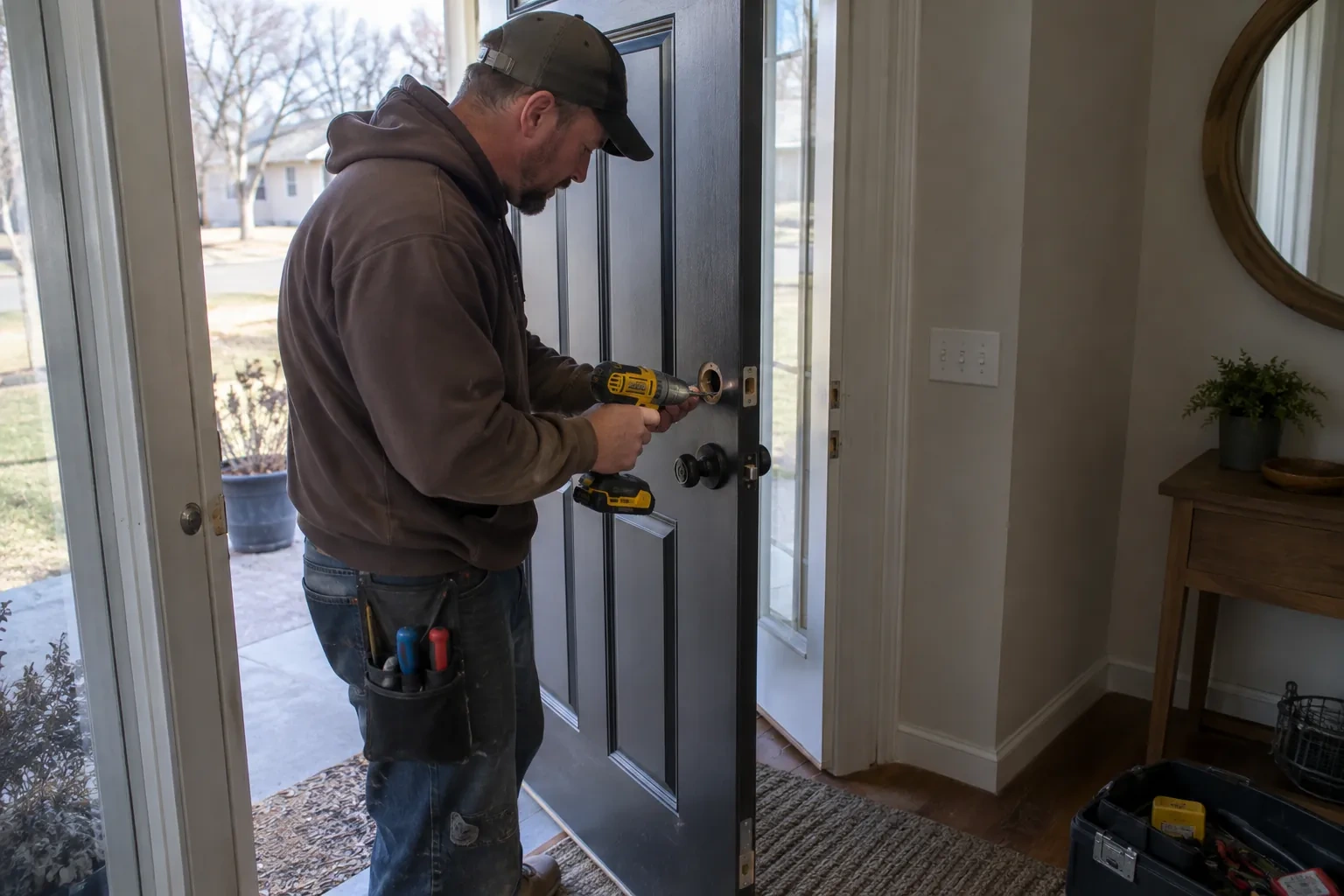
Before a single cylinder comes out, the locksmith walks the property with you and lists each opening: the front door, the back and side doors, the door from the garage into the house, a walkout basement, a gate with a keyed latch, a shed, a mailbox, and any interior door you want on a key. It is surprising how often the garage's side door or the storm door is forgotten and left on the old key. The list becomes the plan for the visit and, at the end, the record of what was done. A door that is not on the list is not rekeyed, so the walk is worth two careful minutes.
Cutting the new key and gauging the depths
On this cylinder type, the new key comes first, then the pins to match it. The locksmith cuts a fresh key from a blank on a code cutter or duplicator, choosing a combination that is not close to the old one, and reads each cut with a key gauge to find its depth on the manufacturer's scale. Bottom pins of the matching lengths are picked from a graded pin kit and dropped into the plug chamber by chamber, so that when the new key is inserted every pin top sits exactly at the shear line. A key cut from a clean blank and pins matched to it by gauge is what gives a rekeyed lock that crisp, new feel.
The old keys are just metal now
Whatever was out in the world before today, the copy the contractor kept, the key the former roommate never returned, the ring that went missing on the bus, none of it turns a lock on your property any more. That is the whole point of the visit, and it is worth saying plainly because people sometimes keep worrying afterwards. If you still hold old keys, they can go in the metal recycling. There is no need to change the door hardware or your routine, but any keypad code known to someone whose access is ending should be deleted or changed separately, since rekeying the mechanical cylinder does not touch those codes.
Lock Rekeying
In the van
Key gauge
Dry graphite or PTFE lubricant
Replacement cylinder for odd keyways
Key blanks
Graded bottom pin kit
Lock Rekeying
What affects the quote
Interior doors added to the plan
Bedroom, office or storage-room locks brought onto a key are lighter work than exterior deadbolts, but each is still a cylinder to pin and test, and the count includes them.
One key group or several
Keying every door alike is the simplest plan. Setting up separate keys for a basement suite, an office or a shed adds a group to pin and label, and the quote shows that as separate work.
Restricted or high-security cylinders
Patented keyways use controlled blanks and pins that cost more than standard ones, and their keys are produced from a controlled record instead of being copied, so a system of that kind is quoted differently from builder-grade hardware.
What to have ready
- Has a key gone missing, or is one still held by someone who has moved on?
- Do you own the home, rent it, or manage it for someone else?
- Is there a shed, gate, mailbox or padlock you would like on the same key?
Lock Rekeying: questions
QuestionsHow is rekeying different from replacing the lock?
Rekeying keeps your existing deadbolt or handle set and gives it a new key, commonly by changing the pins inside, though some cylinders reset a different way. Replacing removes the whole lock or cylinder and fits new hardware. Rekeying suits locks that are in good condition and simply need a fresh key. Replacement is the better call for hardware that is worn or damaged, built to a low grade, on a keyway the other doors cannot share, or due for a change of style or a keypad.
How long does a rekeying visit take?
It scales with the number of cylinders and how many need attention beyond pinning. A single deadbolt is a short bench job; a whole house with five or six exterior cylinders, a couple of swaps for mismatched keyways and a set of spares to cut and test takes a good deal longer. Tell the locksmith how many doors you want included when you book, and the visit can be planned realistically rather than guessed at.
What exactly does rekeying a lock change?
What changes depends on the cylinder. Many locks turn when a row of small bottom pins lines up at a precise level, set by the cuts on your key, and during a rekey the locksmith tips those pins out and loads a set that lines up with a different key, cut new for you; some residential cylinders instead reset a side-locking bar without removing any pins. From then on the new key operates the lock and older keys do not, and the hardware on the door stays as it was.
Related services
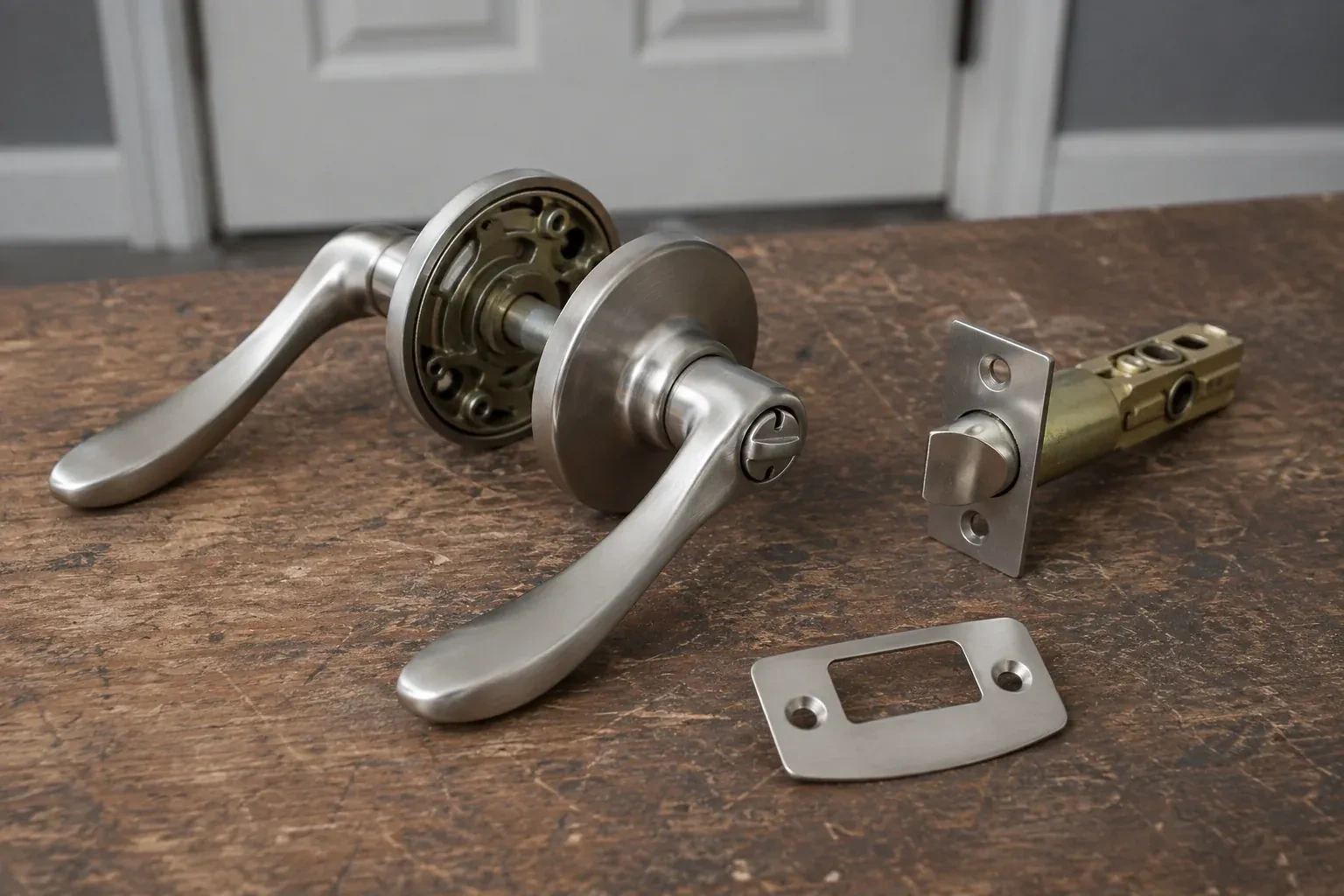
- Lock Replacement & UpgradeThe lever on the side door droops toward the floor and rattles in your hand.
- Vintage Mortise Lock ServiceYou bought a house with its original hardware and a bag of loose keys.
- Smart Lock InstallationHalf the evenings someone asks whether the back door got locked, and nobody is sure.