Locksmith
Tips and plain talk
Locks, keys and doors reward a little attention. A drop of the right lubricant, a spare key in a sensible place, a rekey when someone moves out. The advice here covers those small habits and the bigger decisions, like choosing between mechanical and electronic locks.
Ask us anything about locks
Can a frozen lock be opened, and how do I stop it freezing again?
Frozen cylinders open well with patience: lock de-icer or gentle warming melts the ice so the plug turns, and the cylinder is then dried and treated with a dry lubricant that sheds moisture. Hot water is avoided because it refreezes and can crack cold metal. To prevent a repeat, keep a storm door closed over the main lock, fit a keyhole cover on exposed side doors, and carry a small de-icer in your coat or car through the freeze-thaw months.
An employee left and never returned their keys. Should we rekey?
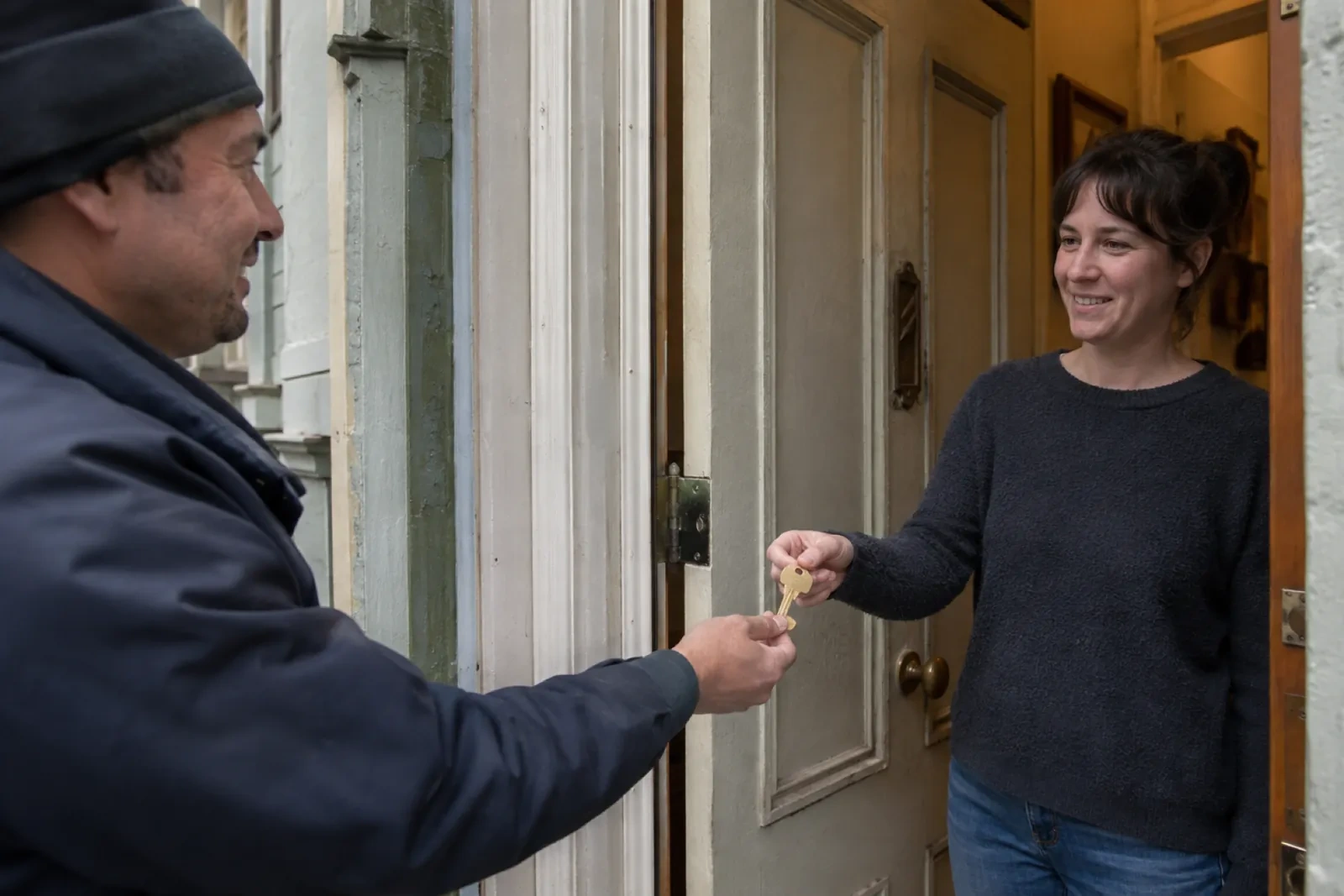
It is the sensible step, and a lockout visit is a convenient moment for it. Rekeying keeps your existing cylinders and changes the pins so a new key operates them and the unreturned one does nothing. If your doors use interchangeable cores, swapping the core takes minutes. Bring every door that shared the old key onto the new one, count the fresh keys into named hands and start a register so the next departure is a line in a book rather than a call.
Part of the key is sticking out. Can I just pull it with pliers?
If a good length shows and the plug is at its normal rest position, a firm straight pull sometimes works. The risk is pushing instead of pulling, or twisting, which drives the piece deeper and can bend a pin. If it does not come on the first gentle try, stop there and leave it for extractor tools, which grip the cuts without loading the cylinder.
Should I call the police before the locksmith?
Yes. Call the emergency number if there is any chance the intruder is still there, and the non-emergency line of your local police service otherwise. A break and enter is reported by phone rather than through the online forms used for minor property damage. Ask for the occurrence number, since your insurer will want it. Once the police have released the scene, or told you they are not attending, the locksmith can begin.
The thumb-turn is stuck from inside and we need that door to get out. What should we do?
Use another exit for now and call. From the inside the fault is usually a bolt pinned by the frame or a bent spindle, both of which the locksmith frees without damage. A main exit door should open from inside without a key or special knowledge, so the repair leaves the door doing exactly that, and if the hardware on it was the wrong type for an exit, a thumb-turn deadbolt is suggested.
Can I just have another key cut instead?
You can, and it solves being without a key. It leaves the lost one working, though, which is the half of the problem that keeps people awake. Rekeying takes about as much effort as a trip to a hardware store counter and ends with a new key in your hand and the old one retired. If the key was mislaid somewhere it will never be found and named nothing, a plain copy is a fair choice.
How is rekeying different from replacing the lock?
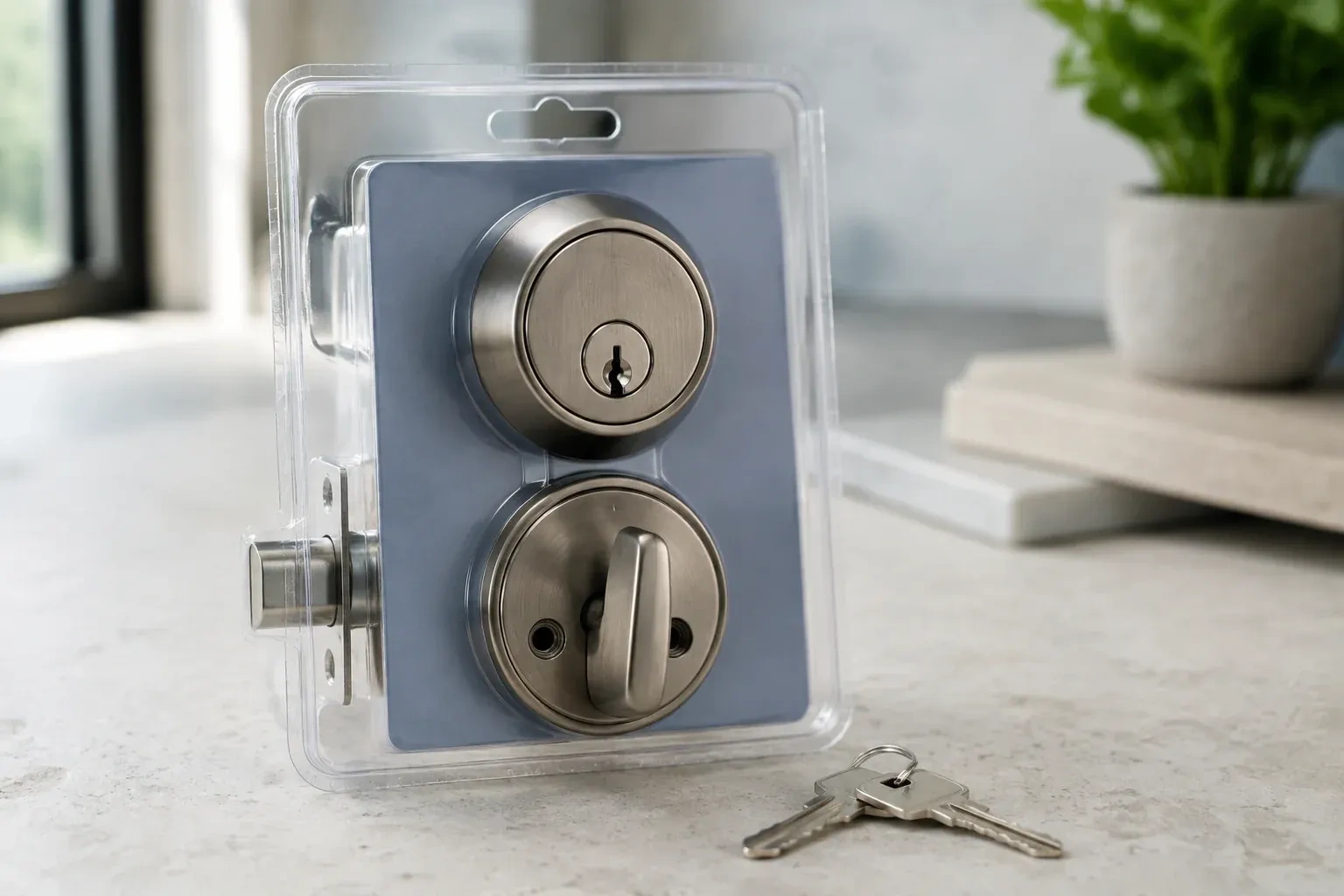
Rekeying keeps your existing deadbolt or handle set and gives it a new key, commonly by changing the pins inside, though some cylinders reset a different way. Replacing removes the whole lock or cylinder and fits new hardware. Rekeying suits locks that are in good condition and simply need a fresh key. Replacement is the better call for hardware that is worn or damaged, built to a low grade, on a keyway the other doors cannot share, or due for a change of style or a keypad.
What happens during the visit, step by step?
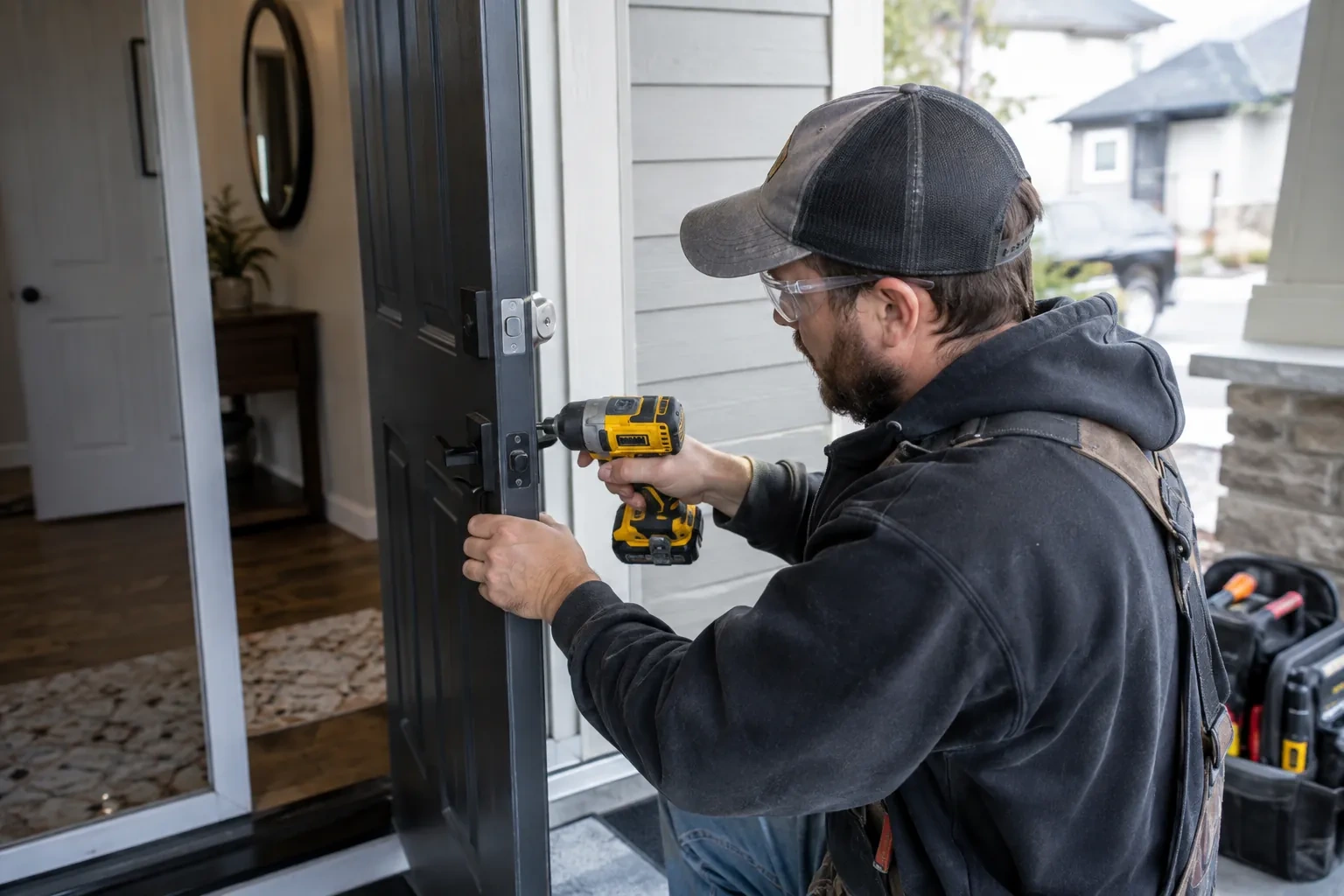
The locksmith looks at the door, frame, glass and hinges, measures the bore and backset, and confirms the hardware and key plan with you. The door is bored or the old lock removed, the bolt is set to the backset, and the cylinder and thumb-turn are assembled. The strike position is marked from the bolt itself, the pocket bored, and a reinforced strike fastened into the framing. Everything is tested open and closed, keys are cut and tried, and the area is vacuumed.
Can a lever replace a knob on the same door?
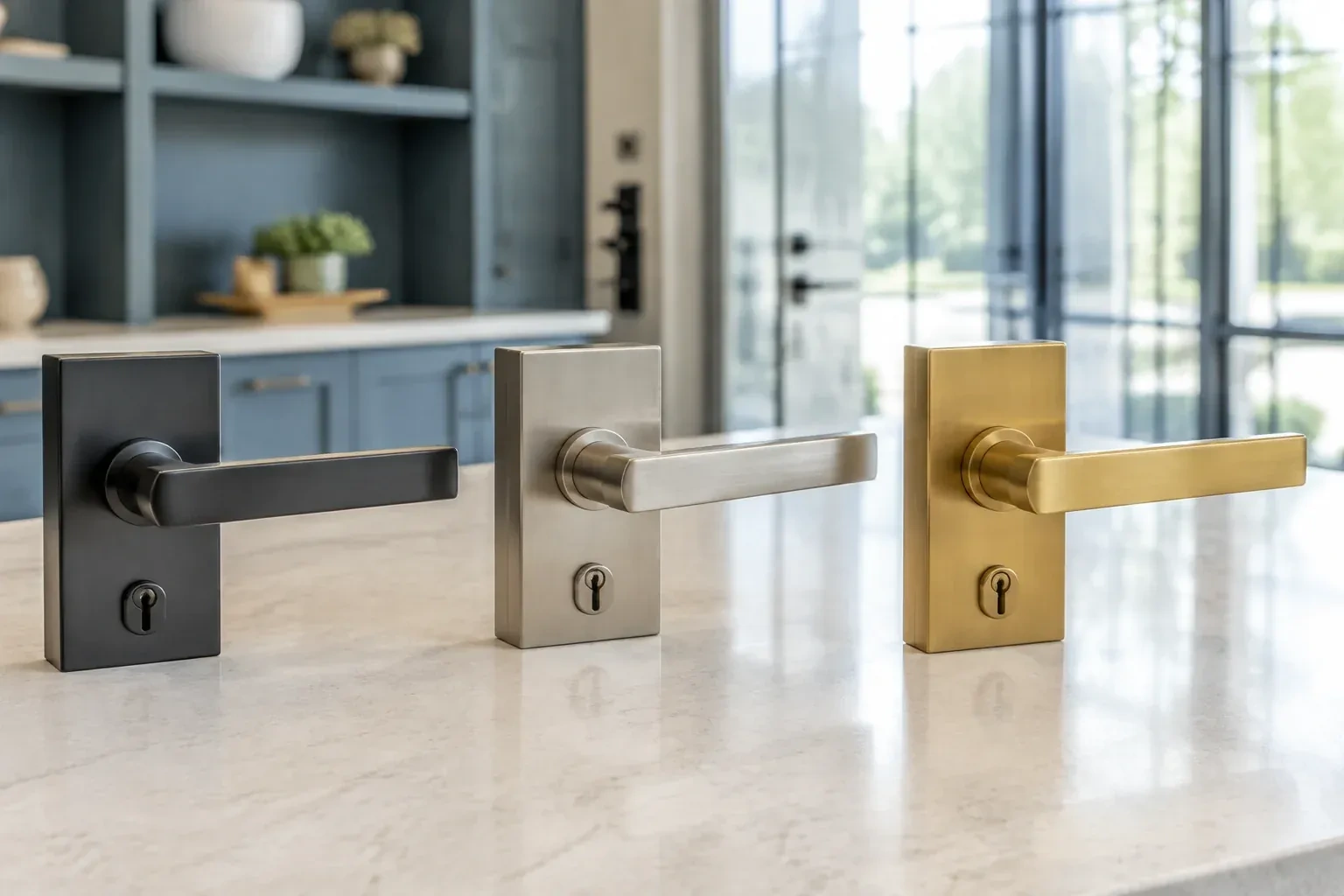
Yes, and it is a common change for anyone who finds a knob hard to grip. Levers use the same bore and backset as knobs, so the swap is usually a direct fit. Levers are handed, so the locksmith checks which way the door swings and chooses or adjusts the lever accordingly. A keyed entry lever pairs well with a deadbolt above it, and interior passage and privacy levers complete the set.
What does the service visit involve, step by step?
The locksmith checks your authority to request the work, examines the door and lock, and tells you what it needs. The knobs, plates and cylinder come off, the case slides out of the door edge and is opened on a bench, cleaned, re-sprung and repaired. Keys are made or the cylinder rekeyed, the door pocket is tidied, everything goes back on, and the strike is adjusted. You test the finished lock from both sides.
Do I still get a key?
In most cases, yes. The majority of keypad deadbolts keep a conventional cylinder behind or beside the keypad, and the locksmith rekeys it during the visit so a fresh key works and the old one is retired. A few designs have no keyway at all and rely on the keypad plus an emergency power contact instead. Which you prefer is part of choosing the model, and either way the fallback route is tested before the locksmith leaves.
If the lock gets replaced, can the existing intercom or buzzer stay?
In most cases, yes. The buzzer, keypad and intercom are generally separate from the mechanical lock or cylinder, so replacing the lock itself does not usually mean replacing the electronic side too. Where the two are connected, such as an electric strike wired to the same frame as a new mechanical lock, the locksmith checks the fit and wiring before starting so the electronic system keeps working once the new hardware is in place. Anything that would need to change is explained beforehand.
Can several compartments in the same panel be done in one visit?
Yes, this is common when a property manager notices several compartments failing around the same time. Each one is still confirmed against the resident or unit it belongs to, and the work moves compartment by compartment. Unless a resident asks otherwise, each lock is keyed separately from the others, and the visit closes with a simple list of which compartment received which lock and keys.
My electronic safe lock has a dead battery. Do you still need to drill it?
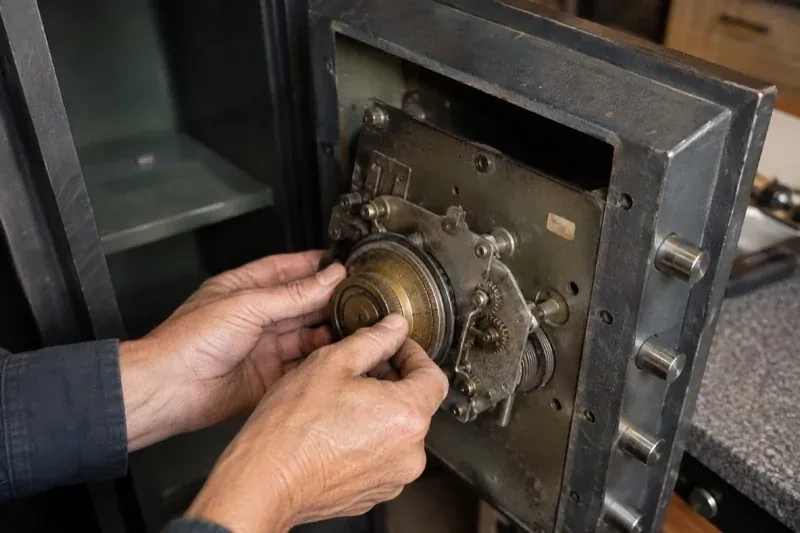
Usually not. It depends on the model. Some electronic locks offer an external contact for a fresh battery, or a mechanical override key behind a cover plate; restoring power this way wakes a dead keypad but does not bypass a lost code on its own. Others have a reset port on the lock body, which sits inside the safe and still needs the door opened by other means first. The locksmith works through that model's own documented procedure before considering anything more invasive.
Why does the inside of my fireproof safe feel damp?
A fire-rated interior works by sealing tightly, and that same seal traps ordinary household humidity over time with nowhere to go. Opening the door for a few hours every few weeks lets trapped air exchange with the room, and a desiccant packet inside absorbs moisture between those openings if it is refreshed on schedule. A musty smell or a soft-feeling document is the interior telling you it needs airing out.
Can a hardware store or kiosk copy my new key?
No. The blank for a patented keyway is distributed only through the manufacturer's network to locksmiths who hold the system, and the side milling or angled cuts need a machine set up for that line. A kiosk would have neither the blank nor the cut. Extra keys come through your locksmith, cut from code, once an authorised person has approved the order. That routine is a small inconvenience compared with never knowing who has a copy.
Is a restricted keyway worth it for a business?
A restricted keyway uses blanks that only the locksmith or authorized source can obtain, released against whatever that key-control program requires, a signed letter, card, signature record or factory authorization naming who may order keys. Hardware stores and kiosks have no blanks, so copies are far harder to get without your say-so. It costs more per key than a standard keyway and is most valuable where keys pass through many hands, such as retail with part-time staff, shared premises or anywhere the count of copies has drifted before.
What happens if a department splits or a business reorganizes?
The existing chart is the starting point rather than a blank page. Doors that move to a new department are reassigned within the existing hierarchy where the cylinders and platform allow it, and only the affected levels are touched. A reorganization is usually an adjustment to the record, not a reason to rebuild the whole system from the ground up.
Who keeps administrative control of the software after installation?
The business does. Handover includes a full administrator account with the ability to add and revoke credentials, change schedules, and pull an entry log, confirmed working before the locksmith leaves. Whether the installer keeps any support or portal access beyond that is a setting agreed with the business, not a fixed feature of every system, so it is worth confirming as part of that handover.
What should I have ready before the visit?
Knowing the intended use of the room, roughly how many people it holds, whether any doors are already fire-rated, and whether any of them are part of a pair helps the locksmith bring the right devices. If a fire inspector or building official has already given a note about the opening, having that note or its reference number on hand keeps the visit focused on what was actually flagged.
My storefront door is aluminum and glass. Does it need special hardware?
Yes. An aluminum storefront door has a narrow stile, the vertical metal frame around the glass, that a standard mortise or cylindrical lock cannot physically fit into. These doors take a narrow-stile lock or a hookbolt built specifically for that slim profile, and matching the hardware to the frame is what lets the bolt engage the keeper fully instead of catching at an angle.
My wallet, permit and everything else are locked inside. What then?
That is the ordinary case, and there is a routine for it. Tell the locksmith on the phone so the plan is agreed in advance. Often the plate can be matched to a photo of the permit on your phone, a family member can bring identification, or a fleet manager can confirm a company vehicle. Otherwise the door is opened and the documents in the glovebox are checked against your identification before the locksmith leaves.
My fob is cracked but still works. Do I need a whole new key?
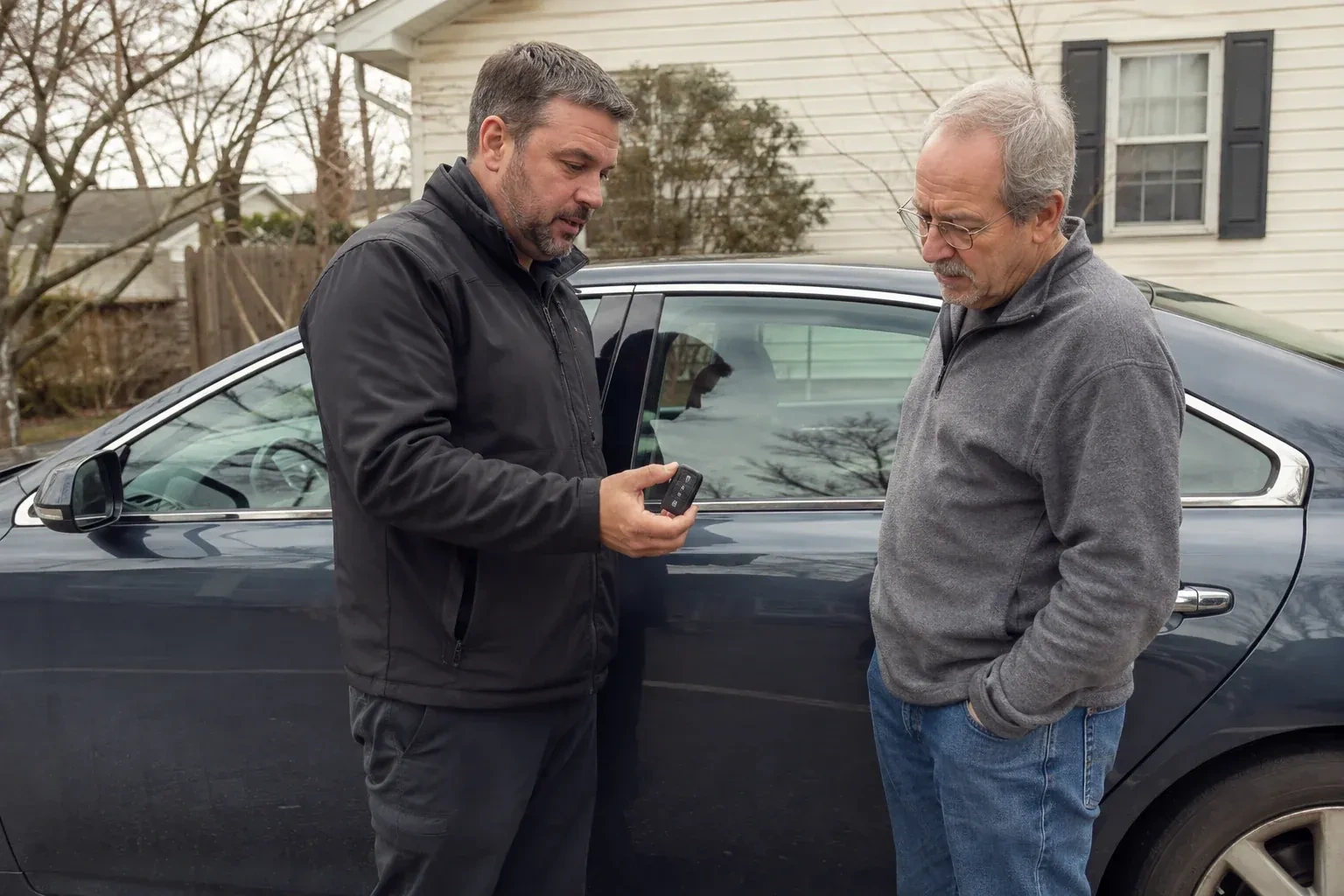
Usually not. A cracked case often protects a healthy circuit board and transponder, and those can be moved into a new shell of the same pattern with a freshly cut blade. Because the electronics are unchanged, nothing needs programming, and the rebuilt key behaves exactly as before. A new key is the answer when the board is corroded, a button has died or the chip has been damaged.
Can spare keys be made for older vehicles without a chip?
Yes, and it is usually the most straightforward version of this service. A vehicle old enough to use a plain mechanical key has no chip to read or program, so the whole job is cutting a matching blade, either traced from the original or cut to code, and testing it in every lock the first key opens.
What should I have ready before a key fob programming visit?
The vehicle's identification number, proof that you own or are authorized to use it, and an honest count of how many fobs exist for the car, working or not. Mention whether any fob is truly lost rather than misplaced at home, and whether the vehicle currently starts with the fob you do have. That picture lets the right procedure and parts be settled before work begins rather than partway through it.
How do I know if this is a key problem rather than something else?
The clearest sign is the engine cranking normally, meaning the starter motor turns it over, but never catching, often alongside a flashing security light. A fuel or mechanical fault usually behaves differently, such as cranking slowly or making unusual noise. Describing exactly what happens when the key is turned helps the locksmith tell the two apart before arriving.
Do you check the steering lock as part of this service?
Yes. The steering lock is mechanically tied to the ignition barrel on most vehicles, engaging when the key is removed and releasing as the key turns toward accessory. It is cycled several times during testing, alongside every switch position, so a fault that shows up only in how the wheel locks or releases does not go unnoticed after the visit is finished.
The remote does not work on one door, but the key still does. What is going on?
This pattern usually points to the power lock actuator on that specific door rather than the mechanical lock, since the key path and the remote path use different components once they reach the door. The actuator, its wiring, or the connector near the hinge are the likely places to look.
Can a locksmith program a new immobiliser or transponder key?
On many machines that carry one. The mechanical cut and the electronic pairing are handled as two separate steps: the key is shaped to fit the lock, then its chip is taught to the vehicle's module using an existing key or programming equipment built for that system, where the maker's own security rules allow it. Both steps are tested with a full engine start, since a key can turn the switch and still fail to start the machine if the chip was never paired.