Lockouts · Brampton
Seized & Jammed Lock Opening
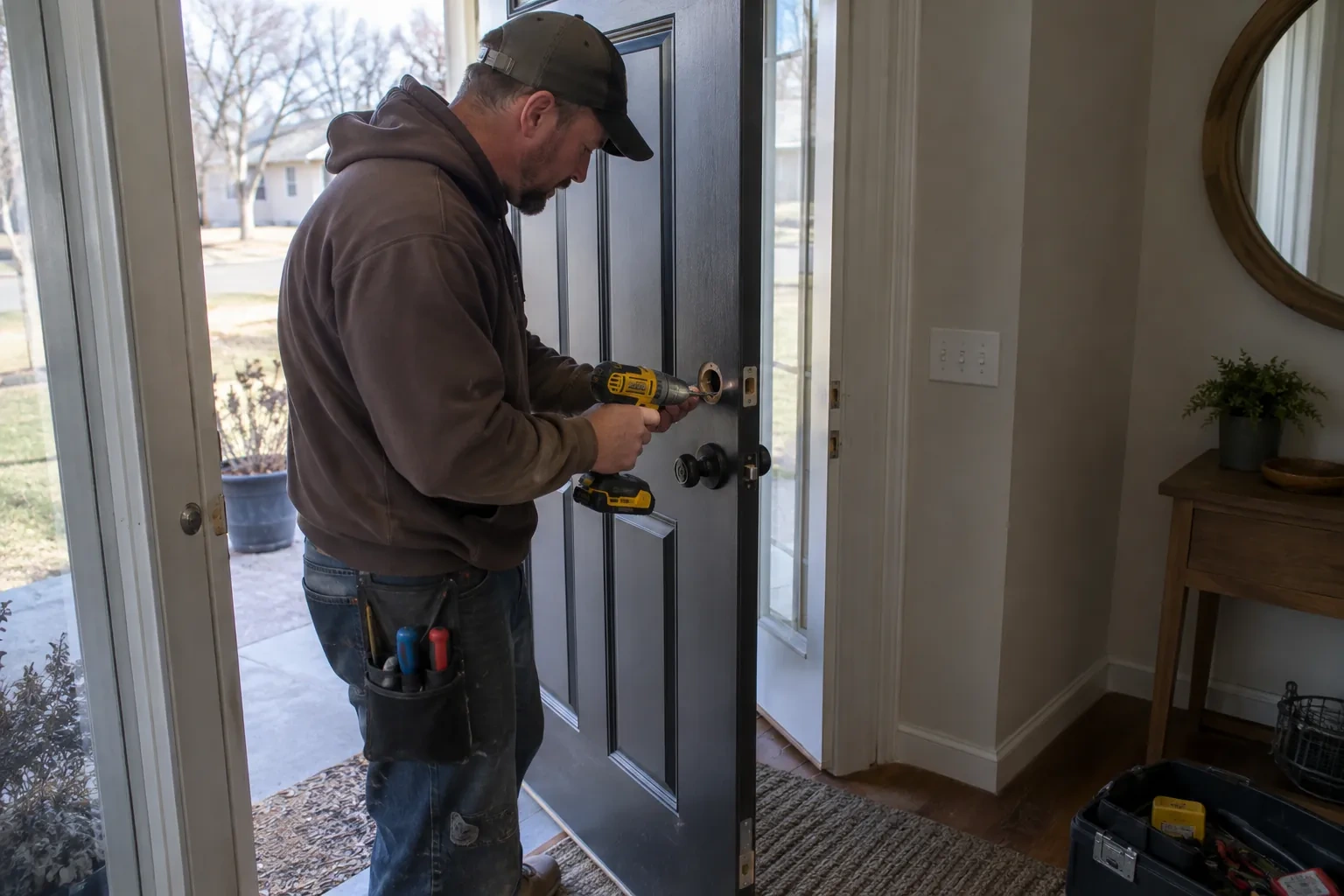
The old mortise lock on the front door of the house turns the key halfway and stops with a dull clunk.
In plain words
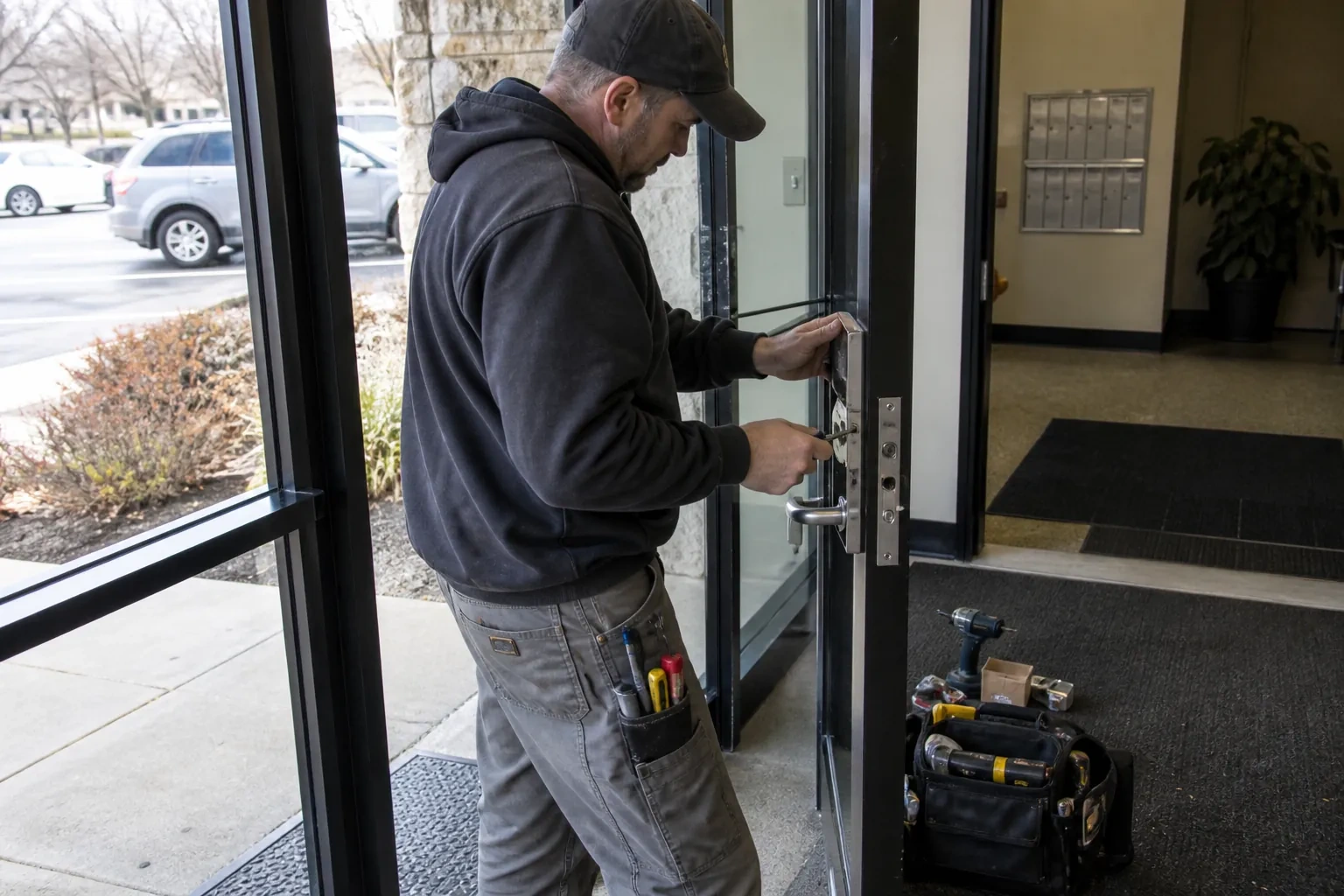
On storefronts, offices and older houses the hardware is often a mortise lock with a lever, and the jam is frequently inside the case, not the cylinder. A lever that swings without retracting the latch can point to a broken spring, a worn hub, or another fault in the drive path; a key that stops halfway can point to a bent spindle, an old case packed with dust, or a problem in the cylinder itself. Seized and jammed lock opening for this hardware means getting people through the door, then opening the case, cleaning the contact points, and fitting the part that gave up.
How the visit goesThe shop's lever handle goes down as usual, but the latch inside the mortise case never pulls back. Staff are waiting on the sidewalk with their coffees, the door is locked, and the handle is simply moving air.
Seized & Jammed Lock Opening
How the visit goes
Whose door, and which door
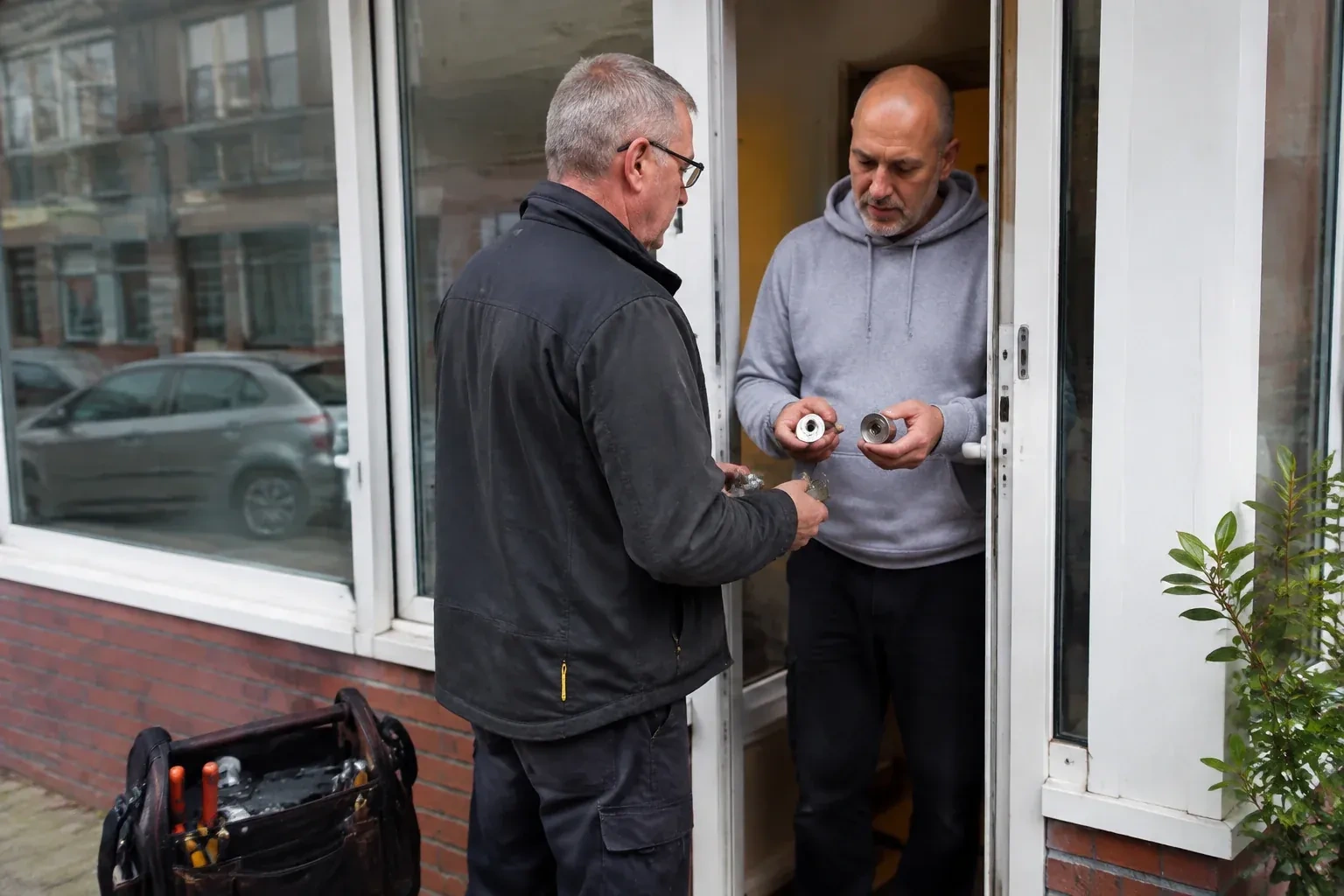
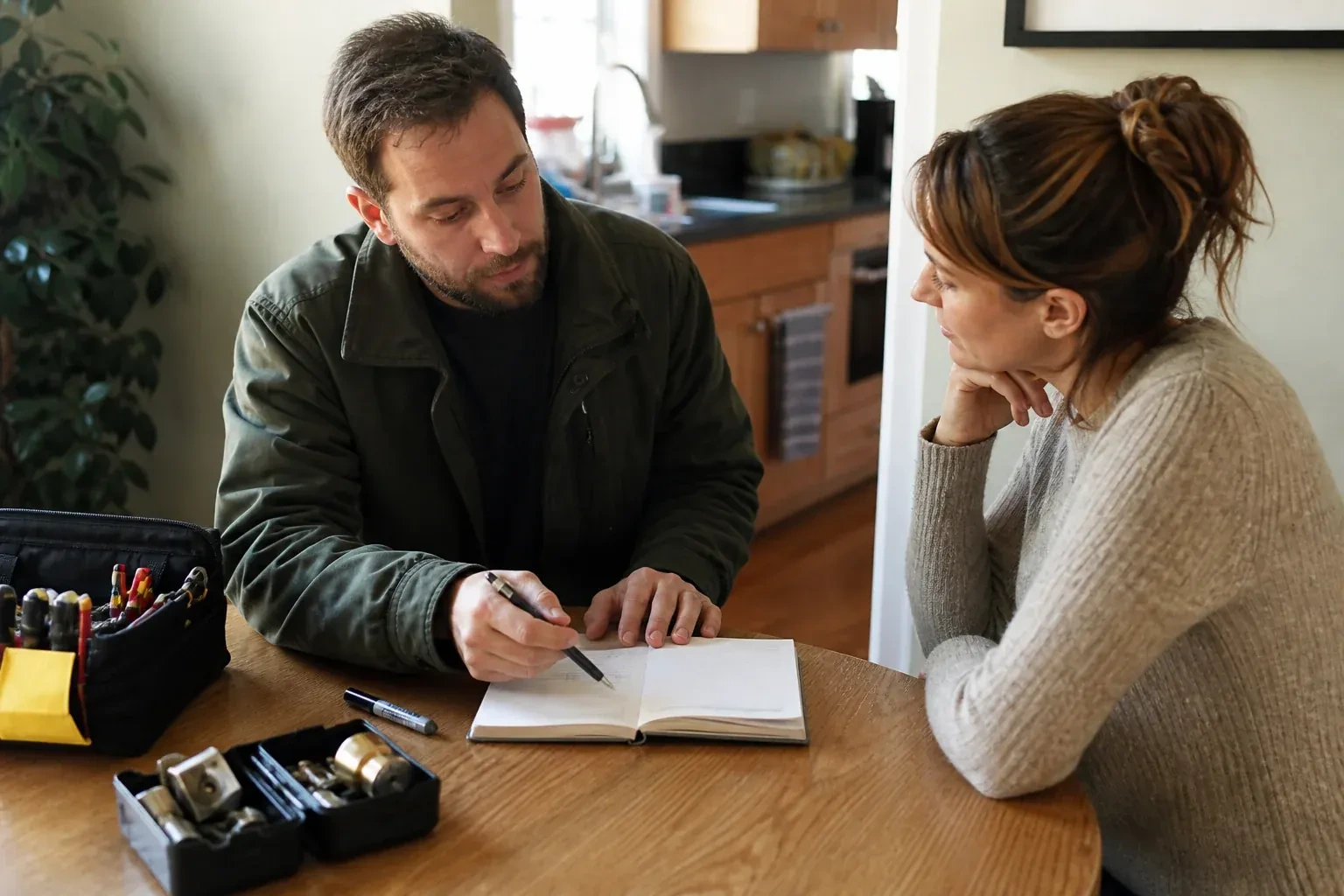
The first check is the person, not the lock. The locksmith confirms that whoever is asking for the opening is entitled to it, usually with photo identification that matches the address, or a lease, deed, property-management record or a manager who can vouch for you. For a business, a key holder or the person named on the lease is enough. If everything that proves it is behind the jammed door, the check is finished once you are inside and before the locksmith leaves. Then a short walk to the other entrances: a second door on the same key gives a comparison lock and sometimes a gentler way in.
Inside a mortise case or lever set
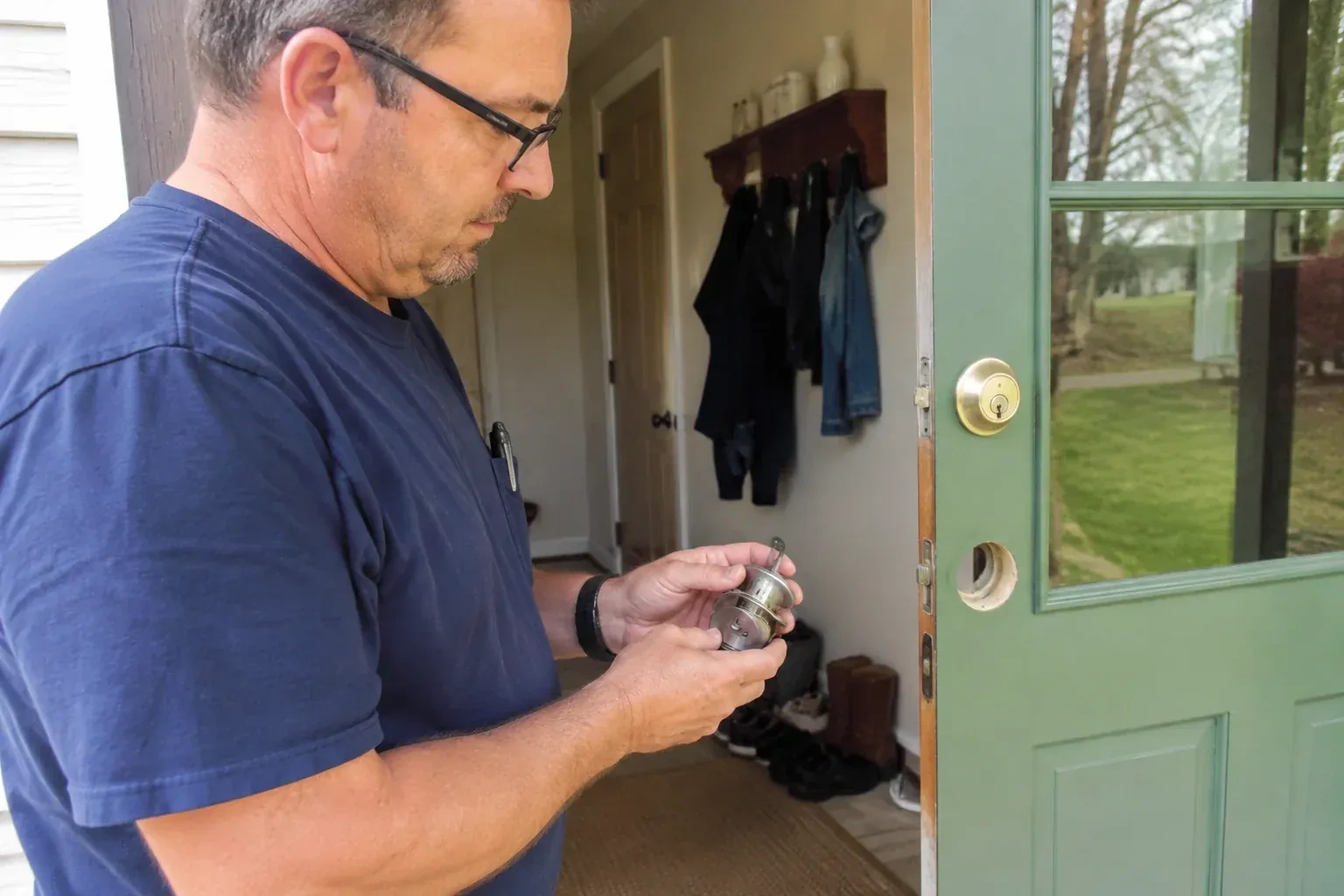
For mortise locks and lever hardware the work moves from the cylinder to the case. The locksmith gets the door open, then removes the trim and draws the case out of the door edge. Inside, a broken lever return spring, a worn hub, a bent spindle or a latch that has lost its spring is replaced with the matching part, and years of dust and hardened grease are cleaned from the contact surfaces before a fresh application of a grease suited to lock mechanisms. The case is reassembled, the spindle and cylinder are refitted, and lever, key and thumb-turn are each tested so the latch and bolt travel fully.
A lock that turns with two fingers
You leave with a lock that operates the way it did when it was new: the key seats fully, the plug turns without a wiggle, the bolt throws and retracts through its whole travel, and the door closes and locks without a shoulder. The locksmith has cycled it from both sides and with every key, and has shown you where the trouble was, whether that was a gritty keyway, a broken tailpiece or a strike plate a few millimetres out. If you had a habit of lifting the door or pulling it toward you to lock it, that habit is now retired.
Seized & Jammed Lock Opening
In the van
Strike plate and hinge shims
Replacement tailpiece or cam
Lock de-icer
Key blanks and code cutter
Electronic contact cleaner
Seized & Jammed Lock Opening
What affects the quote
Cutting fresh keys
If a worn key was part of the trouble, keys cut from the code or a fresh master are counted individually, so say how many the household or staff need.
Service or replace the cylinder
A cylinder that can be stripped, cleaned and rebuilt is quoted as labour with a few small parts; one corroded through is quoted with a replacement cylinder matched to your finish and keyway.
Keying a new cylinder to your existing key
Pinning a replacement cylinder to the key already on your ring, or rekeying other doors to match a new key, is extra work per cylinder and simplest to do in the same visit.
What to have ready
- Do you have a spare or original key you could try?
- Has there been a thaw and freeze, or a stretch of humid weather, this week?
- Do you have identification, a lease or a management contact for the property?
Seized & Jammed Lock Opening: questions
QuestionsThe thumb-turn is stuck from inside and we need that door to get out. What should we do?
Use another exit for now and call. From the inside the fault is usually a bolt pinned by the frame or a bent spindle, both of which the locksmith frees without damage. A main exit door should open from inside without a key or special knowledge, so the repair leaves the door doing exactly that, and if the hardware on it was the wrong type for an exit, a thumb-turn deadbolt is suggested.
Will I need a whole new lock?
Usually not. Most jammed locks are saved by cleaning the cylinder, fitting a small part such as a tailpiece or spring, or adjusting the door so the bolt has room. A new cylinder is fitted when the plug or shell is corroded through or twisted by forcing, matched to your finish and, where possible, pinned to your current key. A complete new lockset is usually a choice you make rather than a requirement, though some internal failures cannot be serviced in place and call for a full replacement.
Does road salt affect door locks?
Yes, especially on side doors near a treated driveway or walkway. Salt spray dries into a crust inside the keyway and around the plug, and each thaw dissolves and re-deposits it deeper. Over a few winters it pits brass and makes the pins drag. The remedy is a flush with contact cleaner, a thorough drying, and a dry lubricant that sheds moisture, followed by rinsing the hardware when the weather allows.