Lockouts · Brampton
Broken Key Extraction
That key had been bending a little for years, and you kept straightening it.
In plain words
Freezing is one of the bigger seasonal causes of broken keys here. Meltwater runs into the keyway during a thaw and freezes overnight, so the plug is locked in ice, and most people respond by turning harder. The blade gives before the ice does. A winter extraction visit therefore begins with thawing: lock de-icer or gentle warmth frees the plug, then the fragment is drawn out and the cylinder is dried and given the lubricant its maker specifies. You leave with the piece out, a new key cut, and a small tube of de-icer so the next frozen morning is a pause rather than a snap.
How the visit goesIn the parking lot your car key snapped in the driver's door. You are holding the plastic head with the buttons on it, the metal blade is inside the lock, and the spare is on a hook at home.
Broken Key Extraction
How the visit goes
Confirming the lock is yours to open
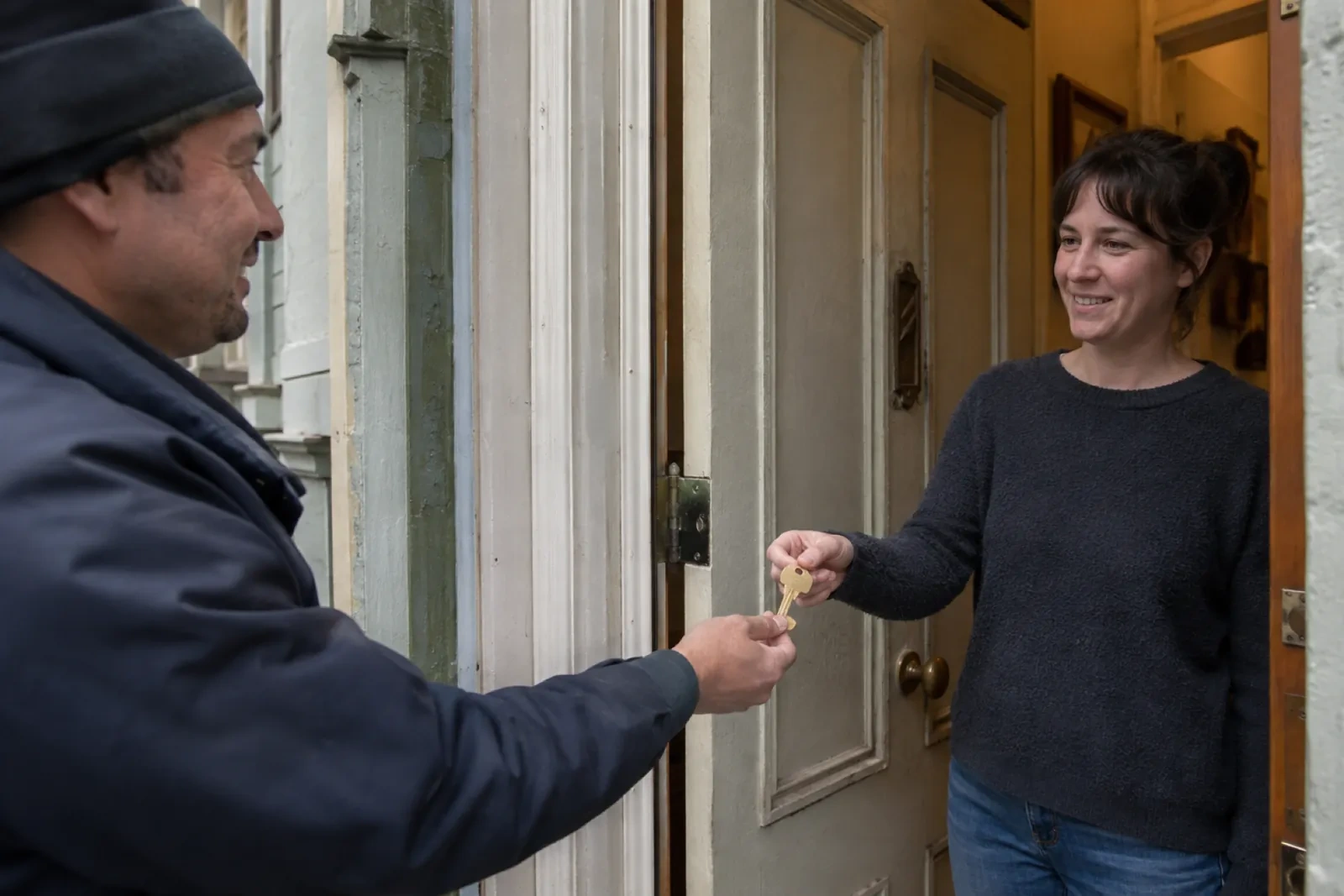
Extraction is an entry service in everything but name, so it starts the way a lockout does: the locksmith establishes that whoever is asking is entitled to the door, padlock or vehicle. For a home that means photo identification plus a document linking you to the address: a lease, a utility statement, or the property manager vouching for you. For a car it is the registration or ownership papers and matching identification. If your wallet is behind the door, say so, and the check is finished once you are inside. It takes a minute, protects every neighbour on the street, and is a sign you have called the right kind of tradesperson.
Cutting the key you leave with
Once the lock is clear, a replacement key is made. The two halves of the broken key are laid together and the cuts are read with a key gauge, or the locksmith cuts from the key code if you have the tag or the lock's records, or from a crisp spare. What is avoided is copying a worn original, because a duplicate inherits every rounded cut and will stick and wear the same way. The new key is cut on a code machine, tried in the lock with the door open, then closed, and from both sides. Extra copies are cut from the new key while the machine is set.
A cylinder that has been looked after
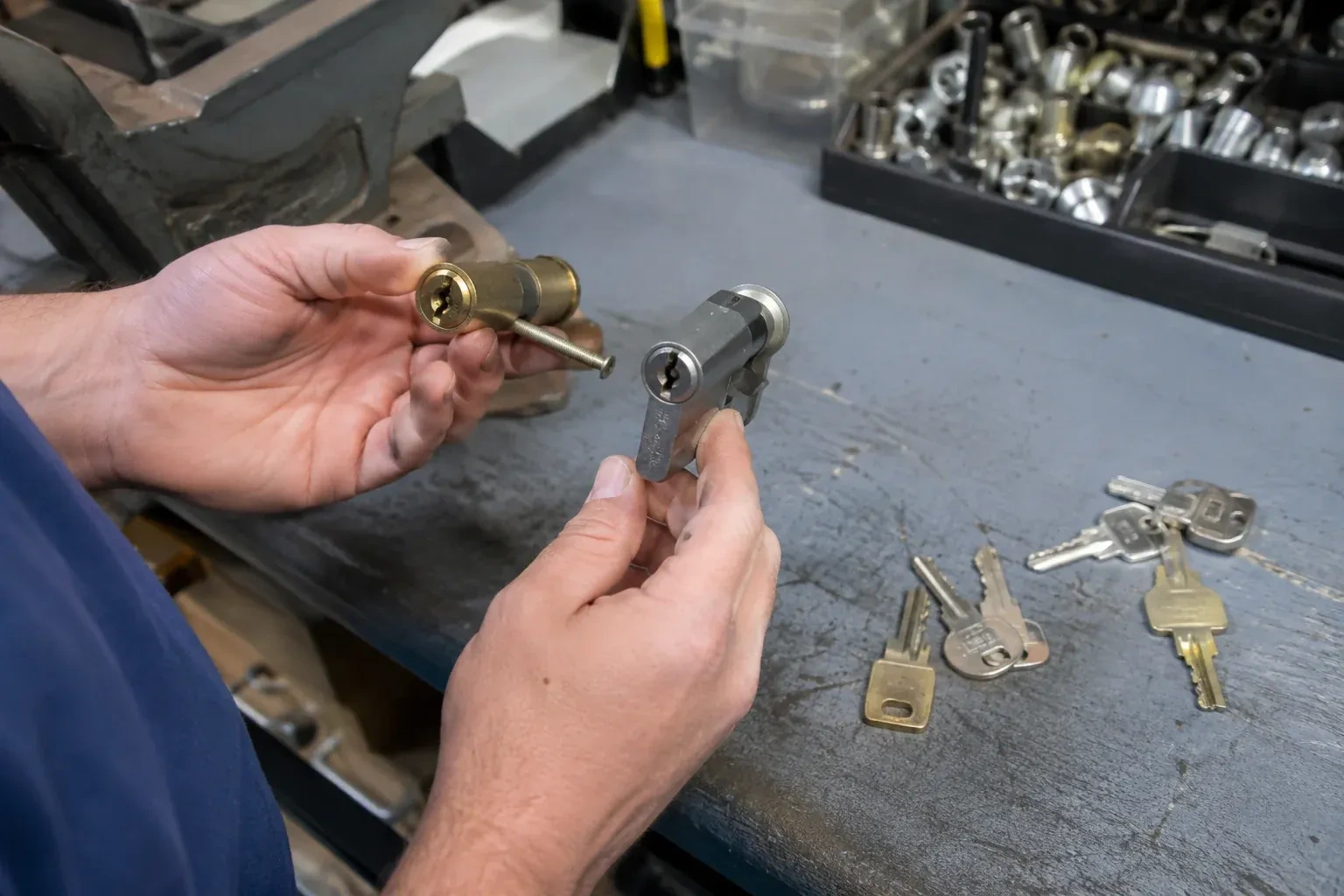
Extraction usually doubles as a service. The keyway has been blown clear of grit and salt, the pins and springs checked for wear, the cylinder cap snugged if it had loosened, and dressed with the lubricant its maker specifies rather than a one-size-fits-all product, since some cylinders take a dry graphite or PTFE spray and others forbid graphite outright. General household oils and sprays commonly collect dust and clog the pin chambers. A puff of the right lubricant twice a year, spring and fall, keeps the cylinder turning freely, and a key that starts to need force is an early message worth acting on before it breaks.
Broken Key Extraction
In the van
Fine-jawed extractor pliers
Manufacturer-approved cylinder lubricant
Lock de-icer
Key gauge and decoder
Compressed air for the keyway
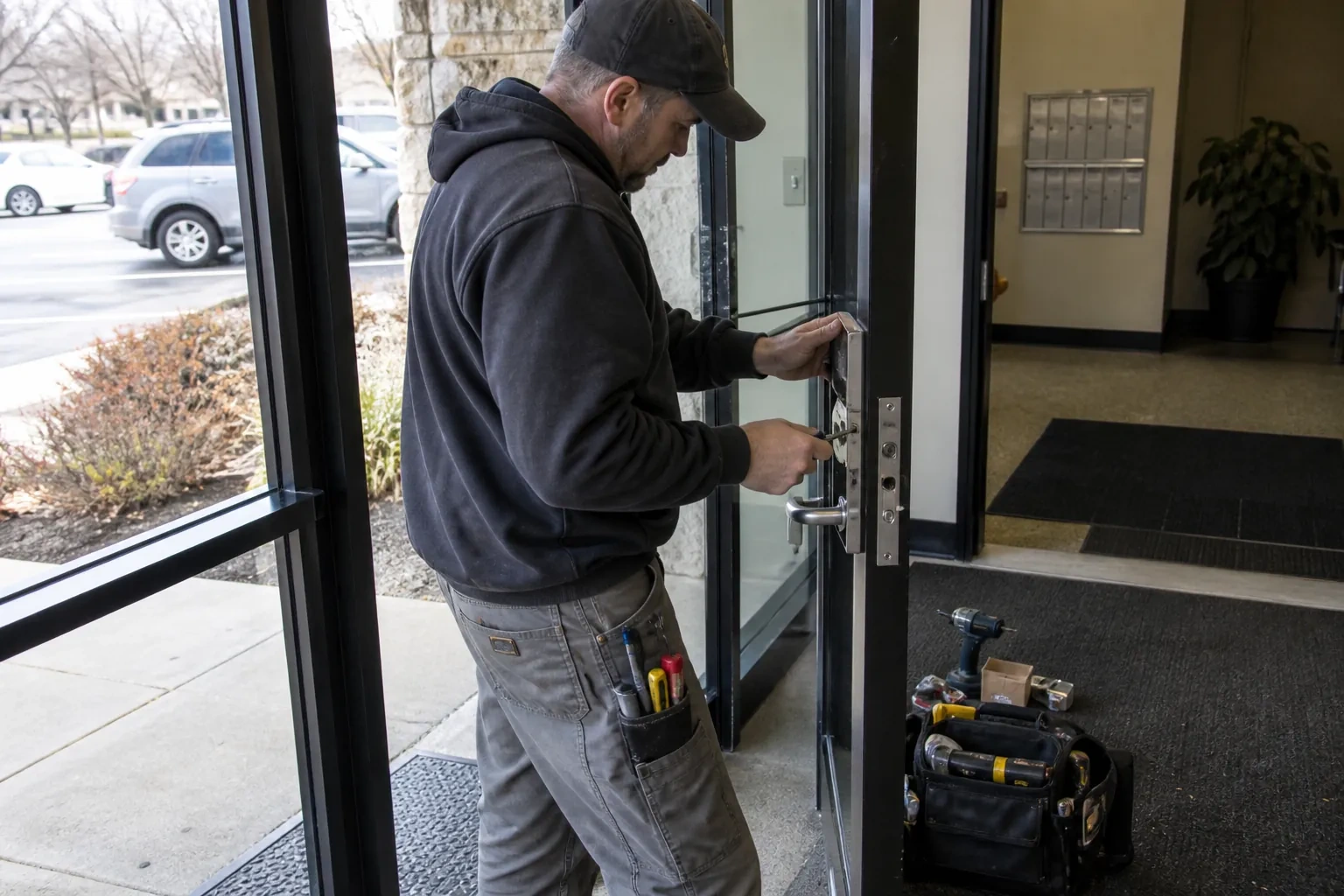
Broken Key Extraction
What affects the quote
Rekeying other doors to match
If the cylinder ends up rekeyed or replaced, matching the other exterior locks to the new key is priced per cylinder, and simplest while the locksmith is already there.
Drilling and a replacement cylinder
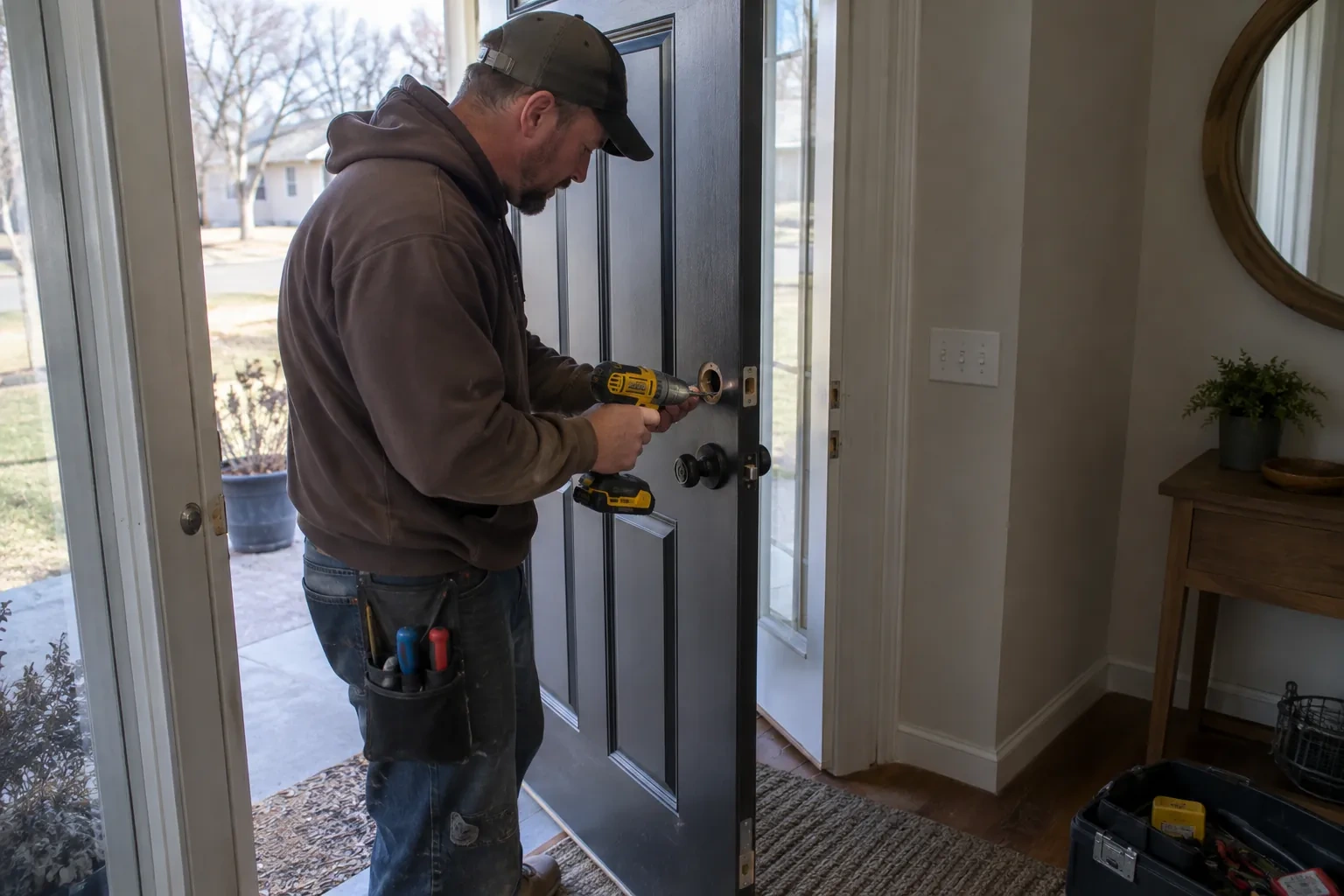
On the rare occasion a cylinder must be sacrificed, the price includes the new cylinder or complete deadbolt plus fitting it, and that is agreed with you before the drill is picked up.
Door or strike adjustment
When the key broke because the bolt was binding in a swollen or sagging door, correcting hinges, strike or weatherstrip is offered and quoted as its own item.
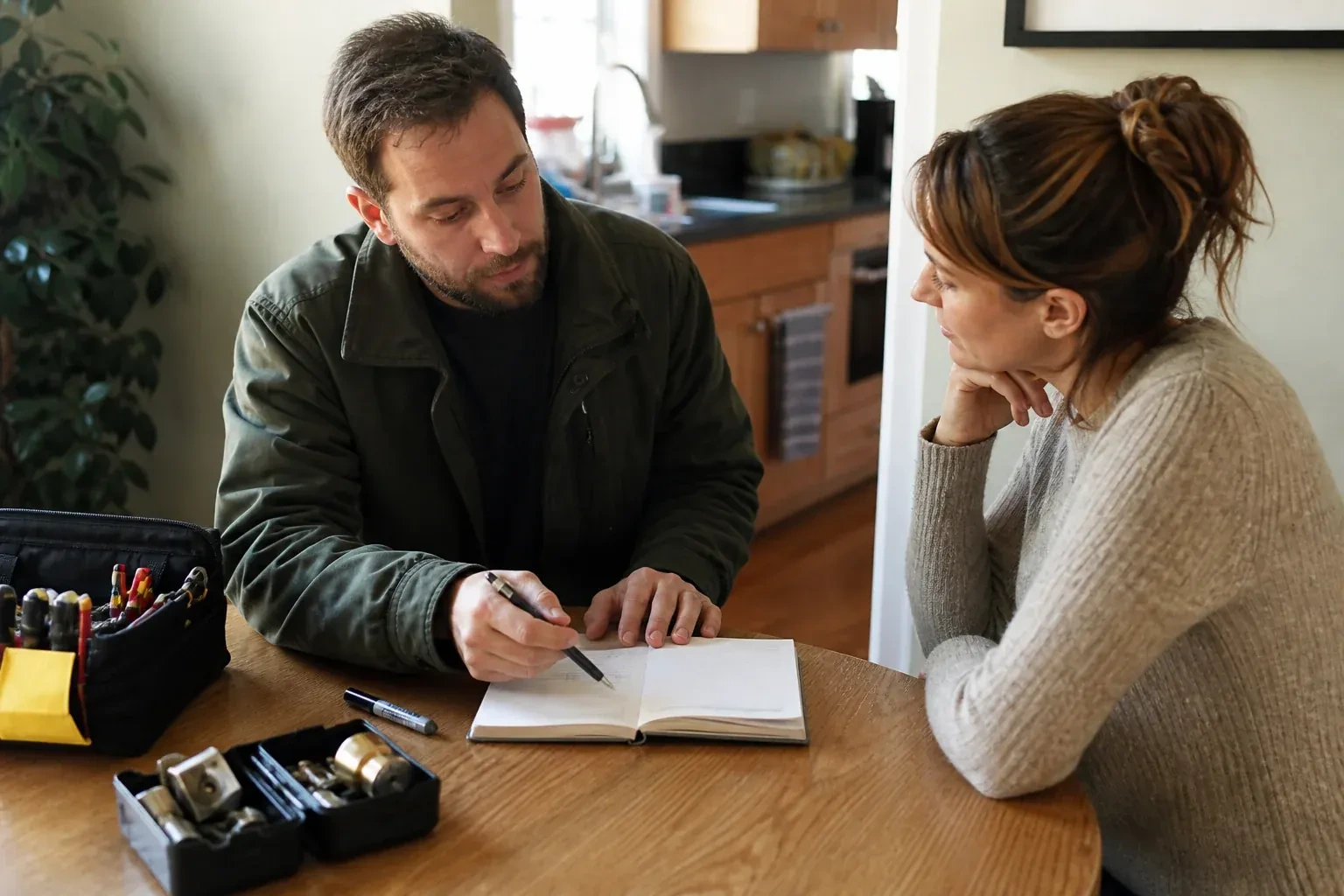
What to have ready
- Is it a car key with a chip or remote buttons in the head?
- Where did the key break: a house door, a padlock, a car door or an ignition?
- Did the key turn part of the way before it snapped?
Broken Key Extraction: questions
QuestionsPart of the key is sticking out. Can I just pull it with pliers?
If a good length shows and the plug is at its normal rest position, a firm straight pull sometimes works. The risk is pushing instead of pulling, or twisting, which drives the piece deeper and can bend a pin. If it does not come on the first gentle try, stop there and leave it for extractor tools, which grip the cuts without loading the cylinder.
How do I stop keys breaking in future?
Look after the lock and the key ages slowly. Keep the cylinder lubricated with the product its maker specifies and free of grit, and have a binding door adjusted, since resistance raises the risk, though a worn, bent or fatigued key can still fail under normal use. Retire copies that have gone thin or kinked instead of straightening them. Cut spares from code, and rotate them so one key is not doing all the work. Take the ring weight off a car key. Small habits, but they add years.
Can the piece be pushed out from the other side?
On a standard door cylinder the keyway is closed at the back by the plug and the tailpiece, so there is no straight path through. What a locksmith can do is remove the cylinder, take off the cap, and push the plug out of its housing with a follower, which frees the fragment from behind. That is done on the bench, not by forcing anything from the inside of the door.
Related services
- Business Lockout ServiceA cook stepped into the alley with the recycling and the rear door swung shut behind him.
- Break-In Damage Lock RepairThere is a hole where the cylinder used to be.
- Seized & Jammed Lock OpeningThe old mortise lock on the front door of the house turns the key halfway and stops with a dull clunk.