Commercial · Brampton
Access Control Installation
You just leased the empty unit next door and want the new tenant to open their own suite without a key to yours, to the loading dock, or to the electrical room down the hall.
In plain words
Credentials take several forms, and most installations end up mixing them: a proximity card or fob held near a reader, a keypad code typed at the door, or a mobile credential read from a phone. Cards and fobs are simple to hand out and just as simple to switch off if lost; a code needs no hardware to issue but has to be changed once shared too widely; a mobile credential ties entry to a device the person already carries. The mix is chosen door by door, based on who uses each one and how often.
How the visit goesHead office wants a record of who opens the branch and when, tied to an actual name rather than a shared code scrawled on a sticky note taped under the till.
Access Control Installation
How the visit goes

Working out schedules and who needs which door
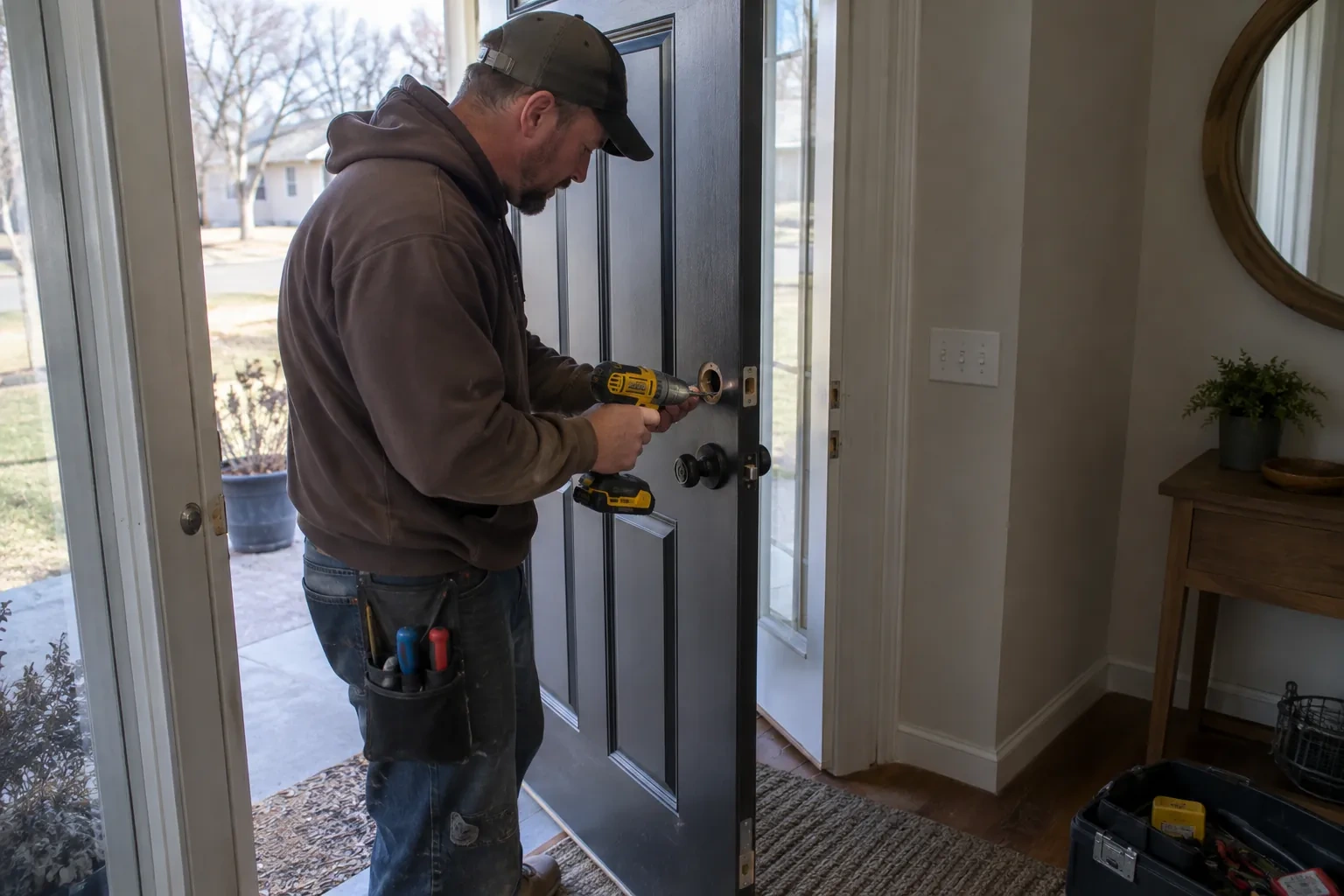
Not every credential should open every door, and not every door should unlock at the same hour, so the locksmith works through a simple list with the business: which roles need which openings, whether a loading dock or a storage room should follow its own hours, and whether a holiday schedule or a temporary contractor credential comes up regularly. This list becomes the access levels and schedules programmed into the controller later, and getting it right at this stage means fewer changes to make once people are already using their cards or codes.
Commissioning day: training the people who will run it
The last step is not technical: it is sitting down with whoever will administer the system and walking through adding a person, revoking a lost card, pulling an entry log for a specific door and date, and changing a schedule for an upcoming holiday or event. The locksmith answers questions on the spot rather than leaving a manual to be read later, confirms the administrator account works with full access, and leaves contact information for anything that comes up once the system has settled into daily use.
What to do when a card or fob goes missing
A lost card or fob is handled by switching it off in the software rather than replacing a lock. The credential stops working as soon as it is disabled, whoever lost it is issued a new one, and every other door in the building keeps running exactly as it did before. There is no locksmith call needed for this, no rekeying, and no gap where a door sits unsecured while a replacement is arranged. Reporting a lost credential without delay, rather than holding onto the news, is the one habit that keeps this advantage working the way it was intended.
Access Control Installation
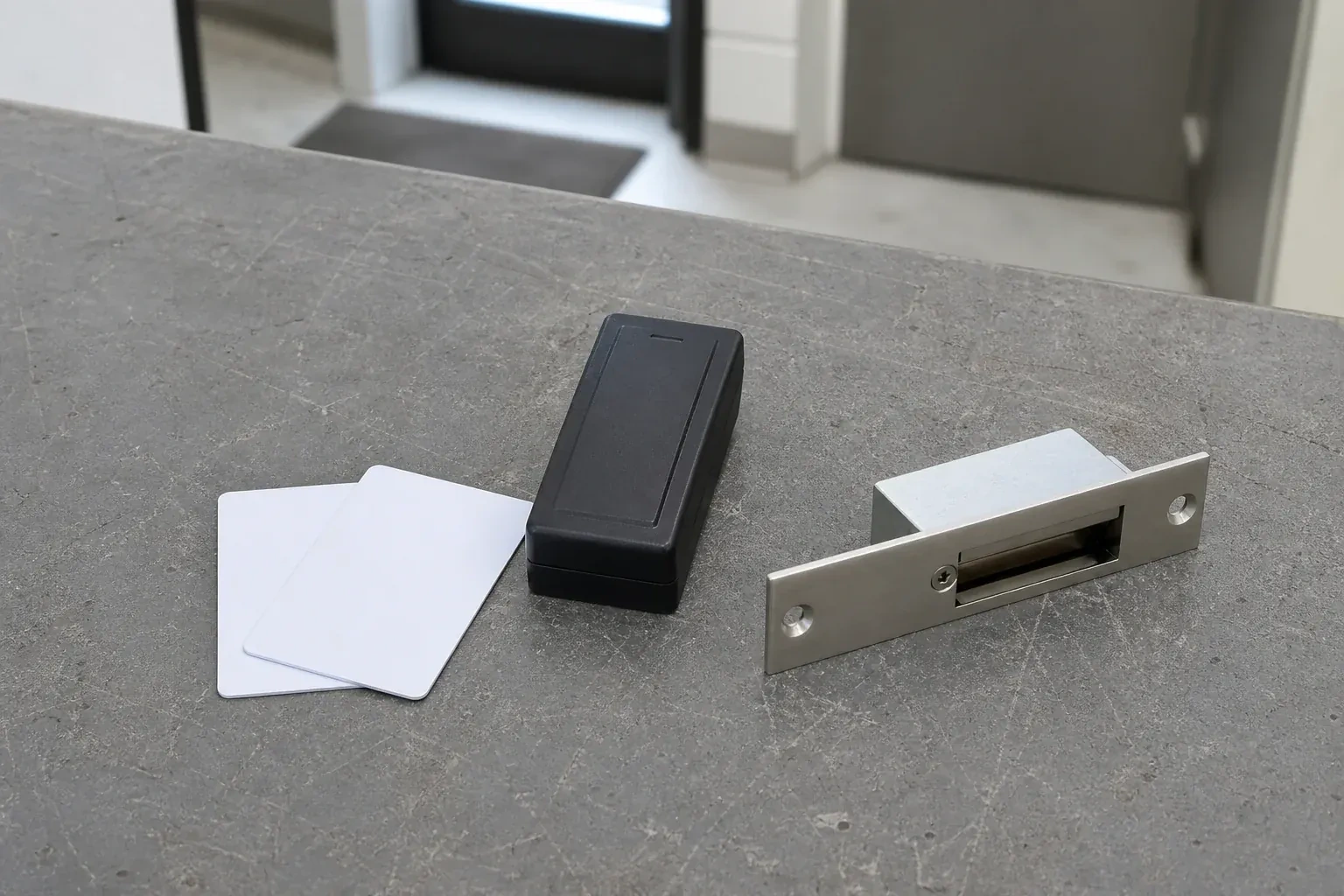
In the van
Mechanical override cylinders
Request-to-exit devices
Electric strikes
Credential cards and fobs
Magnetic locks
Access Control Installation
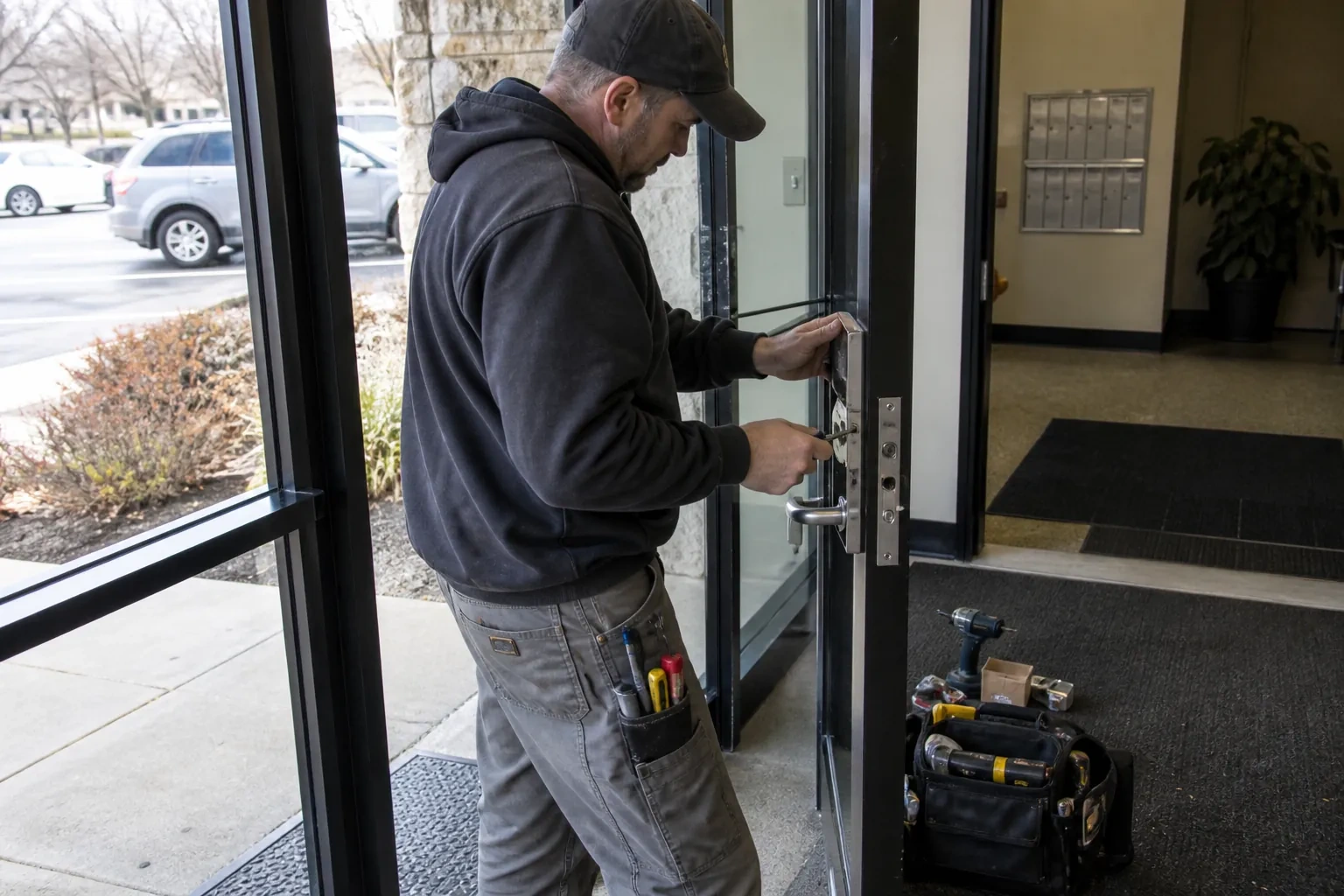
What affects the quote
Condition of the existing hardware
A working mechanical lock that can stay in place as the override is a simpler starting point than an old, failing keypad system that has to be removed before new hardware goes on in its place.
Standalone or networked
A self-contained reader at one door is simpler than a networked controller managing several openings with shared schedules and a combined log, and the choice between them changes both the hardware list and the wiring involved.
How many credentials and what type
Cards, fobs, keypad codes and mobile credentials each involve different issuing steps, and a system enrolling a handful of managers is a shorter task than one enrolling an entire staff across several shifts.
What to have ready
- Is there an existing keypad or card system on any door now?
- Who in the business will manage the system once it is installed?
- Which doors do you want to control with the new system?
Access Control Installation: questions
QuestionsWho keeps administrative control of the software after installation?
The business does. Handover includes a full administrator account with the ability to add and revoke credentials, change schedules, and pull an entry log, confirmed working before the locksmith leaves. Whether the installer keeps any support or portal access beyond that is a setting agreed with the business, not a fixed feature of every system, so it is worth confirming as part of that handover.
How is a lost fob or card handled?
It is switched off in the software the moment it is reported, which stops that specific card or fob from working at any door it used to open. A new one is issued and enrolled in its place. No lock has to be changed and no other credential in the building is affected, which is the main advantage a lost fob has over a lost mechanical key.
Is a keypad code as secure as a card or fob?
A keypad code needs no card to lose, but a code shared among several people is effectively no longer individual, and a forgotten code left active is a common weak point. A card or fob tied to one named person avoids that particular issue, since it is switched off individually rather than reset for everyone at once. Many businesses use a code for general areas and a card wherever entry needs to be traceable to one person.
Related services
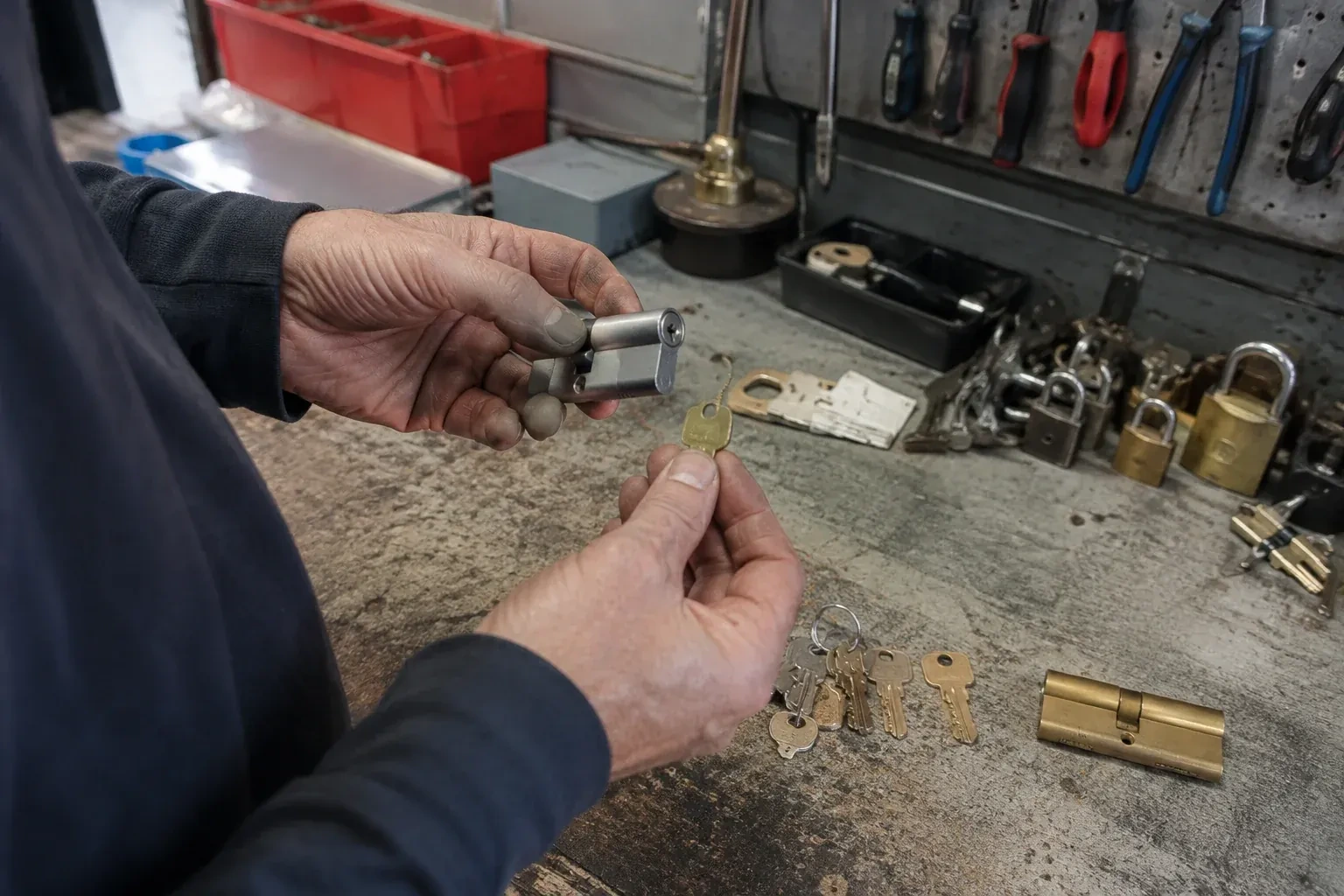
- Master Key System DesignThe new wing was built with its own brand of cylinder, so the two-year-old keys from the original building do not open a single door in the addition.
- Panic & Exit HardwareThe new access-control reader at the staff entrance works fine going in, but nobody has sorted out the door's exit side, and right now a card reader and a pushbar exist as two separate ideas.
- Commercial-Grade Lock ReplacementAt closing time the hookbolt on the storefront door catches the keeper only on the second or third try, and one employee has started giving the door a shoulder to force it home.