Car keys · Brampton
Transponder Key Programming
It is a cold morning and the fob has to be pressed twice, sometimes three times, before the doors respond, and one week later it stops answering entirely.
In plain words
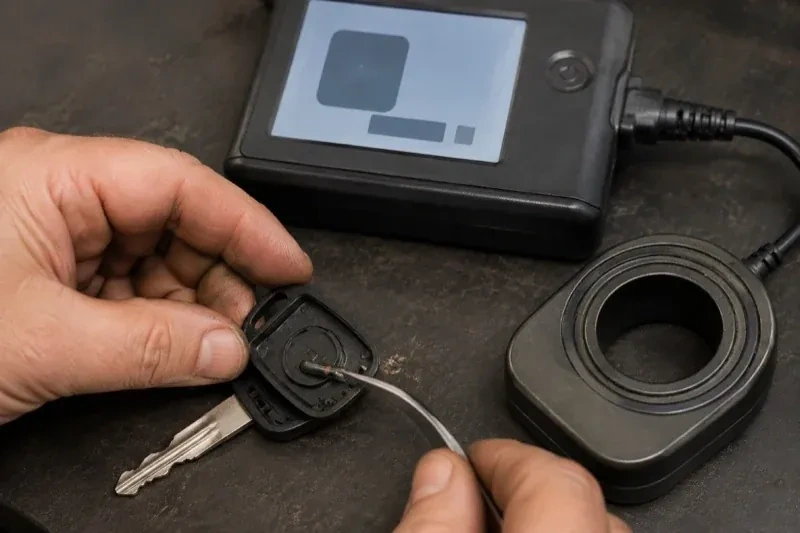
Some vehicles let a locksmith reach the key list directly through the onboard diagnostic port with the right equipment, which keeps a spare or replacement fairly direct. Others, especially newer models, gate that list behind a security session tied to the manufacturer's own network, adding a step before any new key can be written. Knowing in advance which category a vehicle falls into sets realistic expectations for how the visit will unfold, rather than assuming every car behaves the same way under the dash.
How the visit goesThe blade snapped off flush with the door lock last winter, and the shop that cut a replacement only matched the metal shape. The fob still locks and unlocks the doors from across the driveway, but the engine cranks over and over without ever catching.
Transponder Key Programming
How the visit goes

How the vehicle's key list is reached
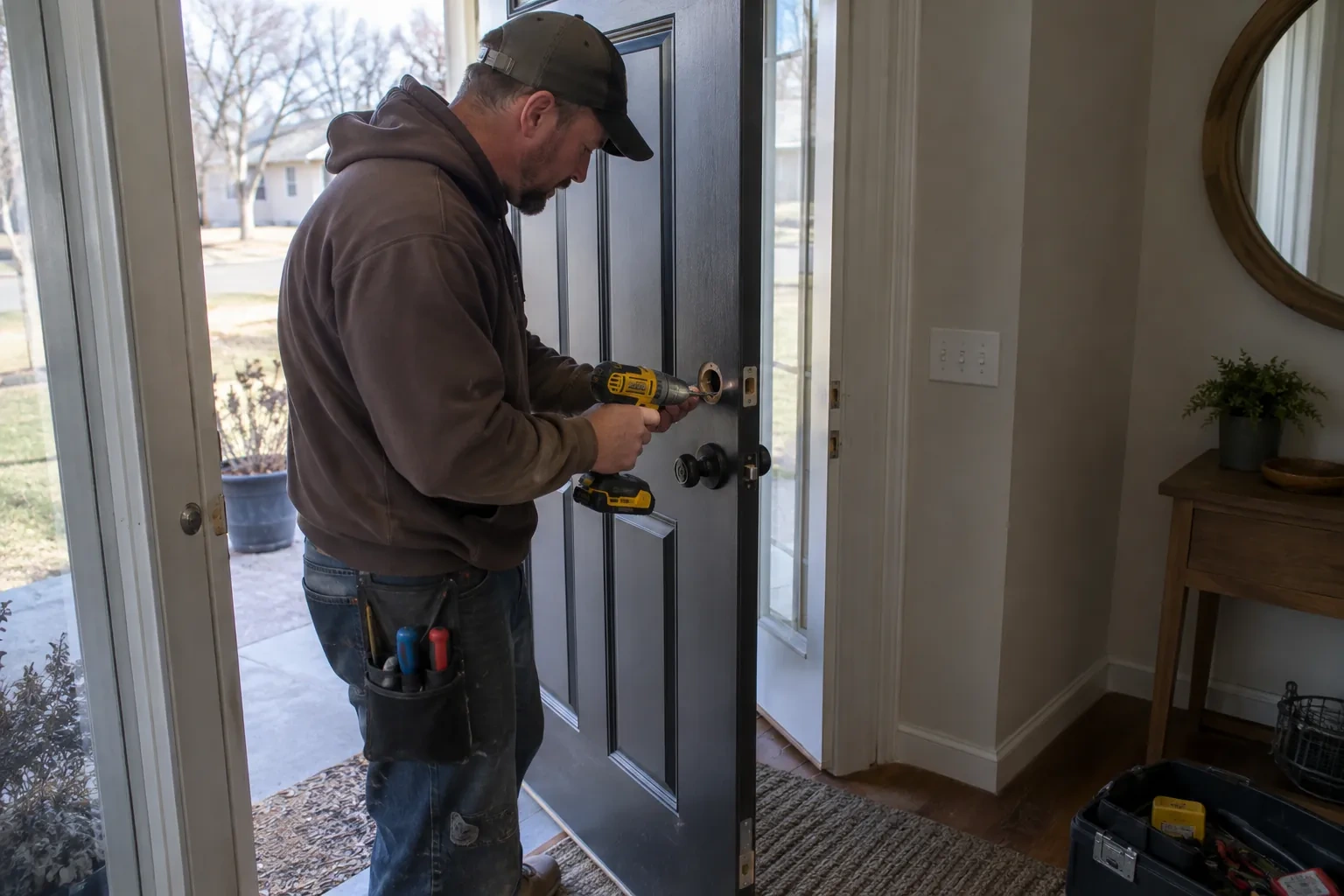
Some vehicles let a locksmith see and edit the key list directly once a diagnostic tool is connected to the onboard port. Others hide that list behind a manufacturer security session that has to be established first, particularly on newer models with more layers between the port and the immobilizer itself. Knowing which situation applies before starting sets the right expectation for how the visit will unfold, and for all-keys-lost work it decides whether the first step is reached directly or has to be built from nothing.
Bringing the fob back to life
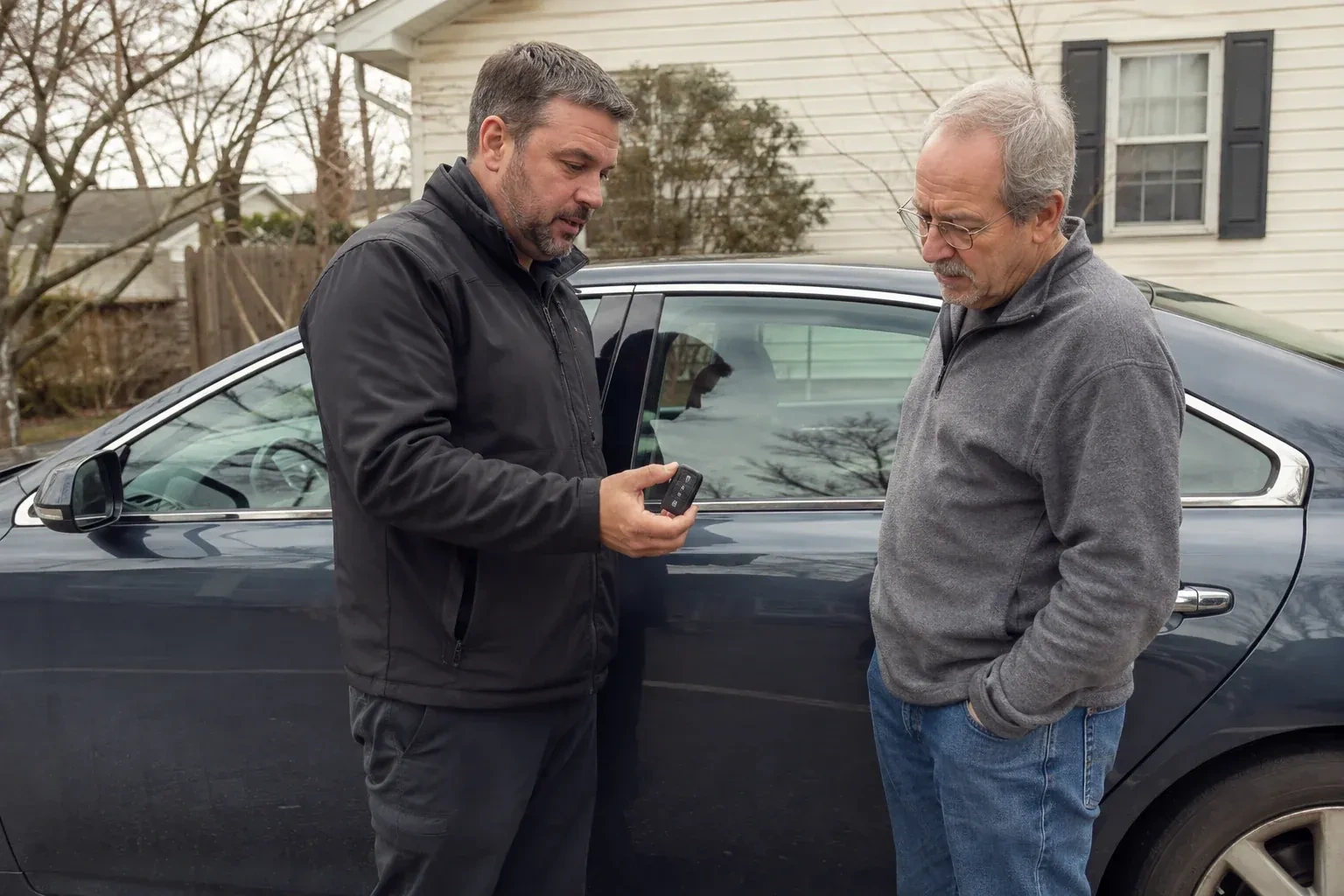
When the vehicle uses a remote-head or proximity fob, the visit includes more than the chip: a fresh battery goes into the fob itself, the remote-entry and any push-button start functions are paired, and the small metal emergency insert is checked and demonstrated if the fob carries one. None of this is separate from the programming; a fob that starts the car but cannot lock the doors, or unlocks the car but leaves the driver stranded when the battery dies, has not finished the job.
Room for the next driver
Most vehicles can hold more than one or two keys in memory, so adding a second household member later is usually a smaller job than the first visit was, provided at least one working key remains to authorize the addition. Knowing that in advance changes how a household treats an existing key: less like the only copy in the world, more like the first of what could reasonably become several, each one traceable to the same visit that started the list.
Transponder Key Programming
In the van
Chipped key blank
Replacement remote-head fob
Fob battery
OBD-II key programmer
VIN reference tool
Transponder Key Programming
What affects the quote
Type of key: blade, remote-head or proximity
A basic transponder blade, a remote-head key with buttons, and a push-button proximity key each involve a different amount of pairing beyond the immobilizer chip itself, which affects both the parts involved and the time the visit takes.
Whether ownership documents are ready at the visit
Having a vehicle permit or registration and photo identification ready when the locksmith arrives keeps the visit moving directly into the vehicle work, rather than pausing partway through to confirm authorization.
Whether any working key remains
Adding a spare or a driver's key with an existing key on hand is a more contained job than an all-keys-lost situation, which needs its own extended process to re-establish trust with the vehicle before anything new can be written.
What to have ready
- Has an aftermarket alarm or remote starter been installed?
- Was a spare ever cut without being programmed?
- Where is the vehicle parked right now?
Transponder Key Programming: questions
QuestionsHow do I know if this is a key problem rather than something else?
The clearest sign is the engine cranking normally, meaning the starter motor turns it over, but never catching, often alongside a flashing security light. A fuel or mechanical fault usually behaves differently, such as cranking slowly or making unusual noise. Describing exactly what happens when the key is turned helps the locksmith tell the two apart before arriving.
My key turns and the engine cranks, but it won't start. Is that this?
That pattern, the starter turning the engine over without it catching, often points to the key or immobilizer rather than a fuel or ignition-timing fault. A flashing security light on the dashboard while this happens adds to that picture. A diagnosis, checking whether the vehicle actually recognizes the key's chip, is what confirms which one it is before any programming begins.
Can a push-button, proximity-style key be programmed the same way?
Yes, though there is usually more to pair afterward: the proximity functions that let the vehicle detect the key nearby, alongside the same immobilizer identity a traditional transponder key would carry. The visit still ends with the same test, confirming the engine starts and the vehicle recognizes the key at a normal walking distance.
Related services
- Car Key ReplacementThe fob went through the washing machine in a jacket pocket.
- Spare Car Key DuplicationThe paperwork for the used car changed hands last week, and the previous owner mentioned, almost as an afterthought, that a second key never turned up.
- Key Fob ProgrammingA fob went missing weeks ago somewhere between a coat pocket and a parking lot, and a spare has covered the gap since.