Lockouts · Brampton
Break-In Damage Lock Repair
There is a hole where the cylinder used to be.
In plain words
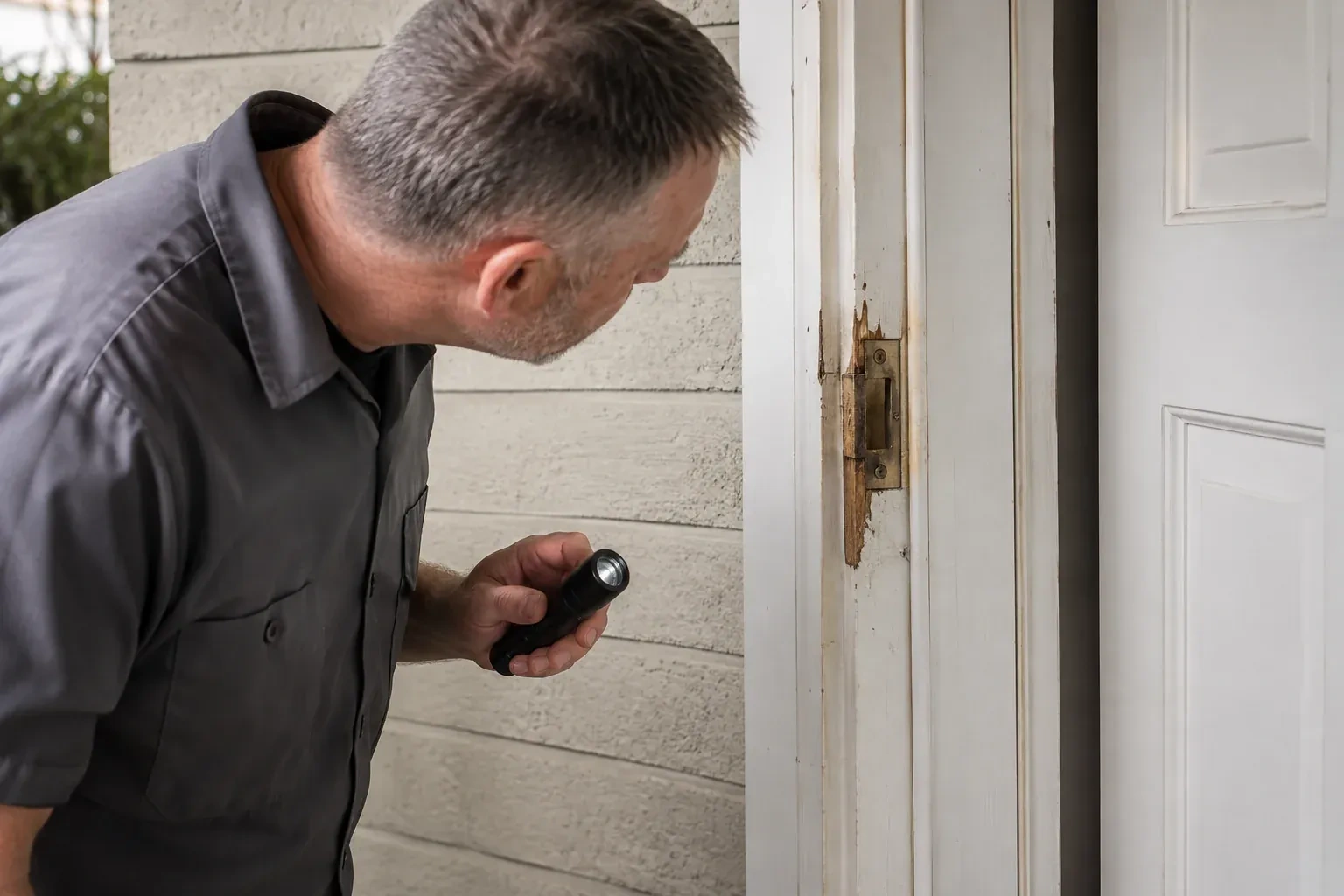
Most forced doors fail at the frame, not the lock. A standard strike plate is held by two short screws in a softwood jamb, and a kick transfers the whole force of a body to those screws. The bolt usually survives; the wood around it does not. Swapping the deadbolt for a heavier one leaves the weak point untouched, so a proper break-in repair rebuilds the strike side with a boxed strike, a pocket cut to full depth and three-inch screws that pass through the jamb and the shim space into the stud behind. The lock is replaced too, but the frame is where security returns.
How the visit goesThe shop's aluminum door has a bent meeting stile and the hookbolt is jammed half out. The alarm did its job and the display is untouched, but the entrance will not close properly and opening time is hours away.
Break-In Damage Lock Repair
How the visit goes
Lock, frame or door: which one failed
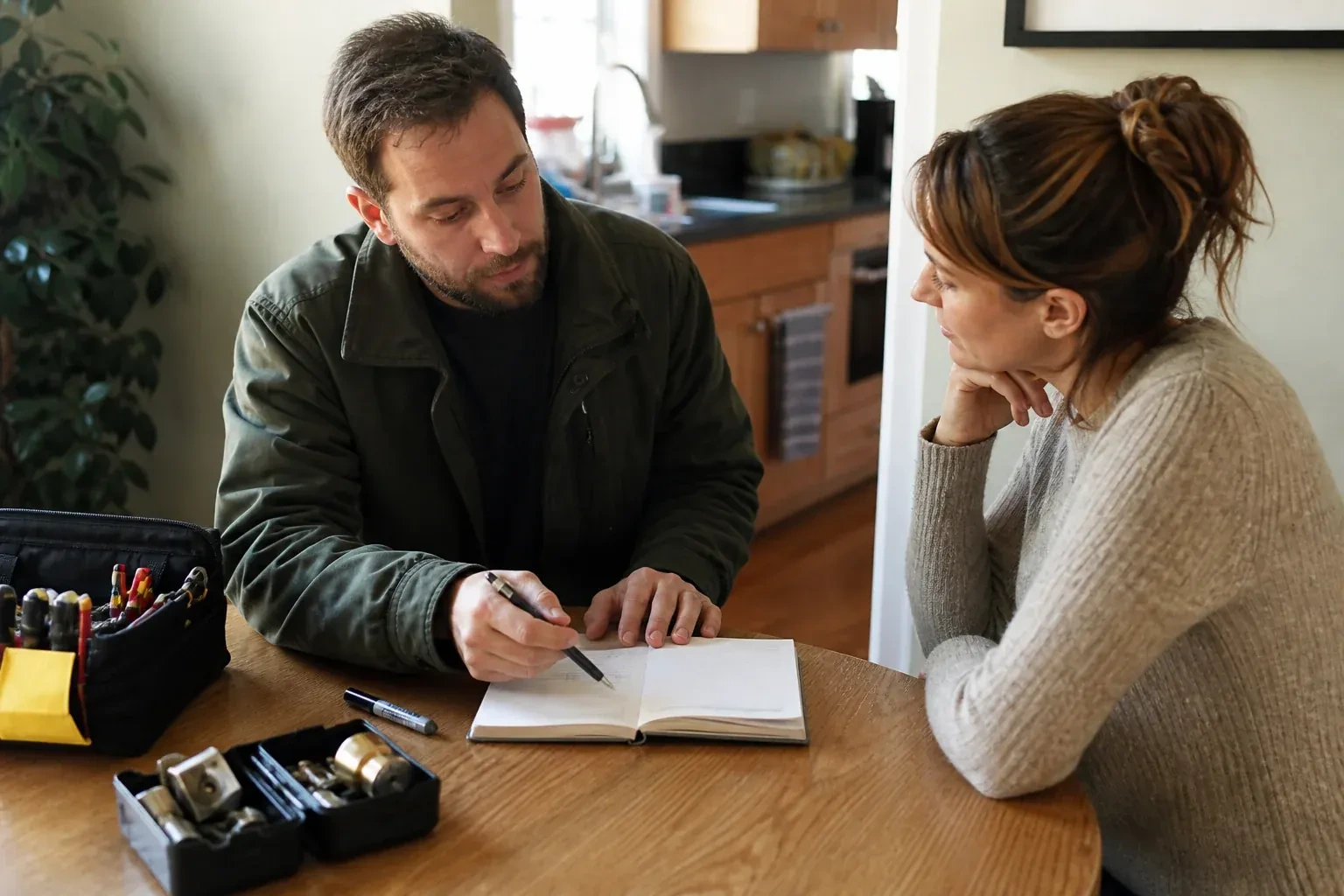
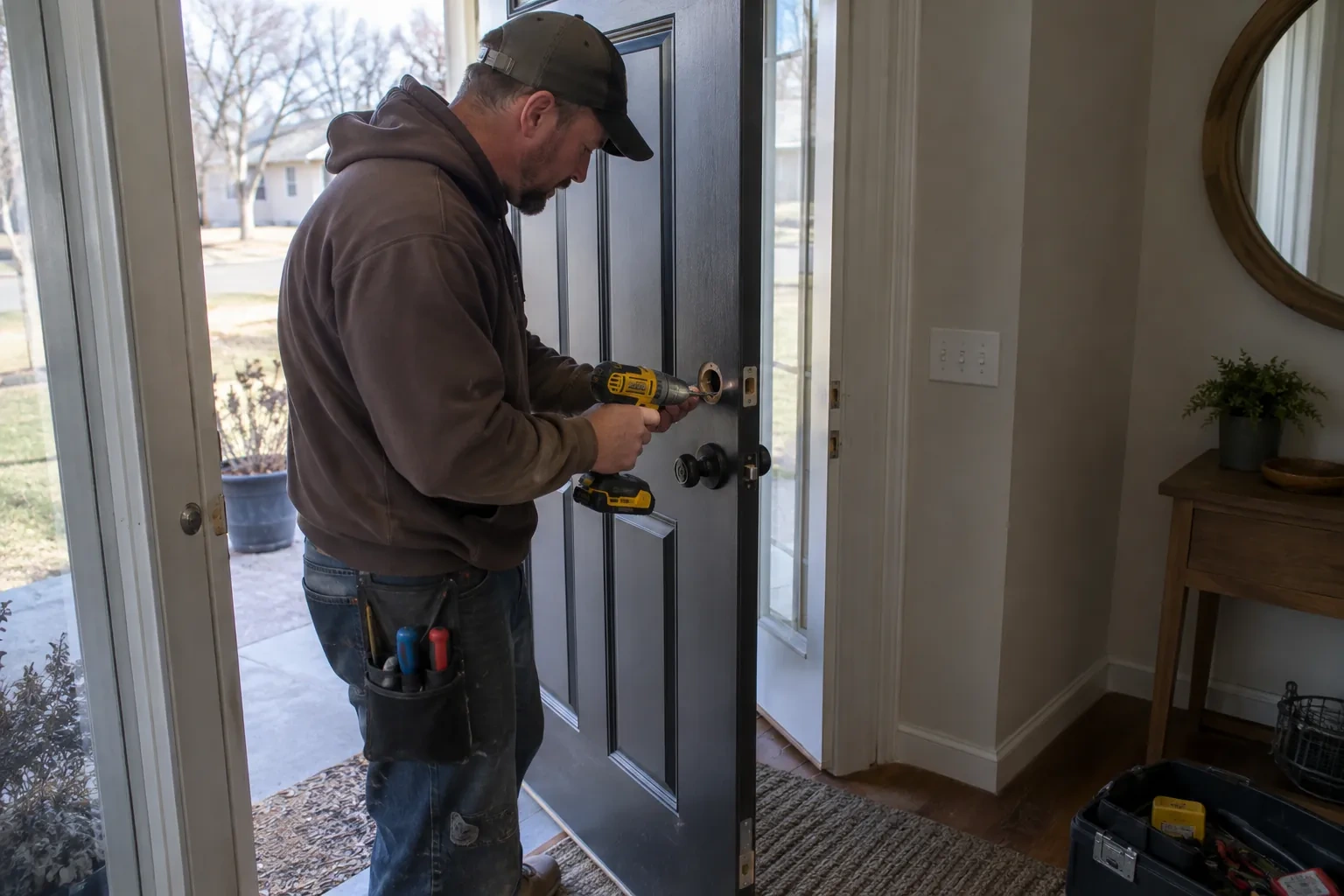
Three components can fail in a forced entry and they are repaired differently, so the locksmith sorts them out before quoting. Lock failure is a broken cylinder, bolt or latch and is answered with hardware. Frame failure is a torn strike or split jamb and is answered with a boxed strike, repair plates, long screws and sometimes new wood. Door failure is a crushed edge, a split around the bore or a bent hinge leaf and is answered with edge reinforcement or, when the slab itself is broken, a door installer. Naming which of the three happened, and often all three, shows you what the locksmith completes tonight and what is handed to another trade.
Storefront and commercial doors
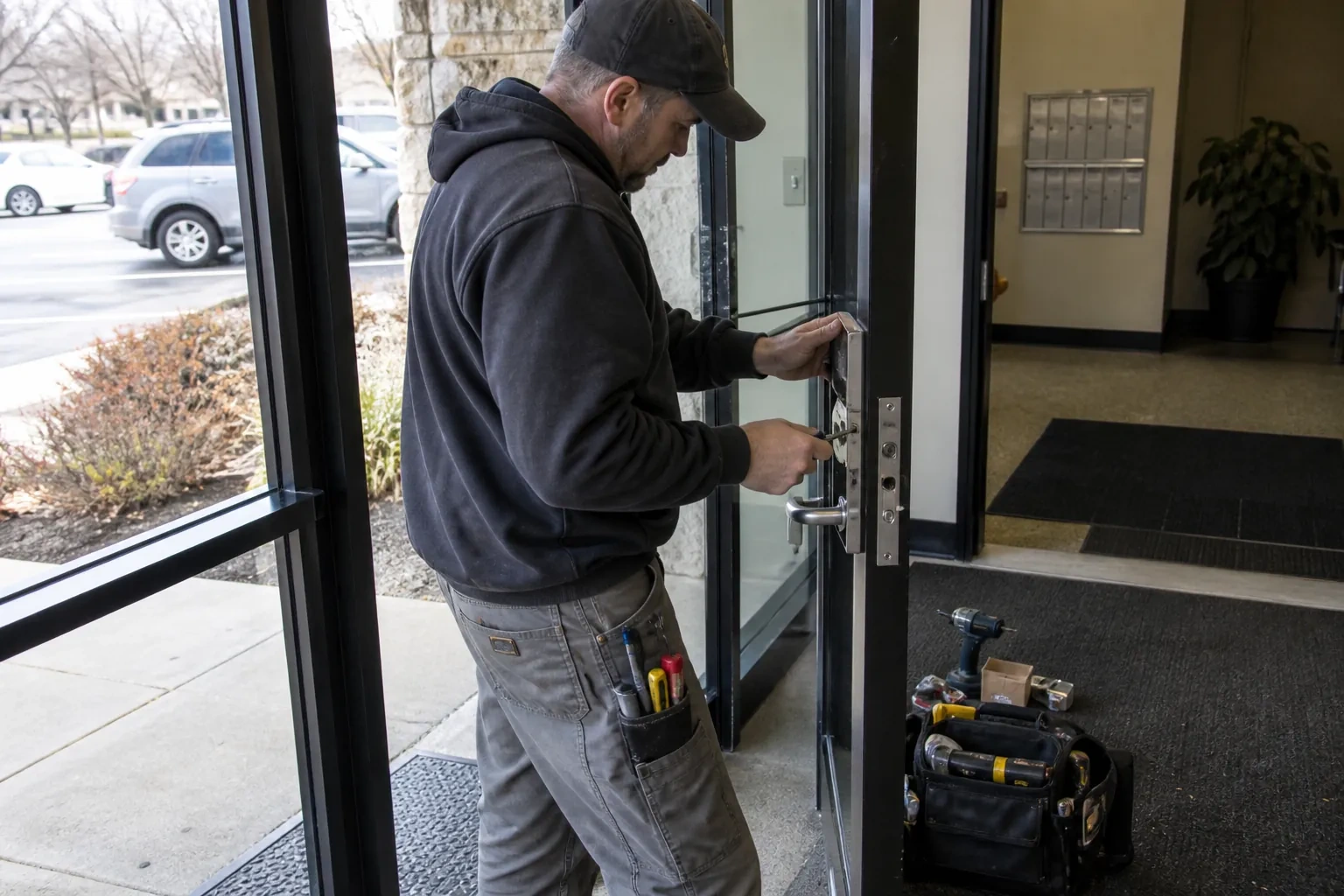
Aluminum storefront doors fail differently: the narrow stile bends under a pry bar, the hookbolt or deadlatch is forced, or the glass is broken. The locksmith straightens or replaces the stile section where possible, fits a new narrow-stile deadbolt or hookbolt with a matching strike, and adds a latch guard plate or an anti-pry astragal along the meeting edge so a bar has nothing to grip. Interchangeable cores are rekeyed and access codes reviewed with the owner. Where the door is part of an exit route, the inside hardware is kept as a single-motion release so the repair strengthens the entrance without changing how people leave.
For tenants and landlords: who holds what
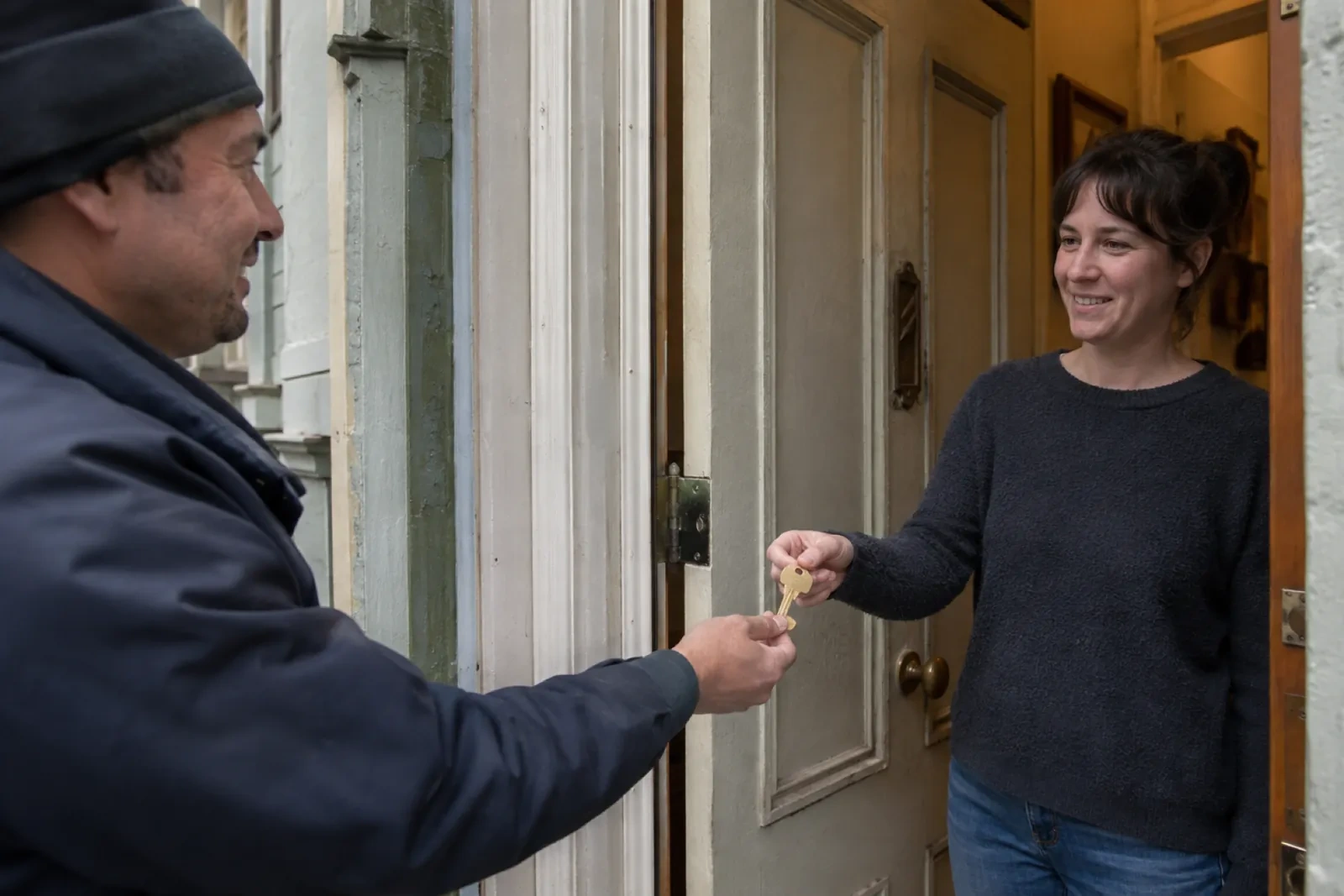
In a rental the repair closes with keys changing hands properly. Provincial tenancy rules place repairs on the landlord and expect a landlord who changes a lock to give the tenant a key, while a tenant changes locks only with the landlord's agreement. So the locksmith notes who authorized the work, how many keys were cut and to whom they were handed, and leaves a copy for both sides. In a condo or apartment building, the superintendent or property manager receives the same note so master key or fob records stay accurate. Everyone ends the day knowing which key opens the repaired door.
Break-In Damage Lock Repair
In the van
Security strike box
Wrap-around door edge reinforcer
Two-part wood epoxy and shims
Plywood and cleats for boarding
Grade 1 deadbolt with one-inch throw
Break-In Damage Lock Repair
What affects the quote
Work referred to another trade
A shattered frame, a broken door slab or smashed glass is listed as needing a carpenter, door installer or glazier, and that work is quoted by those trades rather than by the locksmith.
Door and frame material
A wood jamb over a stud takes standard reinforcement. Steel frames, jambs on masonry, fibreglass doors and aluminum storefront stiles each need their own fasteners and methods, which changes both labour and parts.
Grade of the replacement deadbolt
A residential deadbolt with a one-inch throw and hardened insert, a heavier commercial-grade unit and a keypad or smart deadbolt sit at different points, and the quote names the one you choose.
What to have ready
- Is this a suite door in an apartment or condo building?
- Is there glass beside the door or in it?
- What kind of lock was on the door: knob, lever, deadbolt, mortise or keypad?
Break-In Damage Lock Repair: questions
QuestionsShould I call the police before the locksmith?
Yes. Call the emergency number if there is any chance the intruder is still there, and the non-emergency line of your local police service otherwise. A break and enter is reported by phone rather than through the online forms used for minor property damage. Ask for the occurrence number, since your insurer will want it. Once the police have released the scene, or told you they are not attending, the locksmith can begin.
Someone reached through the sidelight to turn the thumb-turn. Should I fit a deadbolt keyed on both sides?
It is tempting, but a thumb-turn lets everyone in the household leave by that door without hunting for a key, special device or special knowledge, so a keyed inside cylinder is the wrong fix. Better answers are a tested security-film system or laminated glass in the sidelight to slow an arm from passing, moving the deadbolt beyond arm's reach of the glass where the door allows, and a glass-break sensor if you have an alarm.
What should I have ready when I call about a break-in?
Whether the police have been called and any occurrence number; whether everyone is safe and the property is empty of intruders; which opening was forced and whether it closes at all; whether the damage is to the lock, the frame, the door or the glass; whether keys, remotes or codes were taken; whether you own, rent or manage the property; and whether there is glass beside the door. Photos on your phone help the locksmith bring the right hardware.
Related services
- Business Lockout ServiceA cook stepped into the alley with the recycling and the rear door swung shut behind him.
- Broken Key ExtractionThat key had been bending a little for years, and you kept straightening it.
- Seized & Jammed Lock OpeningThe old mortise lock on the front door of the house turns the key halfway and stops with a dull clunk.