Commercial · Brampton
Panic & Exit Hardware
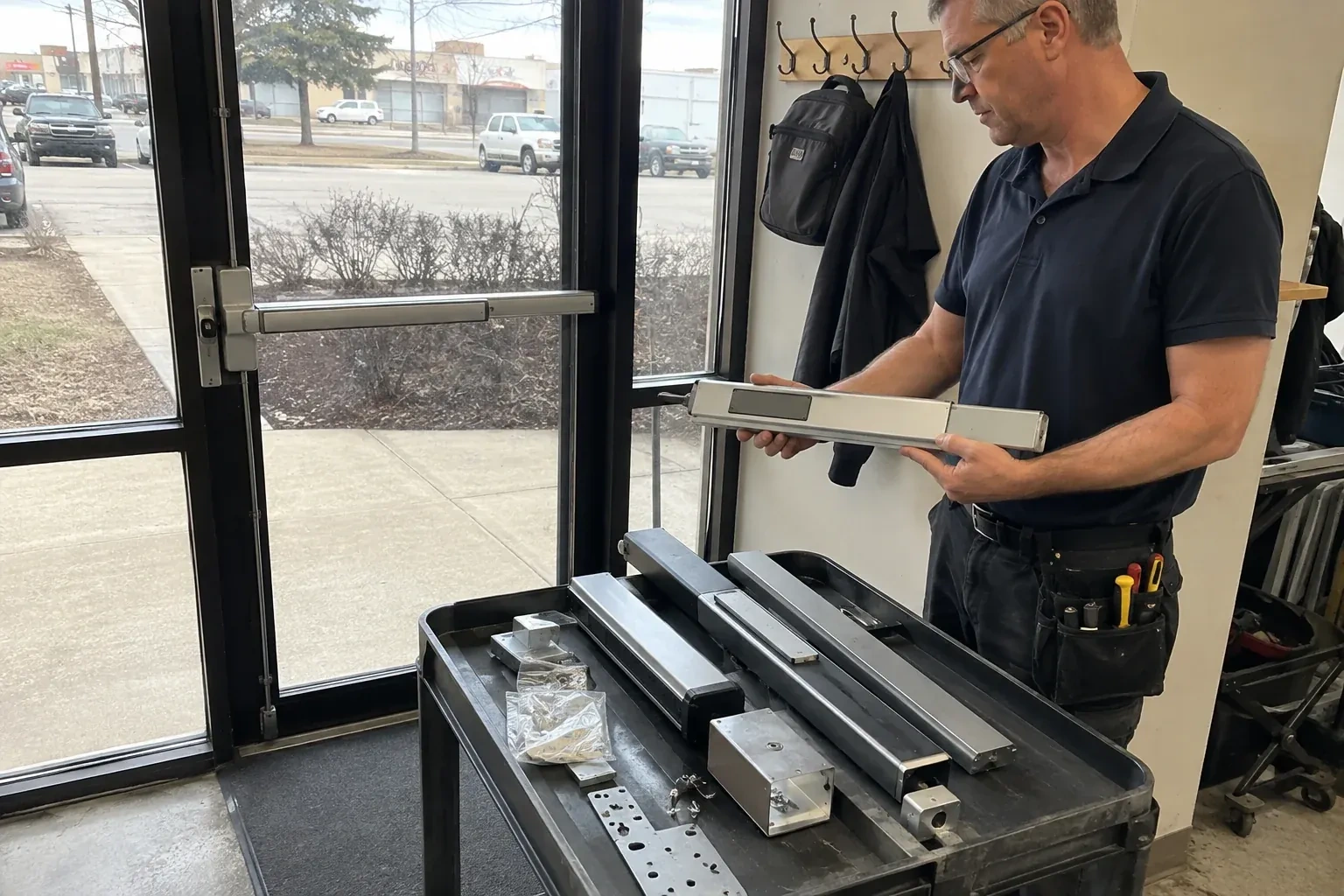
The new access-control reader at the staff entrance works fine going in, but nobody has sorted out the door's exit side, and right now a card reader and a pushbar exist as two separate ideas.
In plain words
A code trigger usually starts the conversation: an occupant load over a threshold, a fire inspector's note, or a new use for a room that used to hold far fewer people. From there the visit works out which openings are affected, what device and trim suit each one, and whether a pair of doors needs a coordinator or a mullion removed. The installation follows a template, and every device is tested for release force and full latch engagement before the visit ends, with a written record of what went on the door for anyone reviewing the space afterward.
How the visit goesA padlock went on the stockroom's back door years ago for security and nobody has thought about it since, until the walkthrough this week pointed out that the same door is the room's only other way out.
Panic & Exit Hardware
How the visit goes

Checking what is already fastened to the door
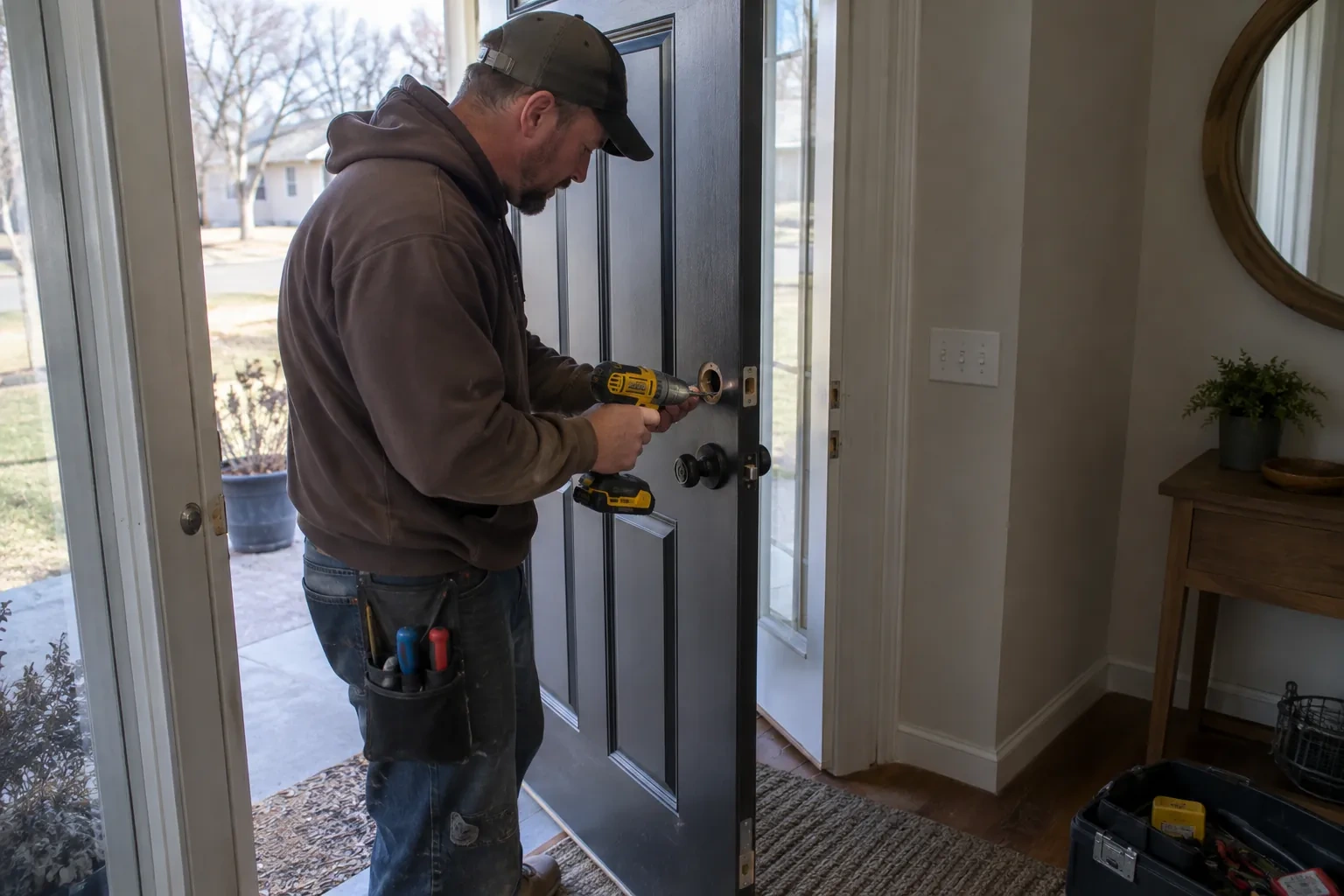
A surprising number of exit-hardware calls turn up a second lock nobody had mentioned: a hasp and padlock added for security, a slide bolt at the top of a rarely used door, or a deadbolt installed long after the original exit device. Each of these has to be understood before work starts, because an exit door can only be trusted to open under one motion if every fastening on it releases the same way. The locksmith notes what is there, explains what it means for the door's exit function, and works out with the owner what stays and what comes off.
Testing release force and full latch engagement
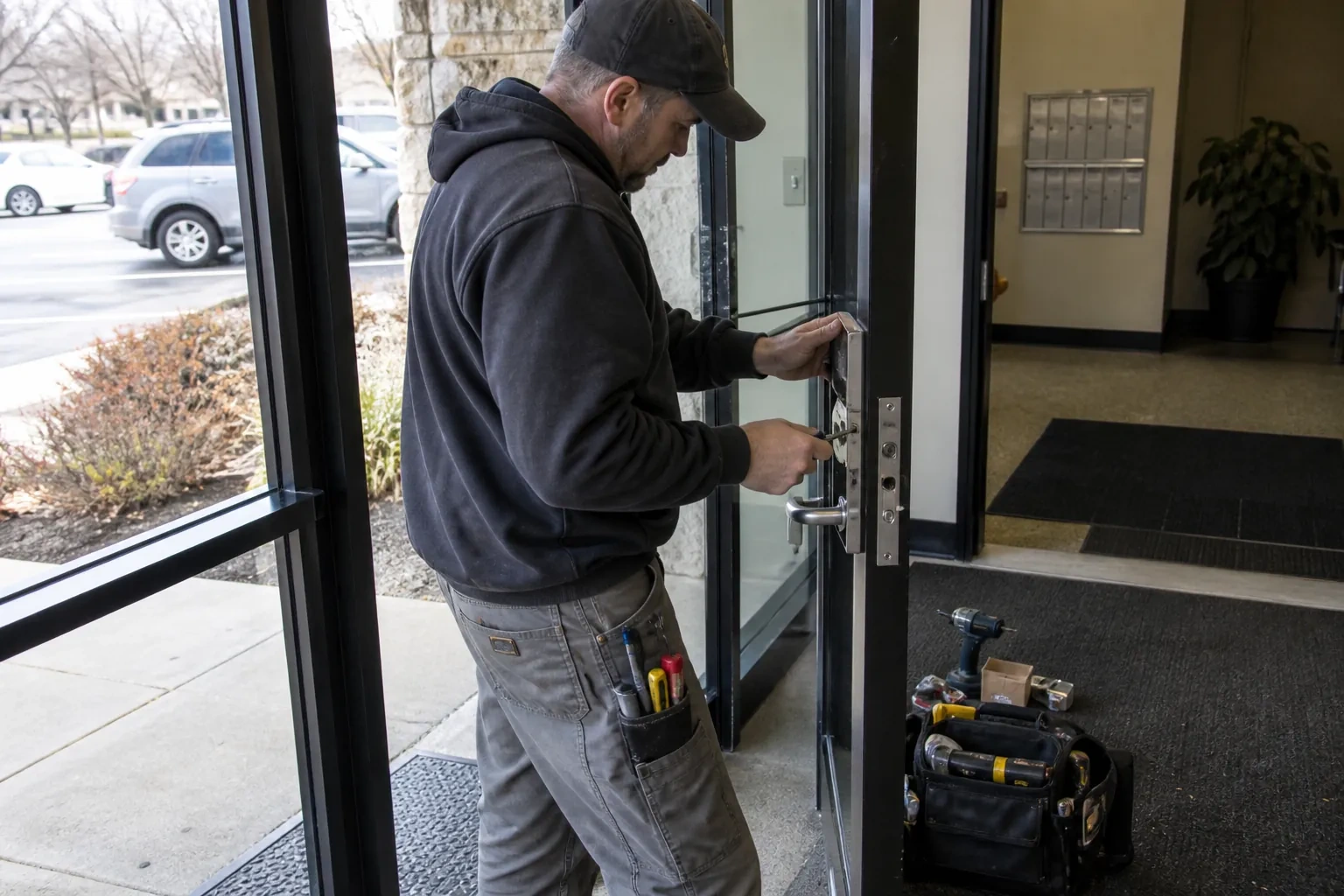
Once mounted, every device is cycled by hand repeatedly, checking that the touchpad or crossbar releases the latch under a light, even push and that the door swings clear of its frame and any threshold without binding. The strike is checked from both sides to confirm the latch seats fully when the door is pushed closed, not only when it is guided into place by hand. Any adjustment the testing reveals is made on the spot, before the device is called finished.
Entry that stays separate from exit, permanently
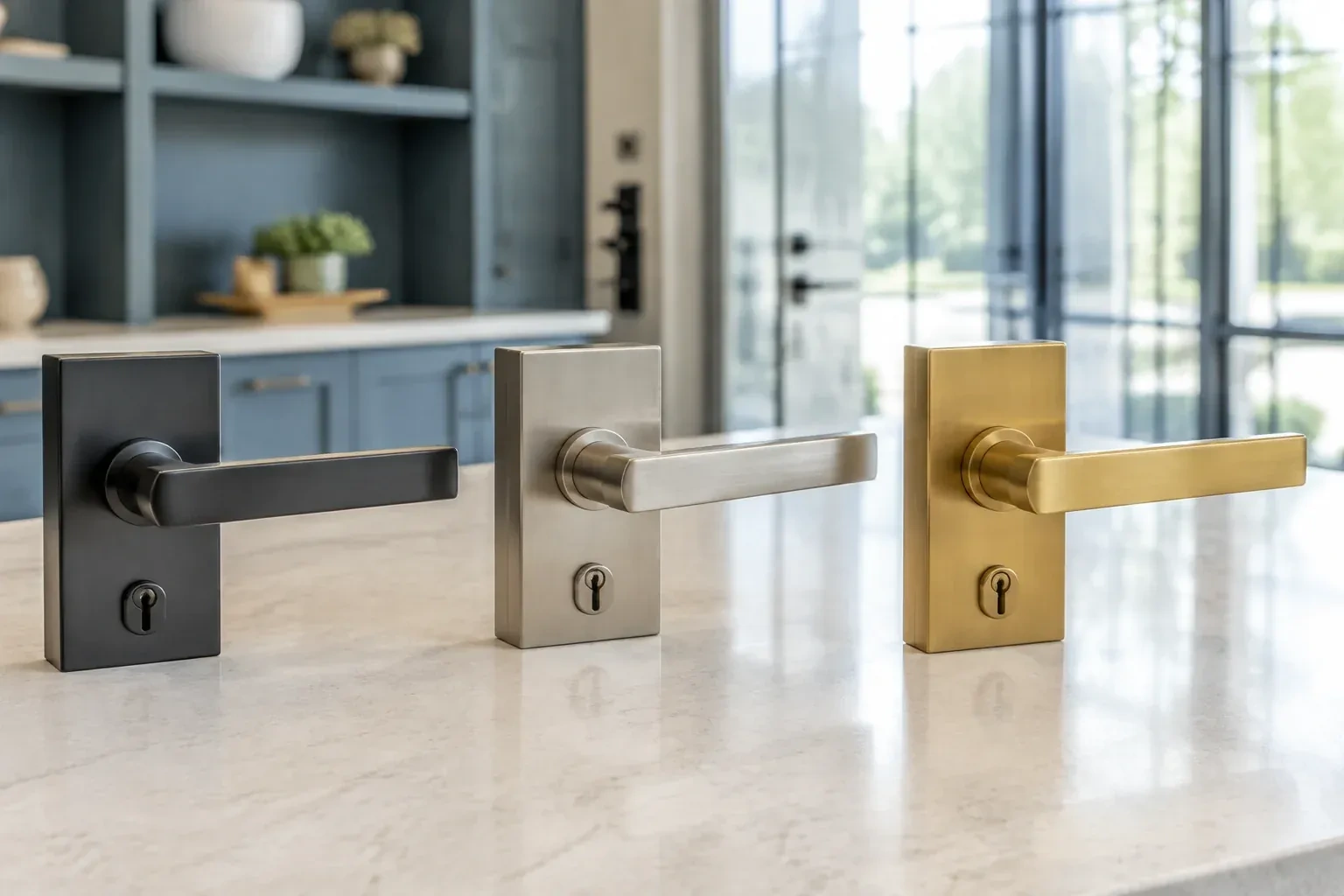
The building keeps full control over who enters through the trim on the outside of the door, independent of what happens on the inside. A lost key, a staff change or a new access-control card affects only the entry side; the exit side keeps working exactly as it did on installation day. That separation is the point of the whole installation, and it is worth remembering when any future change is proposed for that door, so entry security is never solved by touching the inside crossbar.
Panic & Exit Hardware
In the van
Request-to-exit switch
Outside trim (pull, lever or cylinder)
Coordinator for door pairs
Door closer
Signage and labels
Panic & Exit Hardware
What affects the quote
New preparation or existing cut-outs
A door with no prior hardware needs new holes cut and reinforced to the device's template. A door already prepared for a similar device, even an old one, is often a simpler fit with less new drilling.
Weatherproofing for an exterior opening
An exterior device, strike and trim built to handle temperature swings and moisture cost more as hardware than an equivalent interior-only set, and the quote reflects that difference in the parts themselves.
Door and frame condition
A door that has sagged, a frame that has shifted, or a strike pocket that no longer lines up needs correcting before hardware is fitted, which adds its own line to the quote.
What to have ready
- Has a fire inspector or building official already flagged a specific door?
- Is any door part of a pair with a second leaf?
- What is the room's intended use and approximate occupant load?
Panic & Exit Hardware: questions
QuestionsWhat should I have ready before the visit?
Knowing the intended use of the room, roughly how many people it holds, whether any doors are already fire-rated, and whether any of them are part of a pair helps the locksmith bring the right devices. If a fire inspector or building official has already given a note about the opening, having that note or its reference number on hand keeps the visit focused on what was actually flagged.
What is dogging, and can every door have it?
Dogging holds the device's latch retracted so the door works as a simple push-pull for a period, useful during business hours on a busy entrance. It is not available on fire-rated openings, because a fire door must keep an active latch at all times; on those doors, electric latch retraction achieves a similar push-pull convenience without ever leaving the latch mechanically held back.
What does the finished installation actually prove to an inspector?
It proves that a specific device, rated for the opening it sits on, releases under an appropriate force, latches fully, and has been tested and recorded on a given date. The record travels with the building, so a fire inspector reviewing the space later is looking at a documented history of that exit rather than testing hardware with no known installation date or specification.
Related services
- Master Key System DesignThe new wing was built with its own brand of cylinder, so the two-year-old keys from the original building do not open a single door in the addition.
- Access Control InstallationYou just leased the empty unit next door and want the new tenant to open their own suite without a key to yours, to the loading dock, or to the electrical room down the hall.
- Commercial-Grade Lock ReplacementAt closing time the hookbolt on the storefront door catches the keeper only on the second or third try, and one employee has started giving the door a shoulder to force it home.