Lockouts · Brampton
Business Lockout Service
A cook stepped into the alley with the recycling and the rear door swung shut behind him.
In plain words
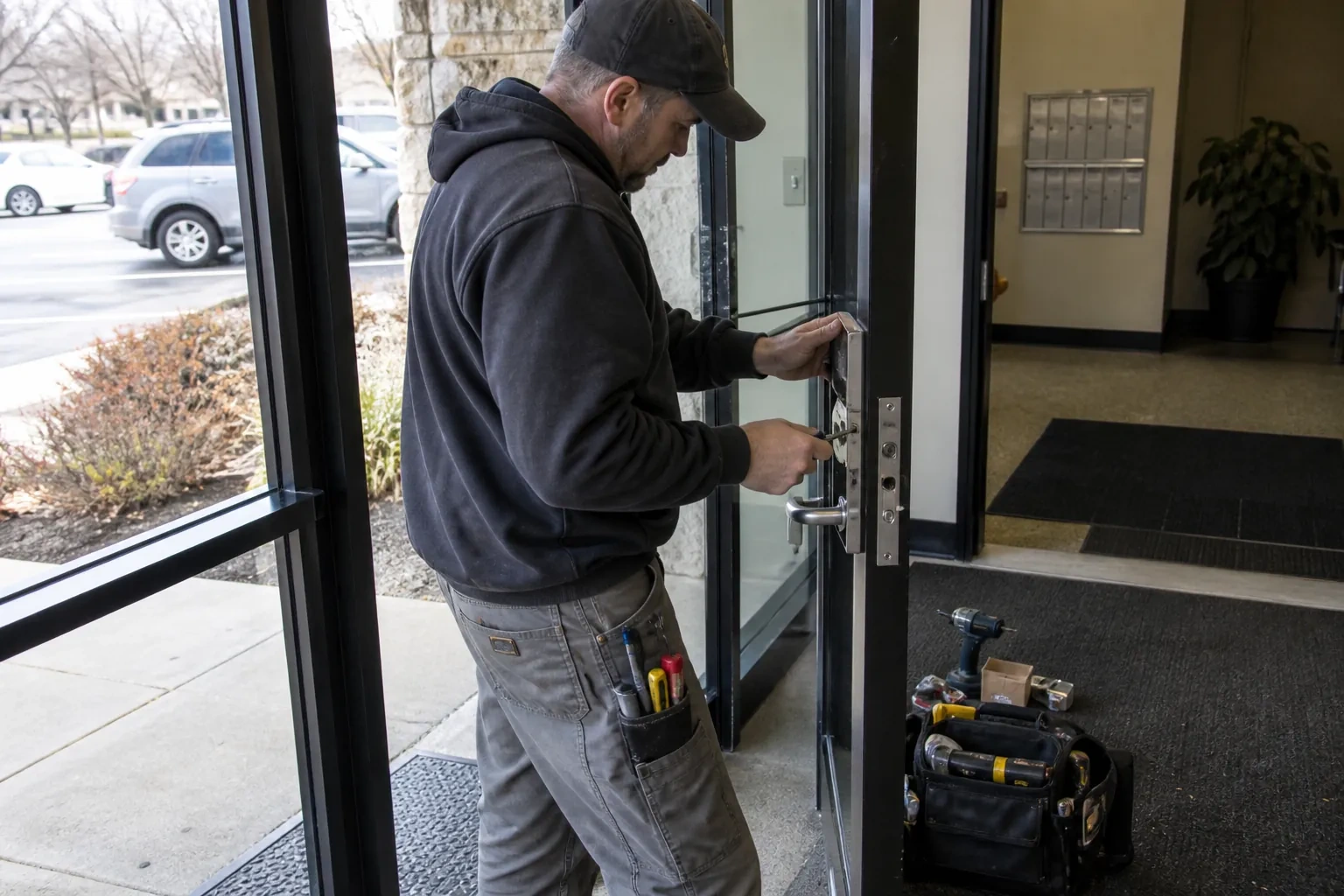
On a commercial door the lock is rarely alone. A door contact feeds the alarm panel, a card reader drives an electric strike or a magnetic lock, and a monitoring company is watching for an opening outside business hours. A business lockout therefore starts with a conversation about those systems: who can disarm the alarm, whether the monitoring station should be told to expect an entry, and whether the electrified hardware has a mechanical override. Handling that first means the door opens without a patrol being dispatched, the access system is left working as designed, and the reader can be reset once someone is inside.
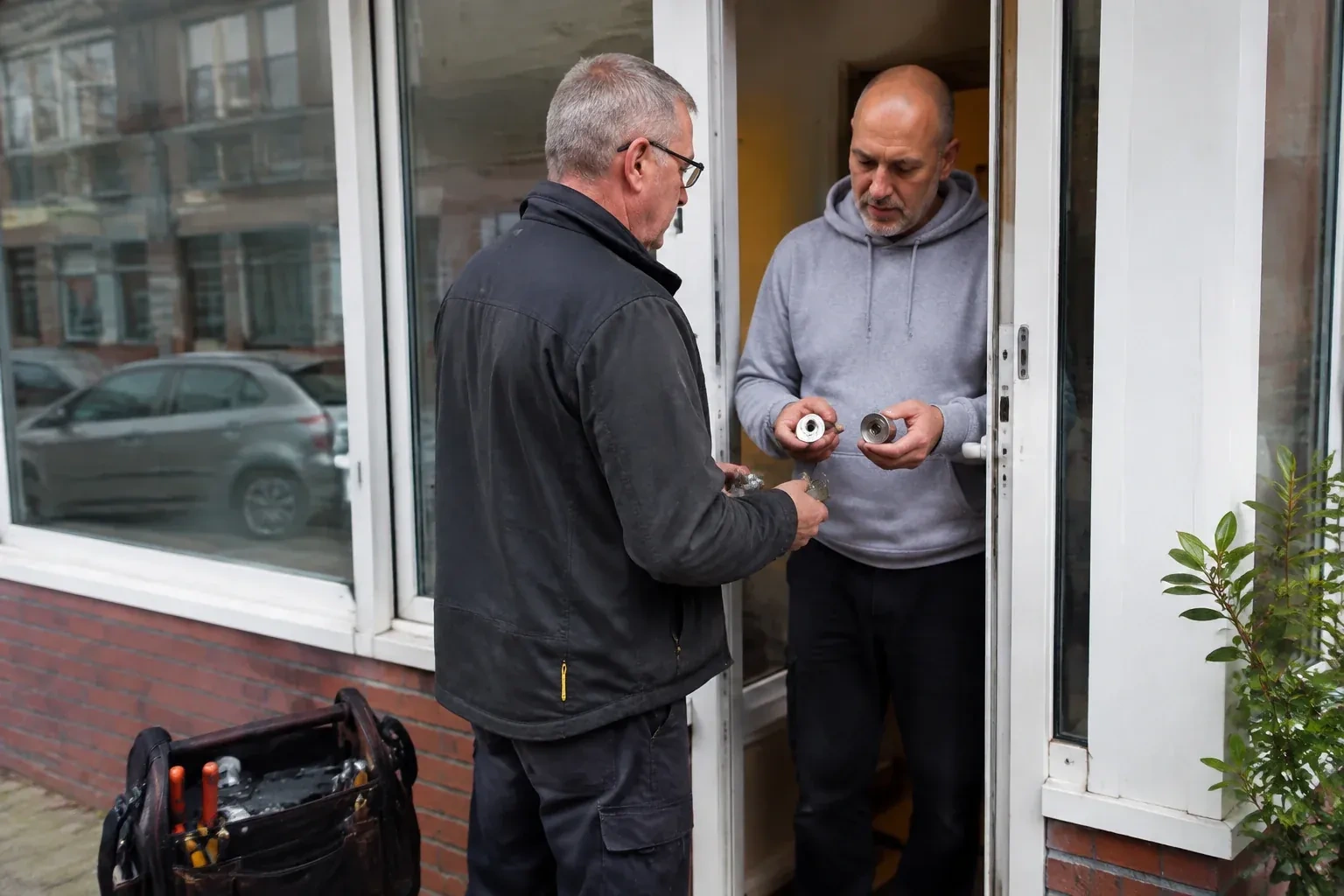
How the visit goesThe key went in stiffly, turned a quarter of the way, and came out in two pieces. Half of it is still inside the cylinder of the aluminium storefront door, and the deadbolt is hooked firmly into the frame.
Business Lockout Service
How the visit goes
Every other opening on the premises
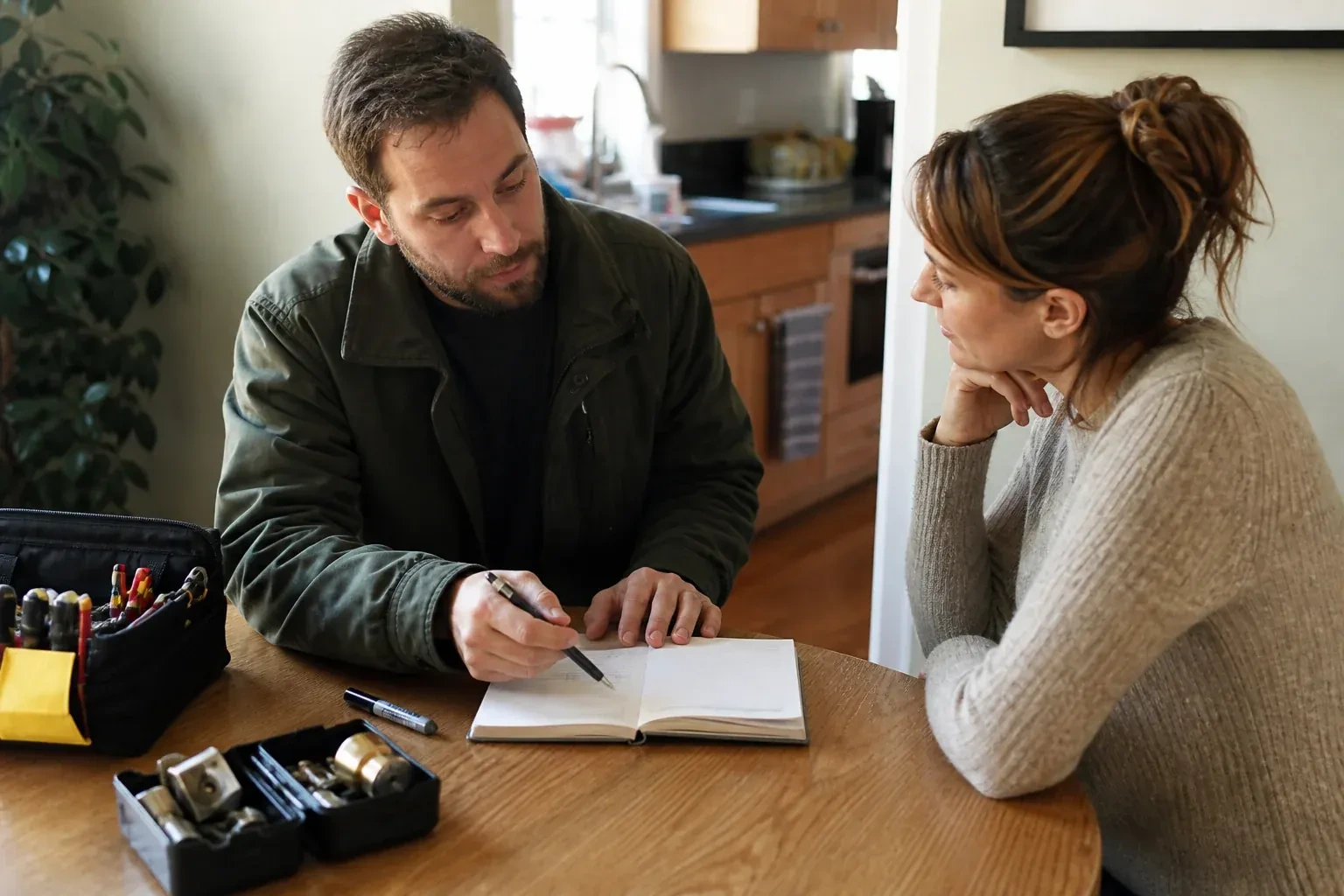
The front door is rarely the only lock a business relies on. The locksmith asks about the rear service door, the side door to the compactor, a roll-up shutter and its padlock, the gate on the compound, and interior doors that matter such as the cash office, the stockroom, the server closet and the staff washroom. Some of these may be on the same key as the front door and others on their own. Knowing the map before starting means the right cylinders are rekeyed together afterwards, a padlock is not forgotten, and a second door that could have been opened more gently is not overlooked while everyone stares at the first.
Non-destructive first, on every commercial door
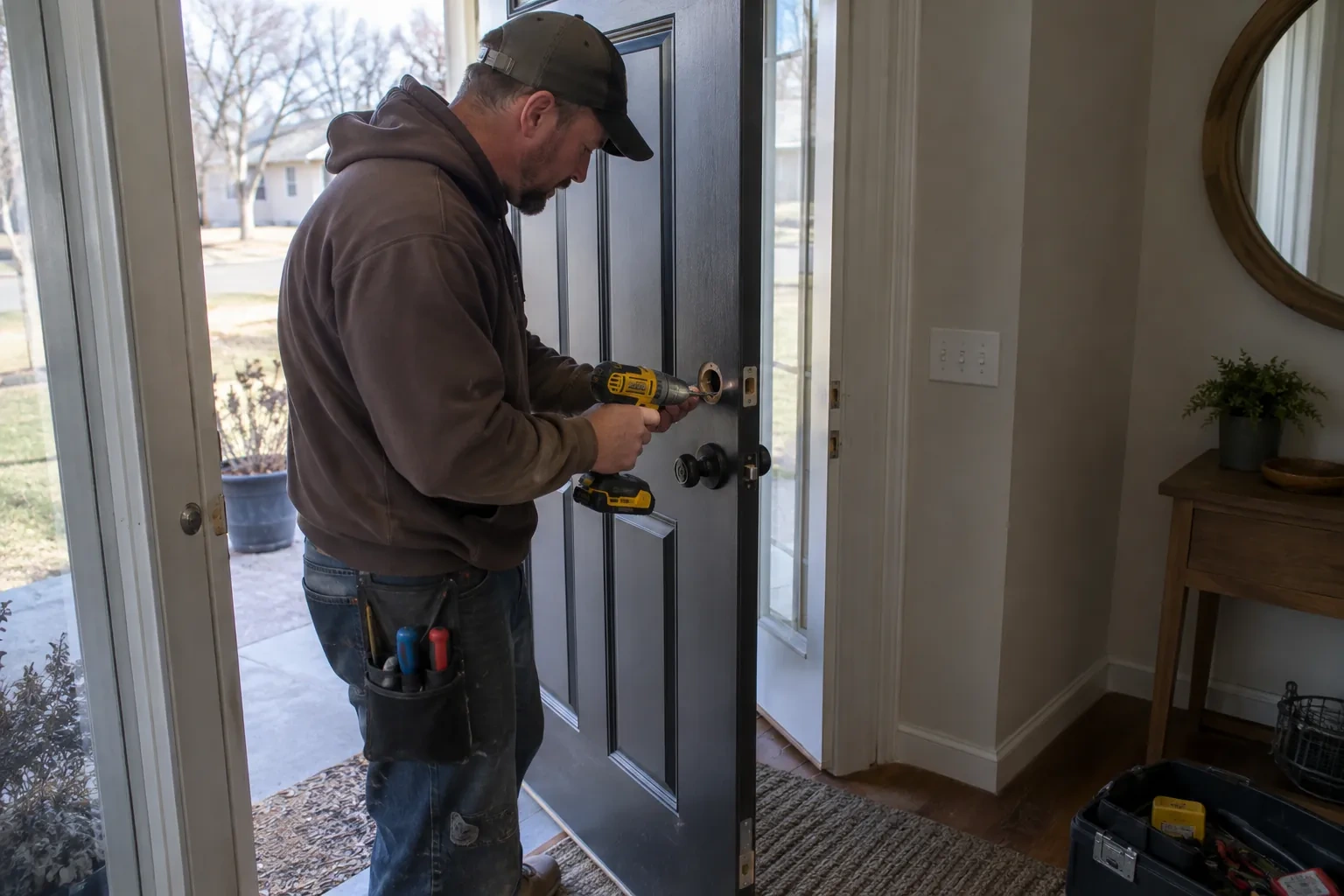
Commercial cylinders are built to a higher standard than most residential ones, but the order of work is the same. The locksmith begins with methods that operate the mechanism as a key would: picking or decoding the mortise or rim cylinder, or pulling a removable core with a control key when the building uses one. Next come bypasses that suit the specific hardware without cutting anything. Drilling sits at the end of the list and is discussed before it begins, aimed only at the cylinder, with a replacement fitted in the same visit. Working in this order keeps the storefront, the trim and the lock body as they were, and the business back on its own keys.
Access control back on its feet
When the lockout involved a reader, strike or magnetic lock, you leave with the system working as it was designed to. Power and backup batteries are restored, the strike or lock is confirmed to hold and release on command, and the reader accepts the fobs it should. Credentials belonging to people who have left are deactivated with the provider while everyone is thinking about it. The mechanical override key is the piece most businesses misplace; it should live with a named keyholder away from the door, not in a drawer inside. A short note of the controller's location and the provider's contact goes into the record for the next person who needs it.
Business Lockout Service
In the van
Replacement mortise and rim cylinders
Strikes, pivot shims and closer adjustment tools
Lock de-icer and dry PTFE lubricant
Key blanks and code cutter
Cylinder decoder and plug spinner
Business Lockout Service
What affects the quote
Upgrades you choose while the locksmith is there
Some businesses use the visit to move to a heavier storefront deadlock, a restricted keyway, interchangeable cores, a lockbox for keyholders or a reinforced strike. None of it is needed to get you open; each is priced as its own option.
Master key system changes
Where the door belongs to a building-wide master key system, changing it means planning with the property manager and pinning cylinders so both your key and the building key still work, which is more careful work than a single rekey.
Distance and access to the door
Travel is part of every call-out, and so is reaching the door: a plaza unit at street level, a suite behind a locked lobby, or a loading dock at the back of an industrial park each take a different amount of the locksmith's time.
What to have ready
- Are there other doors, a roll-up shutter, a gate or a padlock you also need opened?
- Has anyone already tried to force or pry the door?
- Does the building have a property manager or a master key system for the unit?
Business Lockout Service: questions
QuestionsAn employee left and never returned their keys. Should we rekey?
It is the sensible step, and a lockout visit is a convenient moment for it. Rekeying keeps your existing cylinders and changes the pins so a new key operates them and the unreturned one does nothing. If your doors use interchangeable cores, swapping the core takes minutes. Bring every door that shared the old key onto the new one, count the fresh keys into named hands and start a register so the next departure is a line in a book rather than a call.
We need to open for customers. How do you sequence the visit?
Entry comes first and repairs second. Once authority is confirmed the door is opened, staff go in and start their routine, and the locksmith turns to the cause: extracting a broken key, rekeying for a lost one, re-springing a deadlatch or lifting a dropped door. Anything that can wait for a quieter hour, such as rekeying interior doors, is offered as a return visit so the shop floor is not blocked while it trades.
What should I have ready when I call?
The address and unit number, which door you are outside, what the lock looks like, and where the keys are: with someone, lost, broken or simply refusing. Say whether there is an alarm or a card reader on the door, who can disarm or confirm your authority, and whether the building has a property manager. If you can send a photo of the lock and the door edge, the right cylinders and cores come on the first trip.
Related services
- Broken Key ExtractionThat key had been bending a little for years, and you kept straightening it.
- Break-In Damage Lock RepairThere is a hole where the cylinder used to be.
- Seized & Jammed Lock OpeningThe old mortise lock on the front door of the house turns the key halfway and stops with a dull clunk.