Commercial · Brampton
Commercial-Grade Lock Replacement in Brampton
At closing time the hookbolt on the storefront door catches the keeper only on the second or third try, and one employee has started giving the door a shoulder to force it home.
In plain words
A great deal of what happens during this service is choosing the right category of hardware before a single screw comes out. Storefront glass and aluminum doors call for a narrow-stile lock or a hookbolt rather than the mortise body a solid wood or hollow-metal door would take, and a door serving a busy exit route may need listed exit hardware regardless of what was on it before. The locksmith identifies which category the opening belongs to, sources hardware built for it, installs it to the door's existing preparation, and confirms the finished lock operates correctly from both the public and the staff side.
How the visit goesOvernight someone forced the back door, and the cylinder face is scarred, the metal around the strike has pulled loose from the frame, and the latch no longer sits flush.
Commercial-Grade Lock Replacement
How the visit goes

Reading the door before the lock
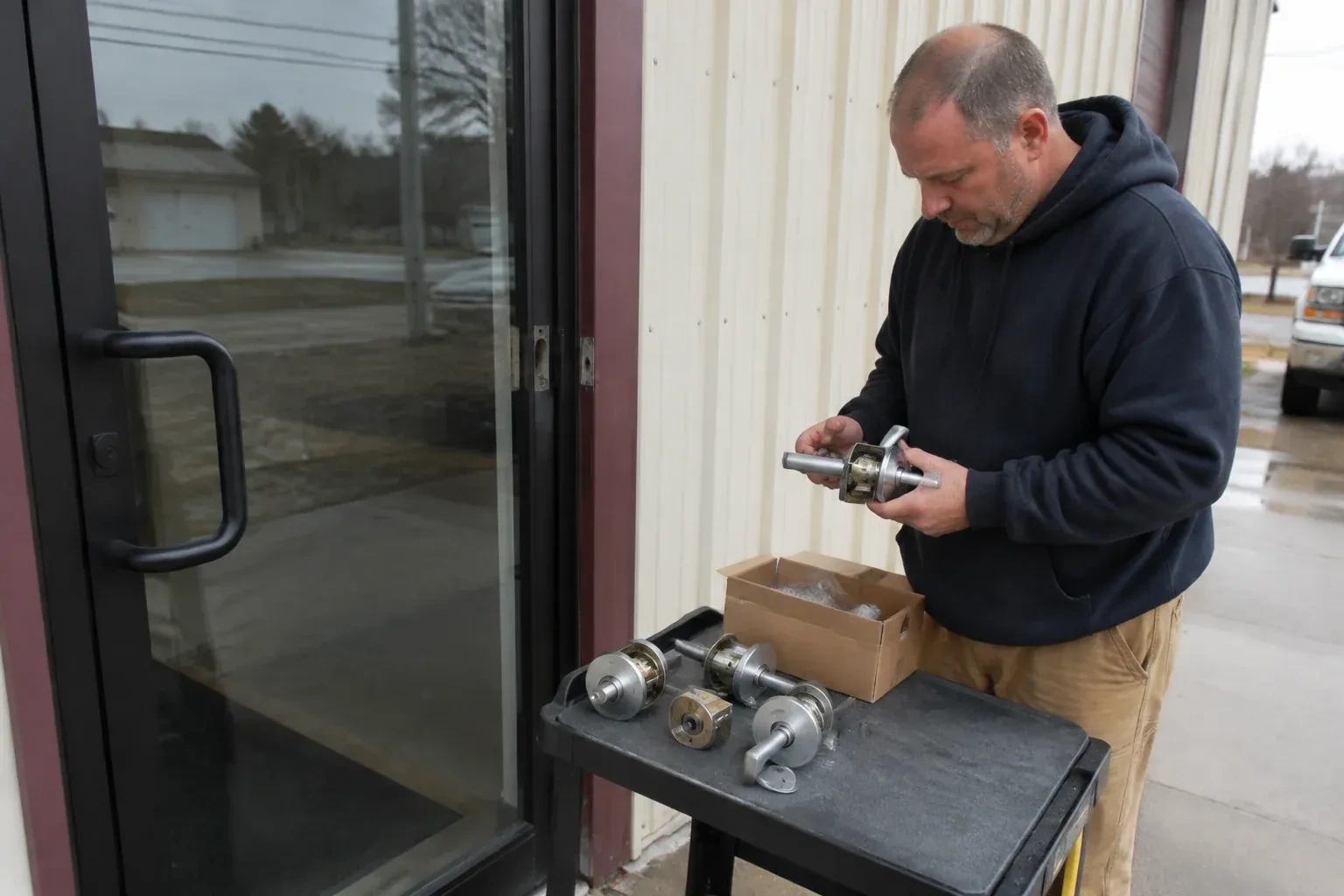
The door tells the locksmith what kind of hardware it can even accept. A hollow-metal or solid wood door with a mortise pocket cut into the edge takes a mortise lock body; an aluminum storefront door with a narrow stile takes a purpose-built narrow-stile lock or hookbolt; a standard cylindrical bore takes a heavy-duty lockset sized to that hole pattern. Handing, swing, backset and existing strike location are measured so the replacement drops into the prep that is already there rather than requiring the door itself to be re-cut.
Fitting the new lock body or lockset
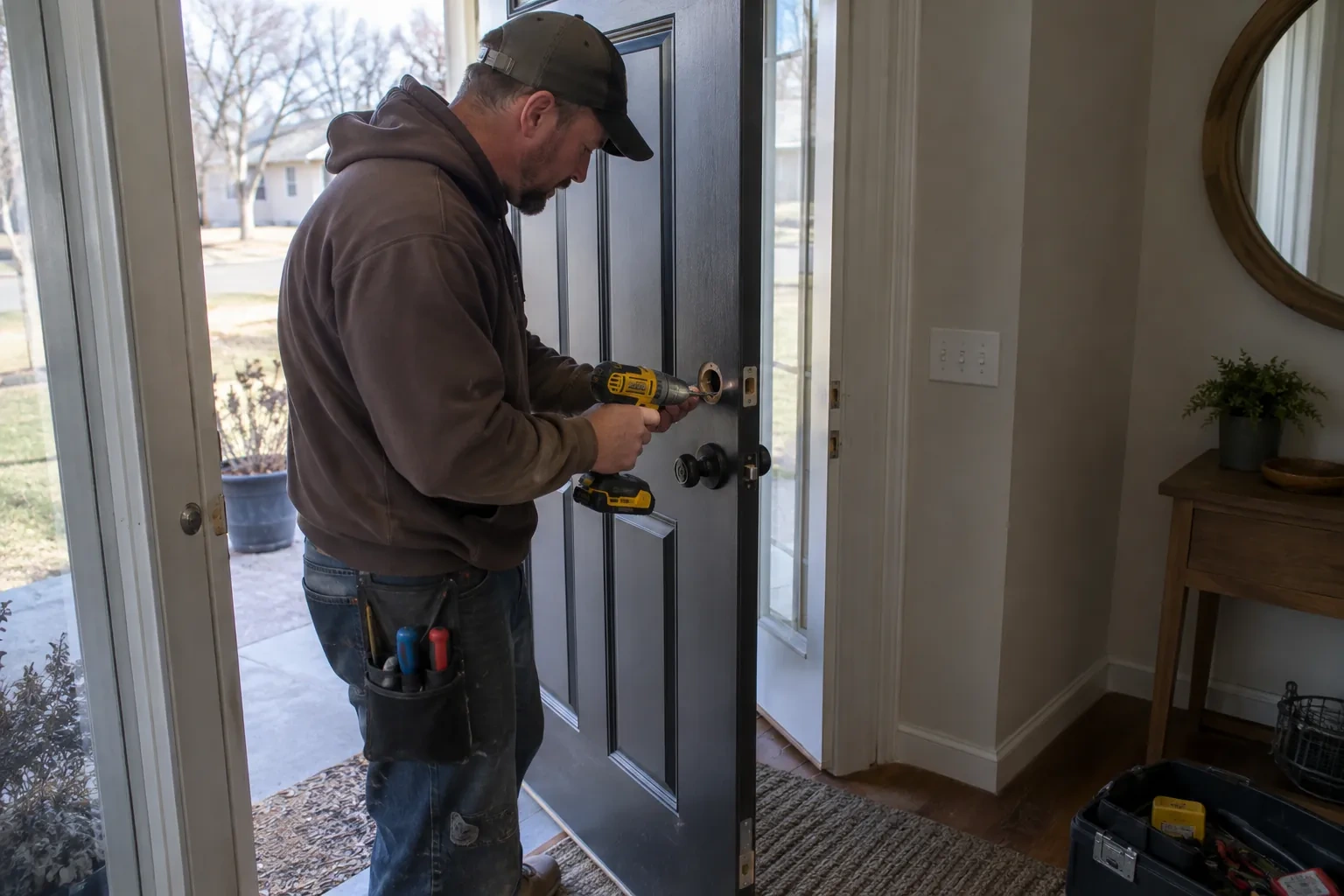
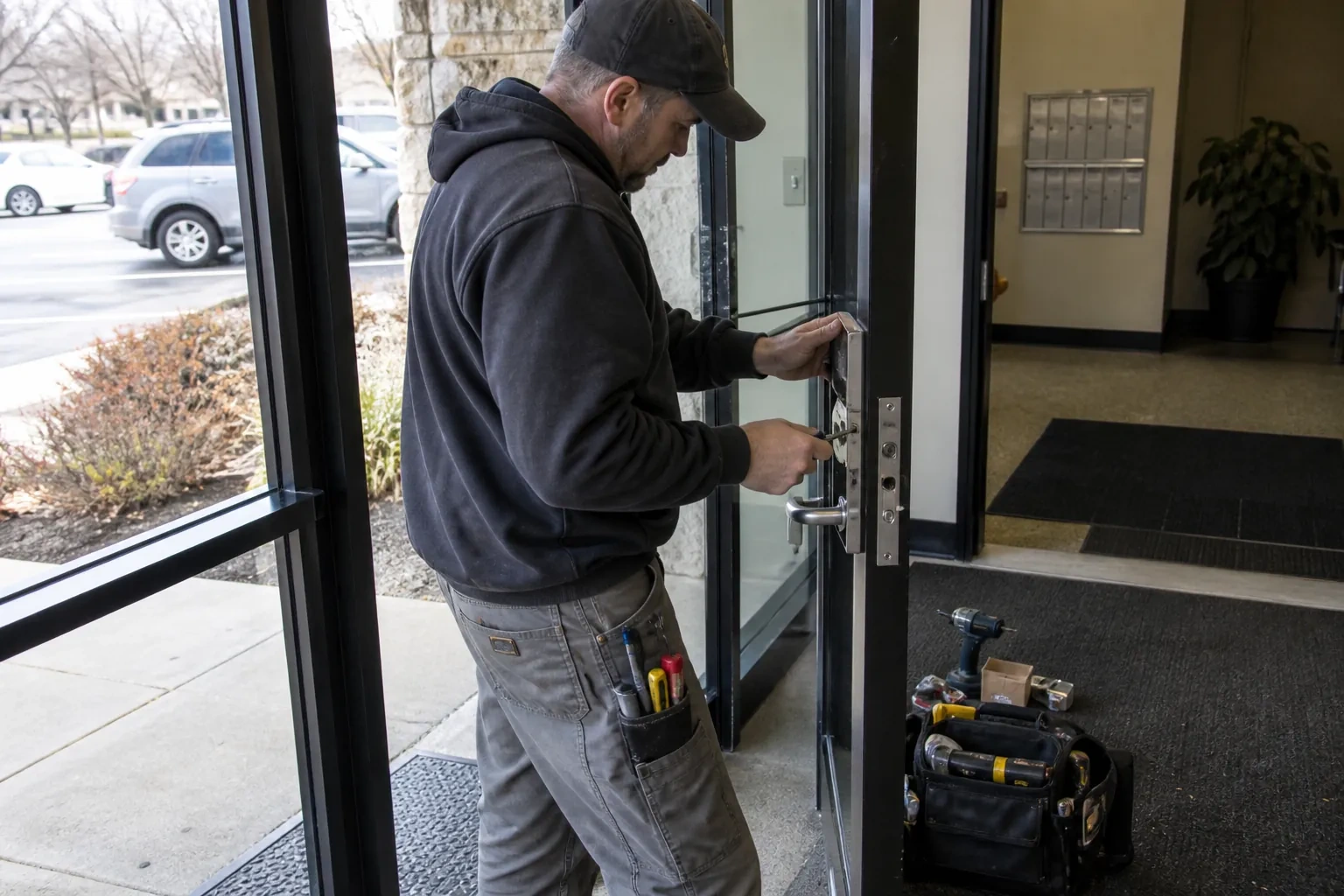
The new hardware is installed into the existing prep, with the lock body or lockset, strike and any reinforcing plate seated so the door closes without binding. On a narrow-stile storefront door, the hookbolt or deadlatch is aligned so it engages the keeper across its full travel rather than catching on one edge. On a mortise-prepped door, the case is fitted so the trim sits flush and the spindle and cylinder line up with the existing holes cut for them.
Confidence after a break-in or a security scare
Where the visit followed a forced door or a lost key that worried the business, the finished hardware answers that concern directly: the damaged cylinder or strike is gone, any compromised key no longer operates the cylinders that were rekeyed or replaced, and the new lock has been cycled and tested rather than simply swapped in and assumed to work. The business can tell staff, tenants or an insurer exactly what changed and why, with a working lock and a written record standing behind that answer rather than a guess about whether the problem was actually solved.
Commercial-Grade Lock Replacement
In the van
Mortise prep and installation tools
Key-control log and tags
Hookbolt and deadlatch hardware
Electric strike
Key cutting and coding machine
Commercial-Grade Lock Replacement
What affects the quote
Number of keys cut and issued
Keys are counted individually into the quote. A small office needing a handful of keys is a smaller line item than a multi-shift operation issuing keys to a large staff roster.
Restricted or patented keyways
A restricted keyway usually costs more as hardware than a standard cylinder, and duplicate keys are controlled through the manufacturer or distributor rather than cut freely; some restricted programs require formal registration, while others control the same blanks without a signed authorization step.
Timing relative to a lease or renovation
Work scheduled around a tenant turnover, a renovation, or a building-wide upgrade across several units can be planned and quoted as a coordinated project rather than a series of separate calls.
What to have ready
- Is this one door, or part of a wider multi-door or multi-branch project?
- What is currently installed: a knob, a deadbolt, a mortise lock, or an exit device?
- Do you have a record of the current keying or key-control log?
Commercial-Grade Lock Replacement: questions
QuestionsMy storefront door is aluminum and glass. Does it need special hardware?
Yes. An aluminum storefront door has a narrow stile, the vertical metal frame around the glass, that a standard mortise or cylindrical lock cannot physically fit into. These doors take a narrow-stile lock or a hookbolt built specifically for that slim profile, and matching the hardware to the frame is what lets the bolt engage the keeper fully instead of catching at an angle.
What is a grand-master key system, and does a small business need one?
A grand-master system adds a layer above a standard master key, useful for a business with several buildings or departments where one senior key should open everything and mid-level keys should open only their own area. A single-location business with a handful of doors usually only needs a straightforward master and change-key structure, without the extra layer.
Do you match hardware to my building's existing key system?
Yes, that is usually the first decision made. The locksmith checks whether your doors already run on a master or grand-master system, an interchangeable-core setup, or a restricted keyway, and orders replacement cylinders that slot into whichever structure you want to keep or move to. Bringing a new door onto an existing system is generally simpler than starting that door on its own.
Related services
- Master Key System DesignThe new wing was built with its own brand of cylinder, so the two-year-old keys from the original building do not open a single door in the addition.
- Access Control InstallationYou just leased the empty unit next door and want the new tenant to open their own suite without a key to yours, to the loading dock, or to the electrical room down the hall.
- Panic & Exit HardwareThe new access-control reader at the staff entrance works fine going in, but nobody has sorted out the door's exit side, and right now a card reader and a pushbar exist as two separate ideas.