Commercial · Brampton
Commercial Rekeying in Brampton
Two people left over the summer and the keys they handed back came up one short.
In plain words
Changing the locks answers today's question; key control keeps it answered. During a commercial rekey the new keys are stamped with a serial code rather than the business name or address, so a dropped key tells its finder nothing. Each key is logged against the person who receives it, and the old keys are collected and cut up on the spot. For premises that want copies kept out of hardware stores, the cylinders can be set up on a restricted keyway, with blanks released only against a signed authorization. What you end up with is a set of locks whose keys you can account for years later.
How the visit goesA key turned up in the parking lot with the shop's name on its fob. It came back to you, which is lucky, but it means keys are leaving the building on rings you have never seen, and the shop's locks have not changed since opening day.
Commercial Rekeying
How the visit goes

Reading the keys that already exist
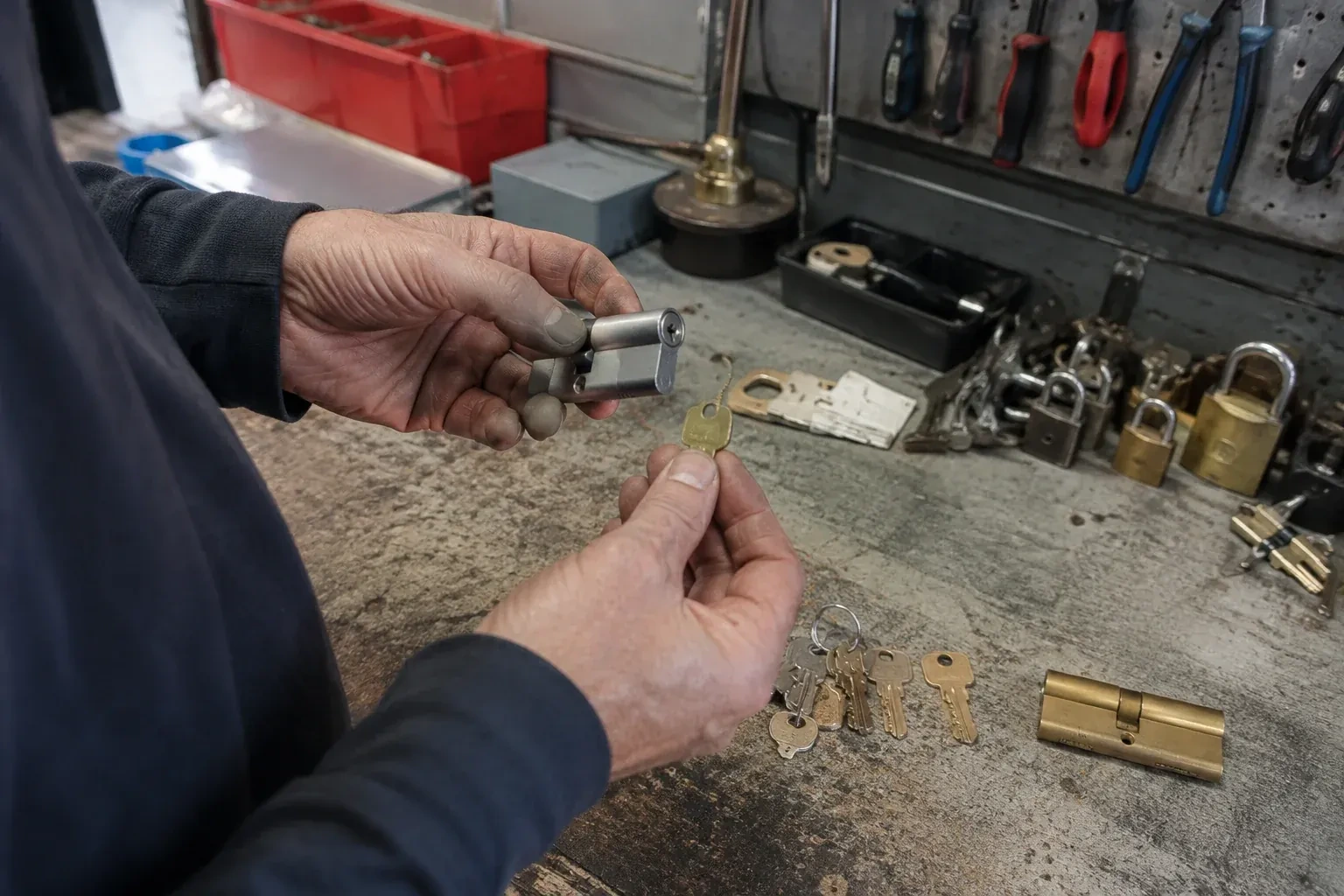
Before deciding anything new, it helps to understand the old. Gather every key the business can find, including the ones with faded tape labels, and the locksmith reads them against the cylinders on the walk. Some will turn out to be duplicates of each other, some will belong to hardware that was replaced years ago, and some may operate doors nobody expected them to. Hardware-store copies stand out by their blanks and by the way they wear. This reading shows how far the key count has drifted and whether an old master still exists, and it lets the new plan retire everything found in the drawer rather than only the keys anyone remembered.
Cutting and marking the new keys
Keys are cut to the new combinations on a code machine rather than traced from another key, so every copy is exact and the tenth key fits as cleanly as the first. Each key is stamped with a short code that means something only on the keying chart; the business name, the address and the word for the door it opens stay off the metal, so a lost key gives nothing away. Keys are counted out by group, tagged, and listed against the names of the people who will carry them. Where the plan uses a restricted keyway, the blanks are drawn against the authorization letter, and that letter is filed with the chart for future orders.
A routine for the next departure
Turnover stops being a security event once there is a procedure for it. When someone leaves, their key is collected against the register and ticked off; if it cannot be produced, the chart shows exactly which cylinders that key opened, and only those are dealt with. Businesses that chose interchangeable cores can go further: the manager takes the control key from the safe, swaps the affected core for a spare in less time than a coffee break, and the locksmith repins the removed core at leisure for the next time. Either way the response is measured and specific, and the front door is never left answering to a key that walked out with a former employee.
Commercial Rekeying
In the van
Interchangeable cores and control key
Rekeyable padlocks
Mortise cylinder set screws and cams
Code key machine
Plug follower
Commercial Rekeying
What affects the quote
No existing chart or keys
When nobody knows what the current keys open, the locksmith reads and records each cylinder before planning the new keying, and that reconstruction is time in the quote.
Mix of lock types
A key-in-lever cylinder, a storefront mortise cylinder, a back-door rim cylinder and a padlock take different handling, though several full-size formats can share one pin kit for the same key system; a premises with a wide mix of cylinder types and brands still takes longer than one with one.
Padlocks, cabinets and mailboxes
Small locks add up. Each padlock repinned to the door key, each cabinet keyed alike and each mailbox cylinder replaced is listed on its own so you can decide what to include.
What to have ready
- When is the premises quiet or empty enough for the work?
- How many doors, padlocks and cabinets do you want included, and where are they?
- Do you want one key for everything, or separate groups with a master?
Commercial Rekeying: questions
QuestionsIs a restricted keyway worth it for a business?
A restricted keyway uses blanks that only the locksmith or authorized source can obtain, released against whatever that key-control program requires, a signed letter, card, signature record or factory authorization naming who may order keys. Hardware stores and kiosks have no blanks, so copies are far harder to get without your say-so. It costs more per key than a standard keyway and is most valuable where keys pass through many hands, such as retail with part-time staff, shared premises or anywhere the count of copies has drifted before.
How long should we set aside for a commercial rekey?
It depends on the count and the mix. A shop with a front door, a back door and a stockroom is a short visit; an office suite with a dozen lever sets, a master key plan and a mailbox takes a good part of a day. Interchangeable cores are the shortest of all, since they are swapped rather than repinned on site. The locksmith gives a time estimate at the assessment, once every cylinder has been counted.
Can all our doors be put on a single key?
Yes, if the cylinders share a keyway or can be fitted with ones that do. Keying everything alike is popular with small shops because staff carry one key and spares are simple. The trade-off is that one key then opens the cash room as readily as the front door. Many businesses choose a middle path: the doors everyone uses on one key, the sensitive rooms on another, and an owner's master that opens both.
Related services
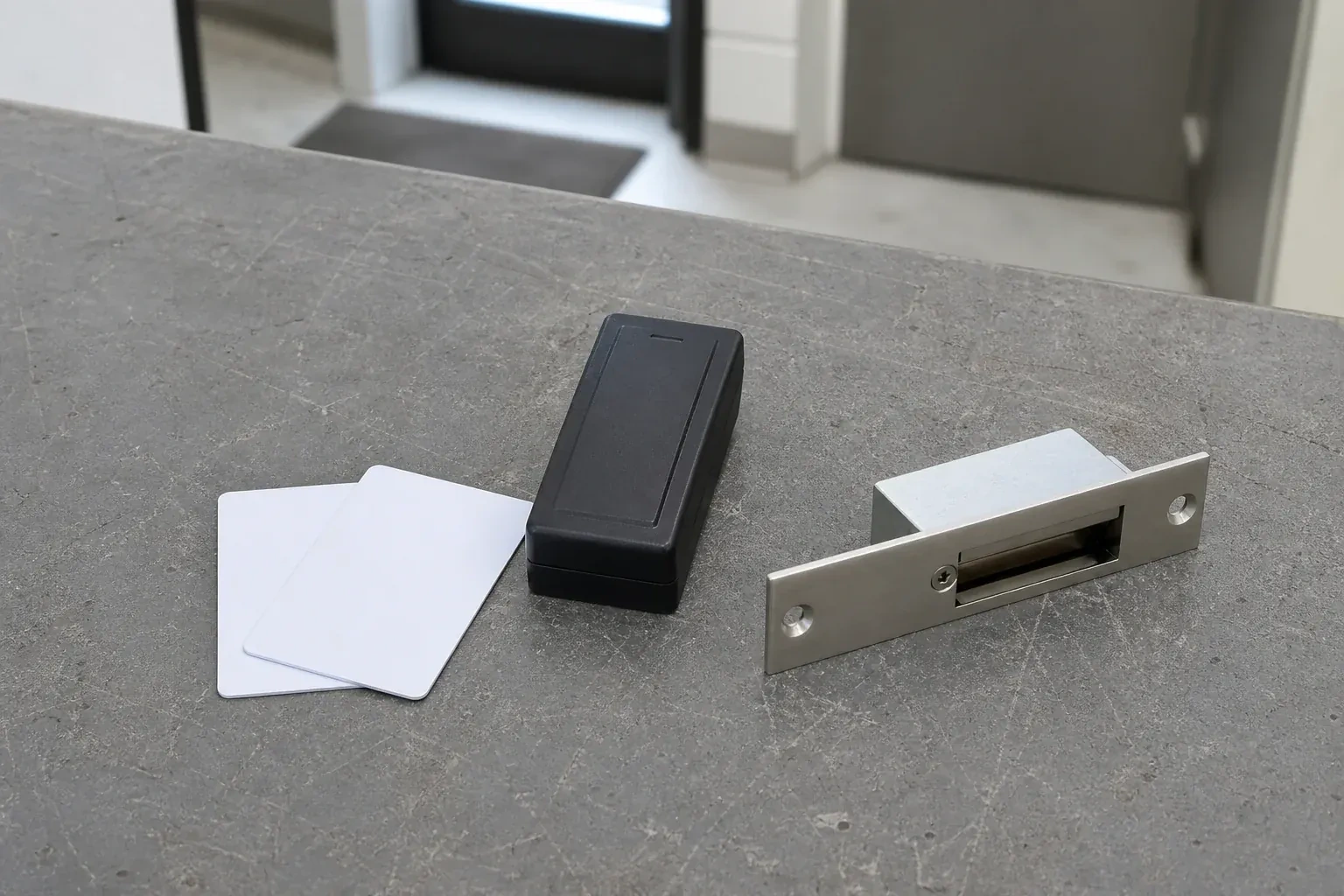
- Access Control InstallationYou just leased the empty unit next door and want the new tenant to open their own suite without a key to yours, to the loading dock, or to the electrical room down the hall.
- Panic & Exit HardwareThe new access-control reader at the staff entrance works fine going in, but nobody has sorted out the door's exit side, and right now a card reader and a pushbar exist as two separate ideas.
- Commercial-Grade Lock ReplacementAt closing time the hookbolt on the storefront door catches the keeper only on the second or third try, and one employee has started giving the door a shoulder to force it home.