Change or rekey · Bramalea
Smart Lock Installation in Bramalea
Half the evenings someone asks whether the back door got locked, and nobody is sure.
In plain words
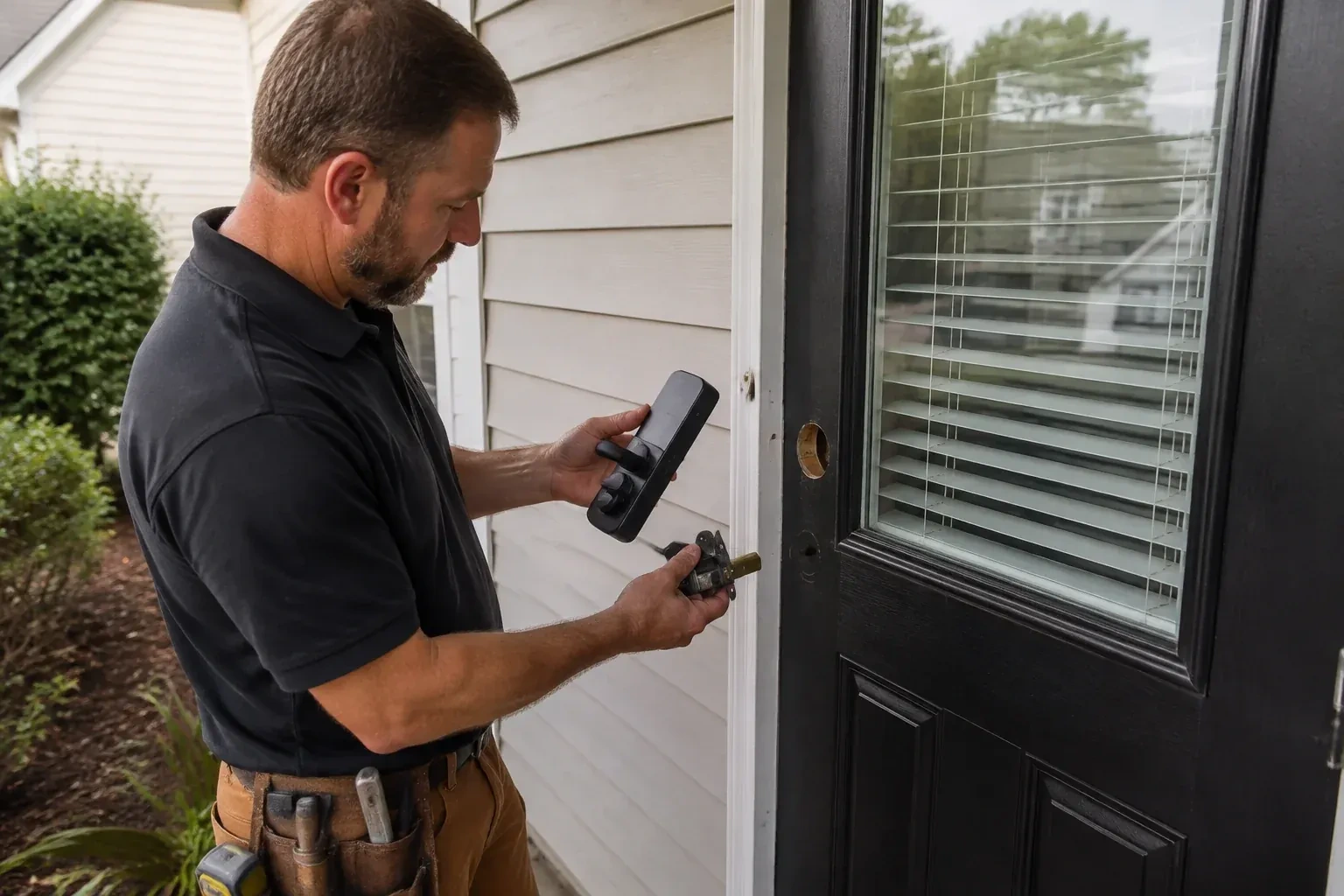
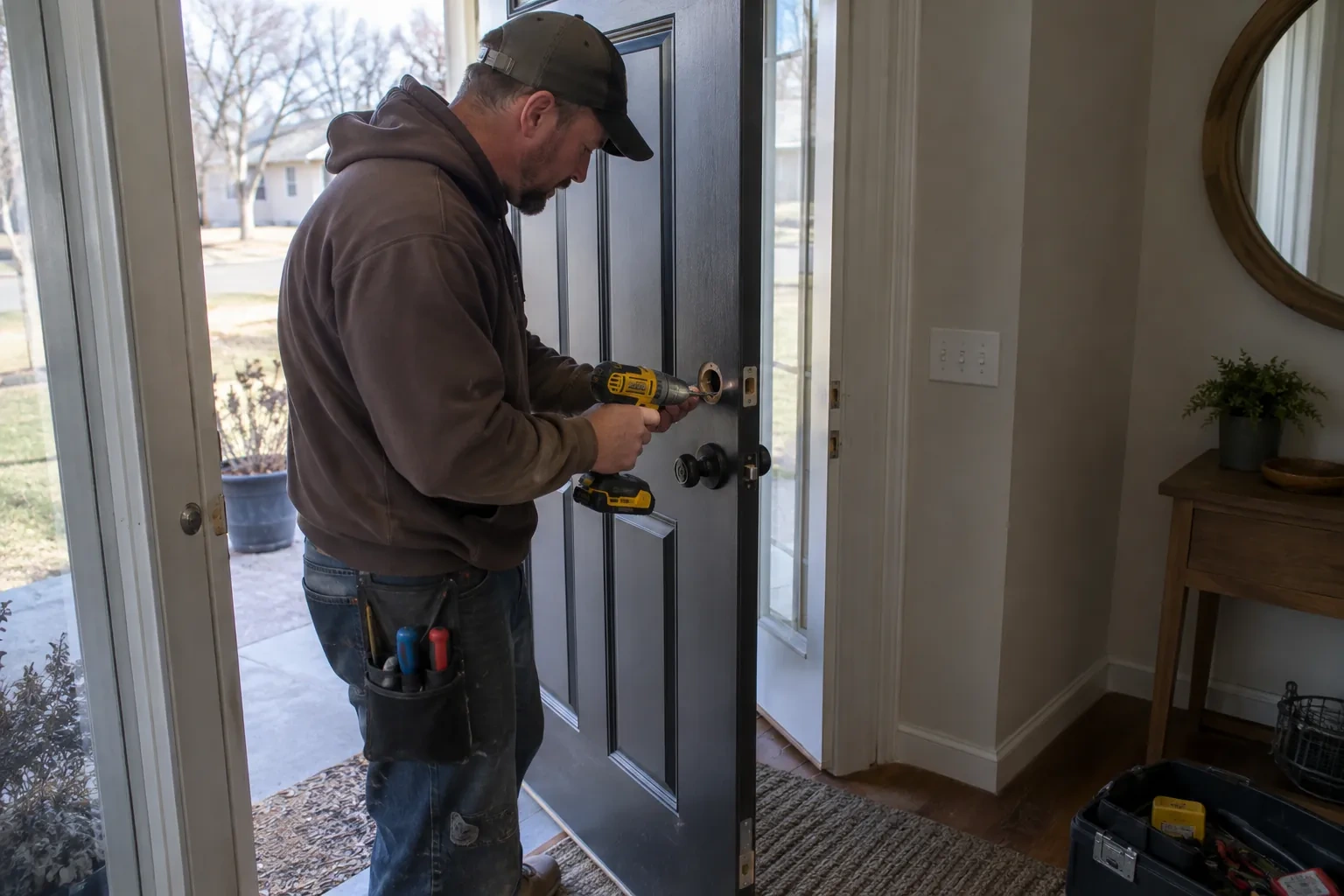
Our winters shape how a smart lock should be fitted. Cold drains batteries sooner, so the locksmith fits the maker's specified battery type, sets the low-battery alert to reach a checked phone, and shows how a fresh set goes in with gloves on. Meltwater that refreezes overnight can bind a bolt, so the strike is set to give the motor clearance. A storm door that traps summer heat, or a keypad facing driving snow, steers the choice of model and finish. Fitted this way, a smart lock is set up to perform through the cold months, even though batteries and materials still work harder in deep winter than in June.
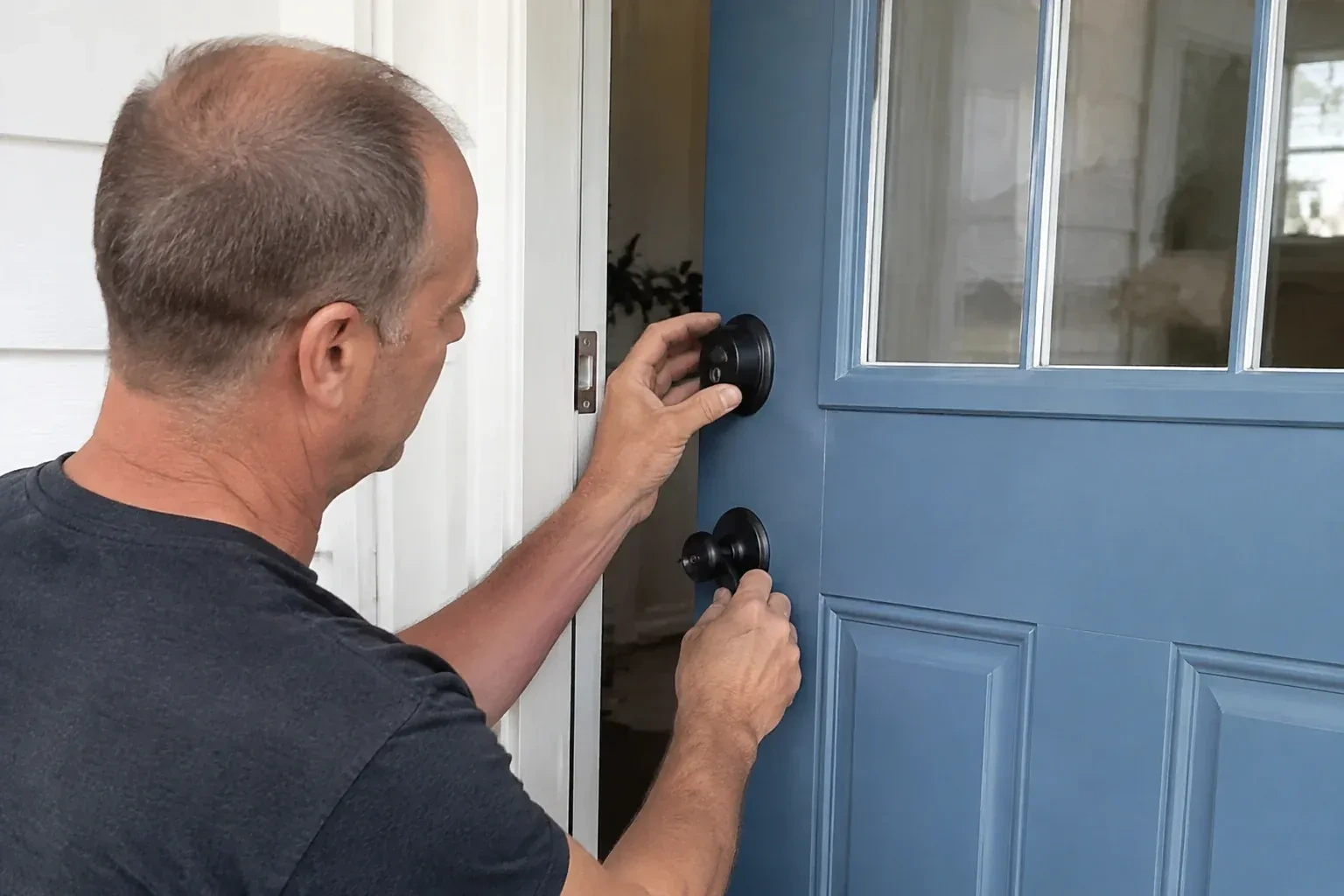
How the visit goesArthritis has made the small house key hard to grip and turn, especially with gloves on in January. Pressing a few buttons, or tapping a fob against the lock, would make coming home in winter far easier.
Smart Lock Installation
How the visit goes
Signal strength at the door
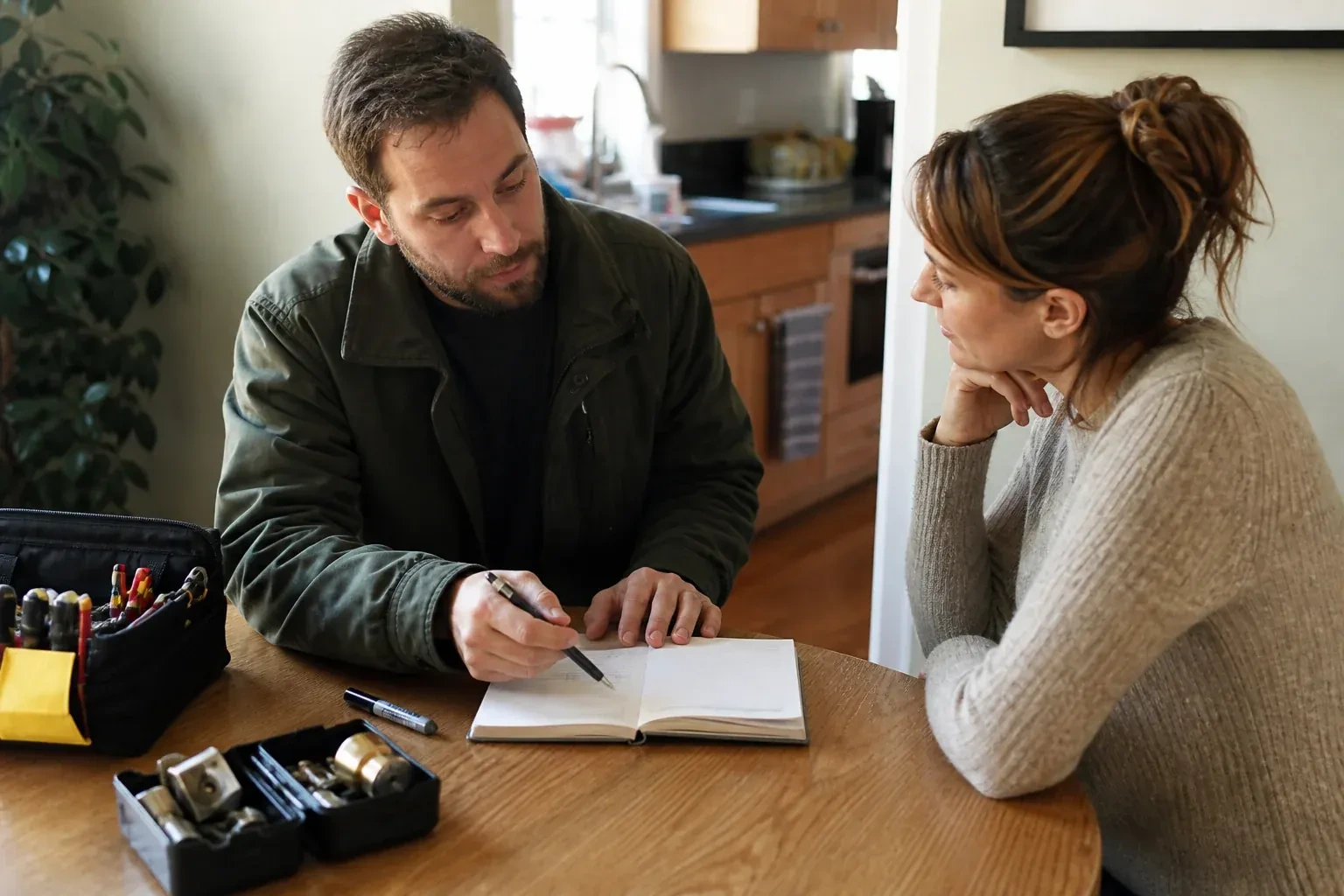
If the lock is to be reached from a phone away from home, the network at the door matters as much as the lock. The locksmith checks how strong the Wi-Fi is on the door itself, not in the hallway, because a metal door, a brick wall or a router at the far end of the house can leave the entrance in a dead spot. Where it is weak, the options are a bridge plugged in near the door, a hub-based model that uses its own radio, or a Bluetooth lock that works locally and skips the network entirely. Finding this out before the box is opened avoids a lock that drops offline every evening.
Testing everything before the van door closes
The last stretch of the visit is all testing, with the door closed as in daily life. Each code is entered and the bolt watched all the way home. The app locks and unlocks the door while the phone sits at the far end of the house, and again from outside the property if the lock is online. The override key is tried in the rekeyed cylinder. The auto-lock is timed. If the model has an emergency power contact, a nine-volt battery is touched to it to prove that route. The storm door is closed to make sure nothing fouls the exterior housing. When every route in and out has behaved, the job is done.
Knowing what works when the internet is out
You leave with a clear picture of what the lock does on its own. On most models the keypad, the key and any fob keep working with no network at all, because they talk to the lock directly; what needs the internet is checking or changing the lock from far away and receiving alerts. Codes and schedules stored in the lock carry on through a router reboot or a power cut. The locksmith will have named which functions on your specific model depend on Wi-Fi or a hub, so a quiet evening with no connection is an inconvenience for the app and nothing more for the door.
Smart Lock Installation
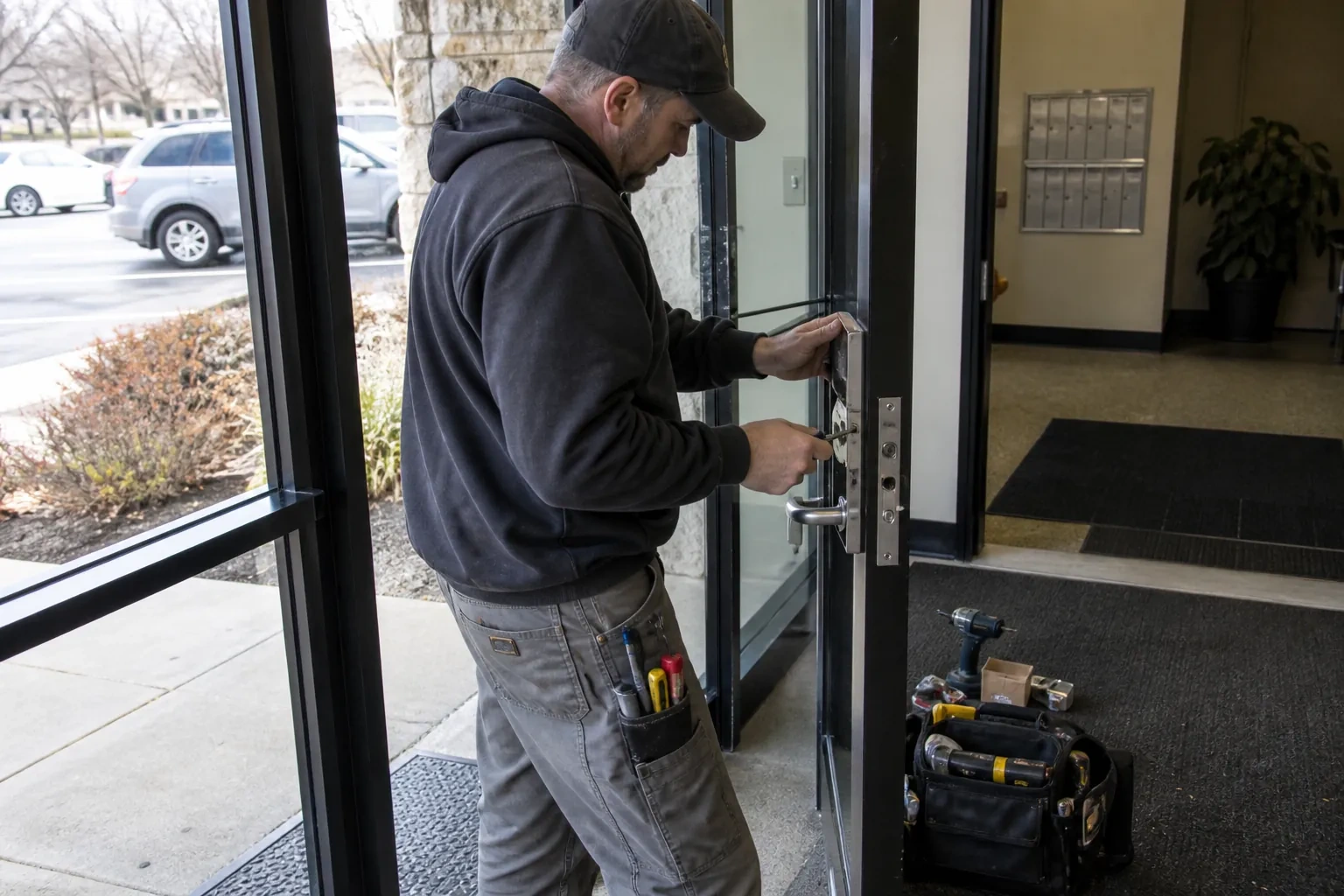
In the van
Mechanical override cylinder and repinning kit
Manufacturer-specified batteries
Hole saw, spade bit and drilling jig
Reinforced box strike with long screws
Hinge shims and long hinge screws
Smart Lock Installation
What affects the quote
Rekeying the override cylinder and other locks
Repinning the smart lock's backup cylinder to a new key, cutting the keys and bringing the remaining mechanical locks onto the same key are each counted per cylinder and per key.
Storm door and weather adjustments
Where the entrance calls for a vented storm door panel, a keypad shield or a model rated for heat and cold exposure, those items are named separately so you can choose them or not.
Taking over an existing smart lock
Resetting, re-enrolling and cleaning the permissions on a lock that came with the property is a different job from fitting new hardware: less cutting, more account work, and it is quoted on its own footing.
What to have ready
- Is there a storm door in front of it?
- How many people need their own way in, and does that list change often?
- Do you already have a specific lock in mind or in hand?
Smart Lock Installation: questions
QuestionsDo I still get a key?
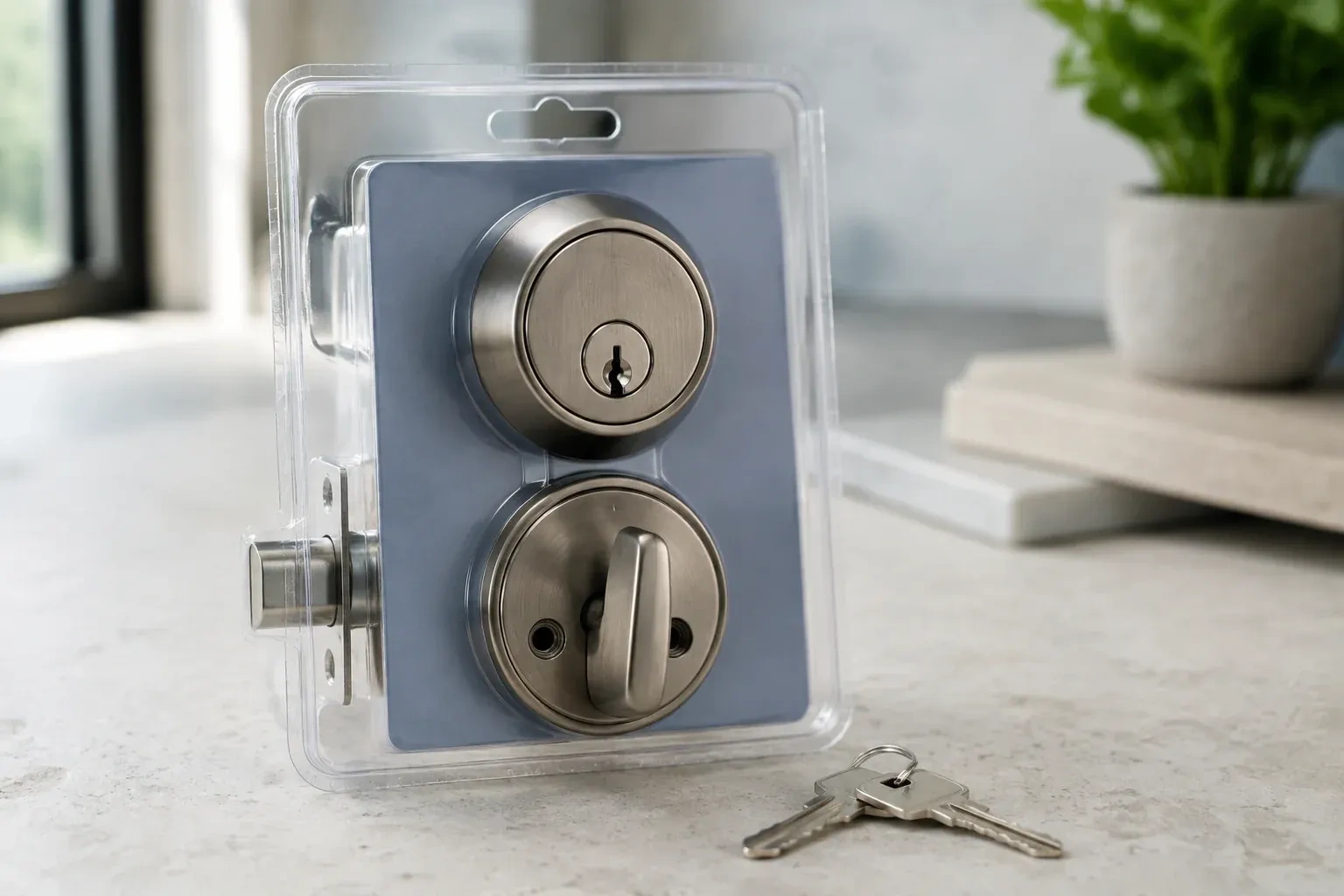
In most cases, yes. The majority of keypad deadbolts keep a conventional cylinder behind or beside the keypad, and the locksmith rekeys it during the visit so a fresh key works and the old one is retired. A few designs have no keyway at all and rely on the keypad plus an emergency power contact instead. Which you prefer is part of choosing the model, and either way the fallback route is tested before the locksmith leaves.
Will summer heat behind my storm door damage the lock?
It can stress it, and it is one of the first things the locksmith looks at. A full-glass storm door on a south- or west-facing entrance can push the air between the doors well above what electronics are rated for on a hot afternoon. The usual answers are a storm door with a vent or screen, swapping to the screen panel for summer, or a model whose maker rates it for that exposure. With that handled, the lock is fine.
How does a smart lock cope with our winters?
Well, with a little planning. Cold reduces battery capacity, so the locksmith fits fresh cells of the type the maker specifies and points you to the low-battery alert, and a new set before the first hard frost is a good habit. The bolt is aligned with clearance so a door that swells or shifts with freeze and thaw does not strain the motor. Keep ice off the keypad, and use lock de-icer only in the key cylinder, never on the touch surface.